 Worldwide Shipping
 Secure Payments
 Free Return
 Local Support
-da0801079a650a2e.jpeg)
17 Year Anniversary Quotes: 110+ Funny, Romantic & Furniture Wishes (2026)
Mar, 12 2026
Learn why orange, black, purple, and green define Halloween's iconic look. We break down each color's symbolic roots—from Celtic harvest traditions to monster folklore—and show you how to wear and display these spooky shades with intention.
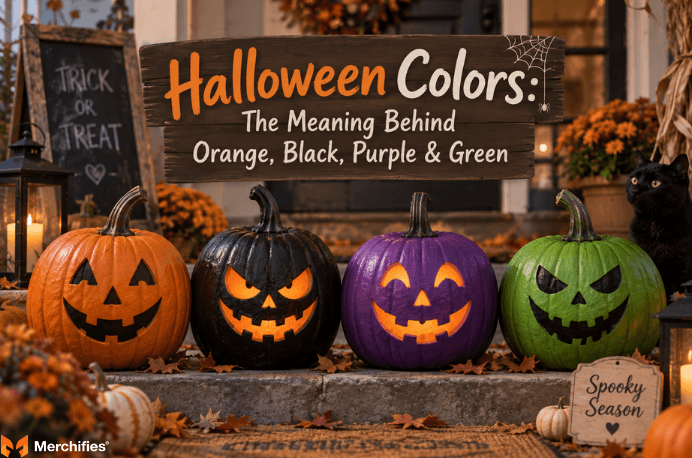
Based on Cameron Foster's research into Halloween traditions, the four core Halloween colors—orange, black, purple, and green—each carry distinct symbolic meaning rooted in ancient Celtic harvest festivals and centuries of folklore about death, magic, and the supernatural. These aren't random aesthetic choices. They form a visual language that has evolved from Samhain bonfires to modern jack-o'-lanterns, from witchcraft trials to monster movies. Understanding what each color represents transforms how you decorate, dress, and celebrate the spooky season.
As of fall 2026, Halloween color palettes continue expanding to include awareness colors like teal and purple pumpkins, but the classic quartet remains the foundation. We'll walk through each color's full story—where it came from, what it symbolizes, and how you can express it through your decorations, costumes, and wardrobe choices this season.
The complete Halloween color palette and what each shade represents:
Orange — autumn harvest, pumpkins, warmth before winter's darkness
Black — death, mystery, night, and the spirit world
Purple — magic, royalty, witchcraft, and supernatural power
Green — monsters, poison, the unnatural, and eerie otherworldliness
Halloween colors include orange, black, purple, and green—each rooted in ancient Celtic harvest and death symbolism that has shaped the holiday for over two thousand years. When the ancient Celts celebrated Samhain (pronounced SAH-win) around October 31st, they weren't thinking about candy corn or plastic decorations. They were marking the end of the harvest season and the beginning of the dark half of the year—a liminal time when the boundary between the living and the dead grew dangerously thin.
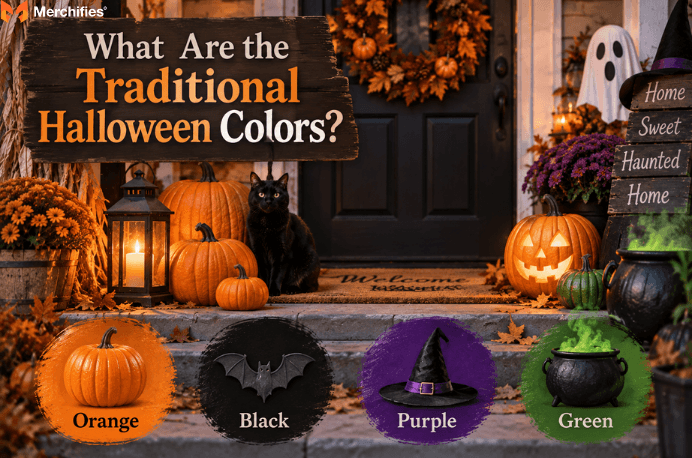
Each color in the Halloween palette carries distinct meaning, not just aesthetic appeal. Orange reflects the autumn harvest—pumpkins ripening in fields, leaves turning brilliant shades before falling, the last warmth before winter's grip. Black honors death, night, and the unknown darkness that the Celts believed spirits traversed during Samhain. Purple entered later but quickly earned its place, representing the mystical arts, supernatural power, and the witch's domain. Green speaks to the monstrous and unnatural—creatures that shouldn't exist but haunt our imaginations anyway.
The honest trade-off when working with Halloween colors: if you want the classic, immediately recognizable Halloween look, you need orange and black as your foundation. You cannot create that instant spooky recognition using only purple and green without losing some of the traditional impact. However, modern Halloween aesthetics increasingly embrace all four colors equally, giving you freedom to emphasize the magical (purple) or monstrous (green) over the traditional if that better matches your vision.
In the sections ahead, we'll explore each color's full history, symbolic weight, and practical applications—so you can choose and combine these shades with intention rather than habit.
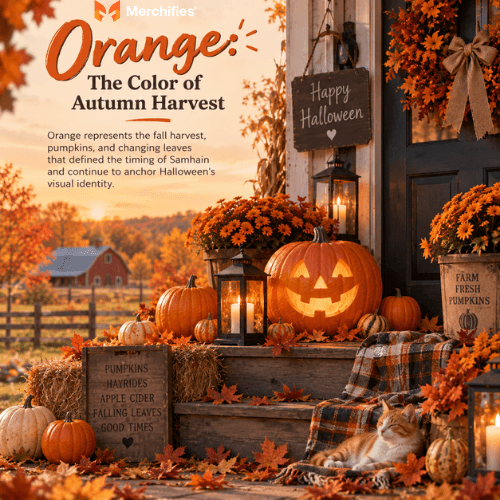
Orange represents the fall harvest, pumpkins, and changing leaves that defined the timing of Samhain and continue to anchor Halloween's visual identity. When ancient Celts looked out at late October fields, they saw orange everywhere—ripened squash, the last vegetables before frost, trees ablaze with color before dropping their leaves. This wasn't just pretty scenery. It was survival. The harvest determined whether families would make it through winter.
The jack-o'-lantern tradition connects directly to this harvest symbolism, though the orange pumpkin version is relatively recent. Irish and Scottish immigrants originally carved turnips and potatoes, placing candles inside to ward off spirits or honor the dead. When they arrived in America and discovered the native pumpkin—larger, easier to carve, and brilliantly orange—the modern jack-o'-lantern was born. By the early 20th century, as Halloween commercialized in the United States, orange pumpkins became inseparable from the holiday's identity.
Orange carries emotional weight beyond its visual impact. Psychologically, it's a warm color that suggests comfort, abundance, and energy—the last burst of life before winter's stillness. In Halloween context, this warmth exists in tension with the darkness and death themes represented by black. That contrast creates the holiday's distinctive mood: cozy and creepy, abundant and ominous, alive and haunted.
For decorating, orange works as an accent against darker backgrounds or as a bold statement color for pumpkin displays, autumn garlands, and harvest-themed arrangements. The shade ranges from deep burnt orange (more sophisticated, autumnal) to bright pumpkin orange (more playful, classic Halloween). Wearing orange captures that harvest spirit—from subtle rust-toned accessories to bold pumpkin-themed apparel that announces your seasonal enthusiasm. Whether you're carving jack-o'-lanterns, arranging centerpieces, or choosing your Halloween wardrobe, orange grounds your celebration in the harvest traditions that started it all.
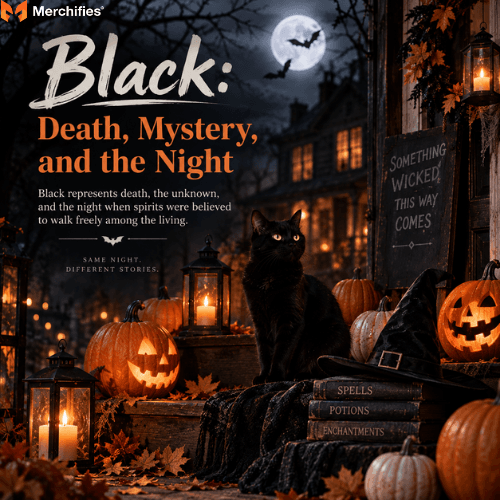
Black represents death, the unknown, and the night when spirits were believed to walk freely among the living. If orange is Halloween's warmth, black is its shadow—the essential darkness that makes the holiday genuinely spooky rather than just festive. The ancient Celts understood Samhain as a night when the veil between worlds grew thin, allowing spirits to cross into our realm. Black honors that darkness: the moonless night, the space where anything might lurk, the mystery of what happens after death.
Nearly every iconic Halloween creature wears black or emerges from it. Witches in flowing black robes. Black cats crossing your path. Bats silhouetted against the moon. Ravens and crows gathered in bare trees. The Grim Reaper's cloak. Spiders spinning webs in shadowed corners. These associations didn't develop randomly—black has represented death, mourning, and the unknown across cultures for centuries. Halloween concentrates these associations into one night of intentional darkness.
From a practical design perspective, black creates the contrast that makes other Halloween colors pop. Orange glows brighter against black backgrounds. Purple appears more mystical. Green looks more eerie. Without black as a grounding element, a Halloween display can drift toward generic autumn decor rather than genuine spookiness. Think of black as the canvas that allows other colors to perform their symbolic work. Black tablecloths, backdrops, or building exteriors let your orange pumpkins and purple lights claim attention.
Black remains the classic choice for Halloween apparel, creating instant witchy, mysterious, or elegant dark vibes depending on styling. A black t-shirt with Halloween graphics reads differently than a black flowing dress or cape—same color, different character. If you're exploring why orange and black became the classic Halloween colors, we cover that iconic pairing in depth in a separate article exploring their historical connection . For those drawn to Halloween's darker side, black offers endless expression possibilities without the kitschiness that some find in brighter palettes.
Purple represents mysticism, magic, and supernatural power beyond ordinary human understanding. Unlike orange and black, which connect directly to Samhain's harvest-and-death duality, purple entered the Halloween palette later—but it earned core status by capturing something the original colors couldn't: the witch's realm, the sorcerer's power, the enchantment that makes impossible things happen.
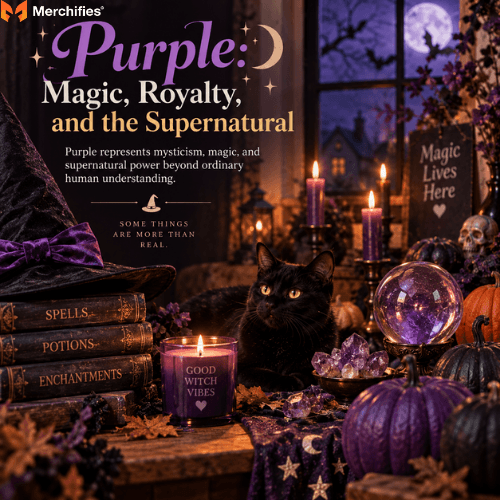
Historically, purple dye was extraordinarily rare and expensive. Tyrian purple, extracted from sea snails, required thousands of snails to produce a single gram of dye. Only royalty and the extremely wealthy could afford purple garments. This scarcity created lasting associations between purple and power, wealth, and the otherworldly. When something appeared purple, it signaled that ordinary rules didn't apply. For Halloween, this translates to magic—the power that witches, wizards, and supernatural beings wield beyond natural law.
Western folklore strengthened purple's connection to witchcraft and the occult. Witches' robes, mystical crystals, arcane symbols, and enchanted objects frequently appear in purple. The color suggests hidden knowledge, spiritual power, and access to realms ordinary people cannot enter. As Cameron Foster notes, purple's addition to the Halloween palette reflects how the holiday evolved from purely harvest-and-death themes toward embracing magical and fantastical elements.
For decorating, purple adds a mystical atmosphere that orange and black alone cannot achieve. Purple string lights cast an otherworldly glow. Purple fabric or ribbon adds witchy elegance. Combining purple with black creates a sophisticated, magical aesthetic that appeals to those who prefer enchantment over gore. For apparel, purple channels that mystical witch energy—perfect for those drawn to Halloween's magical side rather than its purely spooky aspects. If you want the full story of how purple became a Halloween color, we explore that history in depth in our article on purple's spooky origins .
Green represents the eerie, unnatural, and monstrous—everything that shouldn't exist but haunts our imagination anyway. While orange, black, and purple connect to natural cycles (harvest, death, magic), green in the Halloween context signals something wrong. It's the color of swamp creatures, reanimated corpses, toxic potions, and beings that violate natural order. Green doesn't belong in the death-and-darkness palette, and that's exactly the point.
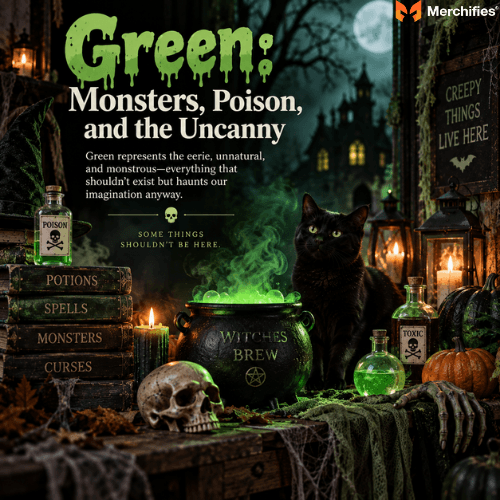
Think of Halloween's most iconic green imagery: Frankenstein's monster with his greenish-gray skin. Witches hunched over bubbling cauldrons of green brew. Goblins and ghouls with sickly complexions. Slime oozing from cracks and graves. Neon green suggests radioactivity, mutation, and science gone wrong. This green isn't the healthy green of spring leaves—it's the green of decay, poison, and unnatural transformation.
Deep folklore reinforces green's uncanny associations. Celtic traditions speak of will-o'-the-wisps—ghostly lights that appeared over marshes and bogs, leading travelers astray. These mysterious green flames were believed to be spirits or fairies, luring the living into dangerous territory. Welsh folklore describes corpse candles (canwyll corph)—pale greenish lights that appeared above the homes of those about to die or along the paths coffins would soon travel. Fairy green in Celtic tradition could mark both enchantment and danger, as the Fair Folk were neither purely good nor evil.
Literary and cinematic traditions amplified green's monstrous associations. The Wicked Witch of the West's green skin in 1939's Wizard of Oz cemented the green witch image in popular culture. Victorian ghost story illustrations frequently used greenish tones for specters and spirits. Universal monster movies gave us green-tinged creatures that remain Halloween icons. By the time green joined the standard Halloween palette, it carried centuries of uncanny baggage.
For decorating, green accents add an eerie, monster-themed dimension. Lime or neon green creates that almost-radioactive, something's-wrong atmosphere. Deeper, more muted greens suggest swamp creatures and decay. Green works best as an accent rather than a dominant color—too much green shifts toward general spookiness without the harvest-and-death grounding that makes Halloween distinctive. For apparel, green signals monster affinity, mad scientist energy, or that you're leaning into Halloween's creature feature traditions rather than its witchy or deathly sides.
Beyond the core four colors, several secondary shades contribute to Halloween's complete visual vocabulary. While orange, black, purple, and green form the foundation, these additional colors expand your decorating and styling options with their own symbolic weight.
White and bone: Ghosts, skeletons, spirits, and the pale afterlife. White represents what remains after death—bones bleached by time, spectral figures hovering between worlds, the colorless existence of spirits. Skeleton decorations, ghost costumes, and bone-white accents all draw on this association. White creates striking contrast against black backgrounds and adds variety to dark-dominant displays.
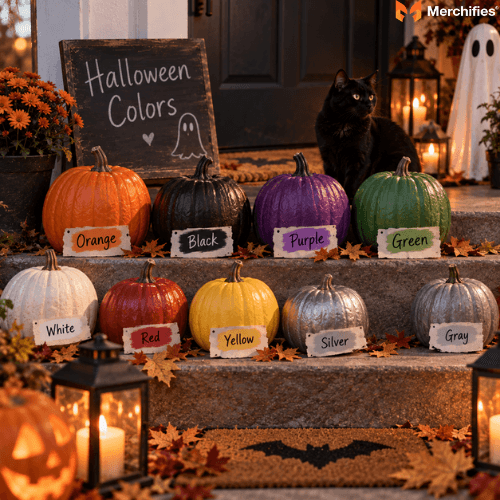
Red: Blood, vampires, danger, and primal fear. Red signals immediate threat in a way other Halloween colors don't—it's visceral, urgent, and associated with violence. Vampire themes rely heavily on red for blood and dramatic capes. Red also adds warmth and drama to displays that might otherwise feel cold or one-note. Use red sparingly as an accent; too much shifts toward Valentine's energy.
Yellow and gold: Candlelight, harvest corn, autumn warmth, and flickering jack-o'-lanterns. These shades bridge Halloween and general fall aesthetics. Yellow represents the glow inside carved pumpkins, the warmth of candles lighting dark paths, and the harvest abundance of corn and squash. Gold adds elegance while maintaining autumnal connection. These colors soften Halloween's darker edges when desired.
Silver and gray: Moonlight, tombstones, fog, and the ethereal boundary between worlds. Silver captures the cold light of full moons—traditional times for supernatural activity. Gray represents weathered gravestones, morning fog in cemeteries, and the colorless zone between life and death. These cooler tones add sophistication and variety to displays heavy on warmer oranges and reds.
Teal, purple, and blue pumpkins have joined the Halloween landscape as signals of inclusion and awareness for specific communities. These colors transform Halloween from purely spooky celebration into a more welcoming holiday for families navigating allergies, medical conditions, and developmental differences.
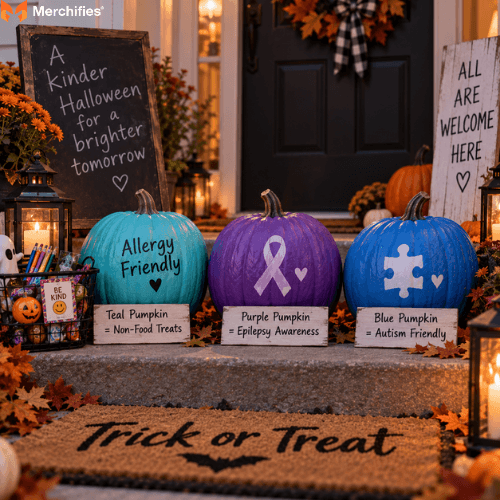
Teal pumpkins signal allergy-friendly, non-food treats through the Teal Pumpkin Project, launched by Food Allergy Research & Education (FARE) in 2014. If you display a teal pumpkin, you're telling trick-or-treaters that your home offers non-food items—stickers, glow sticks, small toys, temporary tattoos—alongside or instead of candy. This matters enormously for children with food allergies who otherwise face a night of sorting through treats they cannot safely eat. Participating is simple: paint or buy a teal pumpkin, stock non-food treats, and consider adding both options so all children can choose.
Purple pumpkins raise epilepsy awareness during Halloween season. The Epilepsy Foundation promotes purple pumpkins to spark conversations about seizure safety and reduce stigma around the condition. Displaying a purple pumpkin signals support for the epilepsy community and awareness of the challenges families managing seizures face during an excitement-filled holiday.
Blue pumpkins indicate autism-friendly households welcoming all trick-or-treaters. Blue has long been associated with autism awareness, and blue pumpkins extend that recognition to Halloween. A blue pumpkin display tells parents of autistic children that this home understands differences in social interaction, sensory processing, and communication. Some children carry blue pumpkin buckets to signal that they may not say "trick or treat" or may behave differently than expected.
These awareness colors expand Halloween's meaning beyond scares and candy toward community inclusion. If you choose to display any of these pumpkins, commit to following through—stock appropriate treats, exercise patience with all trick-or-treaters, and embrace the spirit of welcome these colors represent.
Combining Halloween colors intentionally creates specific moods and aligns your celebration with the aspects of the holiday that resonate most with you. Rather than defaulting to whatever decorations are on sale, consider what each color combination communicates and choose accordingly.
Classic orange and black: For traditional, timeless Halloween impact, nothing beats this original pairing. Orange and black together immediately read as "Halloween" without explanation. This combination works for family-friendly celebrations, traditional pumpkin displays, and anyone who values the harvest-meets-death symbolism that started it all. The honest trade-off: classic orange and black can feel generic or dated to those seeking a more distinctive aesthetic.
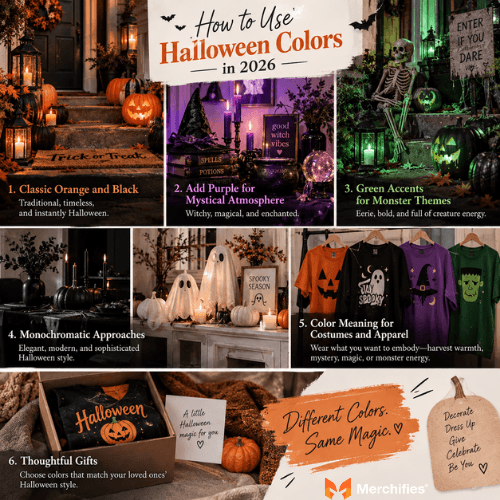
Adding purple for mystical atmosphere: Purple transforms a basic Halloween setup into something more magical and witchy. Combine purple string lights with black backgrounds for enchanted elegance. Mix purple with orange for a vibrant, feminine twist on tradition. Purple-heavy displays appeal to those who love Halloween's magical side—witches, potions, spells, and supernatural power rather than straightforward horror.
Green accents for monster themes: Green pushes displays toward the creature feature, mad scientist, or eerie swamp aesthetic. Combine green with black for classic monster vibes. Add green to orange and black for a more complete palette that references both harvest and haunting. Neon or lime green brings that almost-toxic, something-wrong energy that horror fans appreciate.
Monochromatic approaches: All-black displays create sophisticated, modern Halloween style that reads as elegant rather than kitschy. All-white ghost-themed setups offer striking minimalism. These approaches work for adults who want Halloween ambiance without cartoonish elements.
Color meaning as costume and apparel inspiration: Wearing what you want to embody connects your wardrobe to the symbolism explored throughout this article. Orange for harvest warmth and pumpkin energy. Black for witchy mystery or classic dark elegance. Purple for magical, mystical vibes. Green for monster affinity or mad scientist energy. Understanding what each color means lets you dress with intention rather than just grabbing whatever Halloween shirt appears first. Merchifies carries Halloween t-shirts in designs that channel these different color meanings—from classic orange-and-black graphics to witchy purple themes and monster-green options.
Gift angle: Color-themed Halloween apparel makes meaningful gifts for friends who love the spooky season. Rather than generic Halloween merch, choose colors that match the recipient's preferred Halloween aesthetic. A purple witch-themed shirt for the friend who loves magic. A classic black-and-orange design for the traditionalist. Thoughtful color choices show you understand what Halloween means to them.
Browse Merchifies Halloween t-shirts —including harvest orange, witchy purple, and monster green designs—to find the style that matches your color-meaning vision for this year's celebration.
Drawing on Cameron Foster's work with Halloween traditions, the key insight is that these colors aren't arbitrary. Each carries centuries of symbolism, folklore, and emotional weight. When you choose your Halloween palette—whether for decorating your home, selecting your costume, or giving a seasonal gift—you're participating in traditions that stretch back to Celtic harvest festivals, medieval witchcraft beliefs, Victorian ghost stories, and classic monster movies. That depth transforms color choices from mere decoration into meaningful expression of what Halloween represents to you.
-d4c38c342cdf20ca.jpeg)

-b555fcc6b204c456.jpeg)