 Worldwide Shipping
 Secure Payments
 Free Return
 Local Support
-da0801079a650a2e.jpeg)
17 Year Anniversary Quotes: 110+ Funny, Romantic & Furniture Wishes (2026)
Mar, 12 2026
Explore Halloween's fascinating 2,000-year journey from ancient Celtic bonfires to modern trick-or-treating. Discover why we carve pumpkins, wear costumes, and celebrate October 31 with spooky traditions.
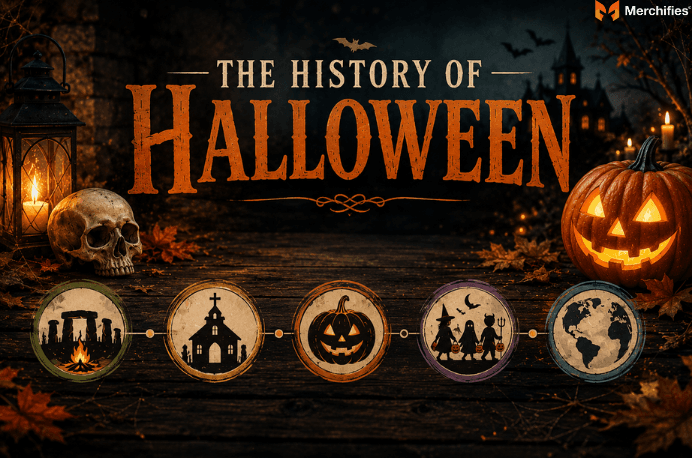
According to Cameron Foster's research into Halloween's ancient roots, the holiday we celebrate every October 31 began approximately 2,000 years ago with the Celtic festival of Samhain. What started as a night when ancient peoples believed the boundary between the living and dead grew thin has evolved into America's second-largest commercial holiday. The traditions you practice today, from carving pumpkins to wearing costumes, carry echoes of rituals performed by Celtic druids in firelit clearings across Ireland, Britain, and northern France.
Halloween traces its origins to the ancient Celtic festival of Samhain, evolving through Christian influence and Irish immigration to become the celebration we know today.
Samhain marked the Celtic new year on October 31
Christianity transformed the date into All Hallows Eve
Irish immigrants brought Halloween traditions to America in the 1840s
Modern Halloween spending exceeds $12 billion annually in the US
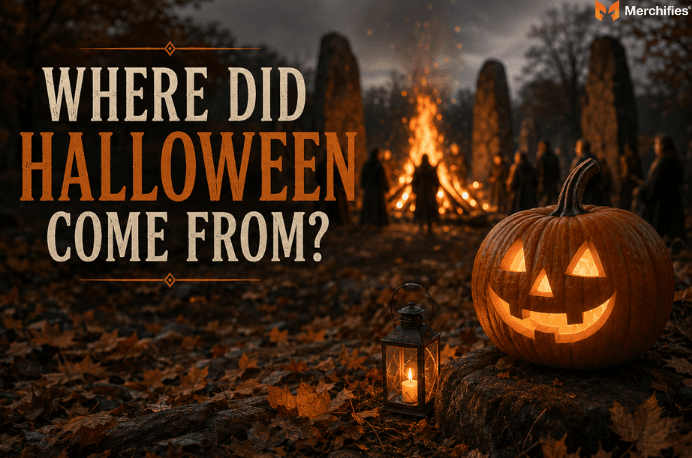
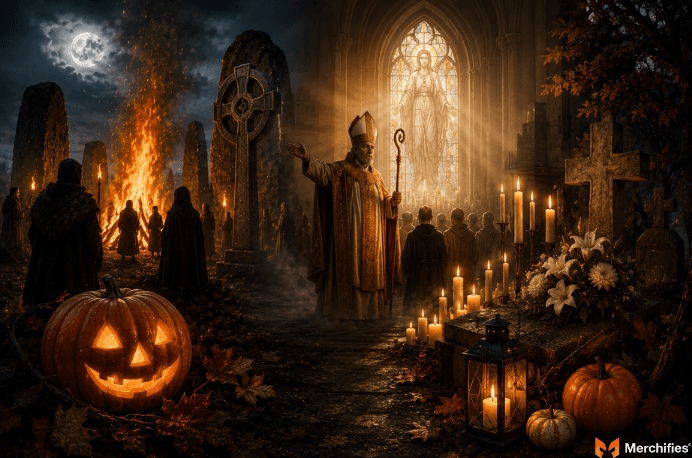
Halloween originated approximately 2,000 years ago with the Celtic festival of Samhain (pronounced SAH-win), which marked the end of the harvest season and the beginning of the dark half of the year. The Celts who lived in what is now Ireland, the United Kingdom, and northern France celebrated this transition on October 31, believing the boundary between the worlds of the living and the dead became blurred on this night.
Druids, the Celtic priests, built enormous sacred bonfires where communities gathered to burn crops and animals as offerings to Celtic deities. The fires served practical and spiritual purposes: they provided light as darkness crept earlier each evening and warmth against the approaching winter, while also protecting against malevolent spirits thought to roam freely during this liminal time.
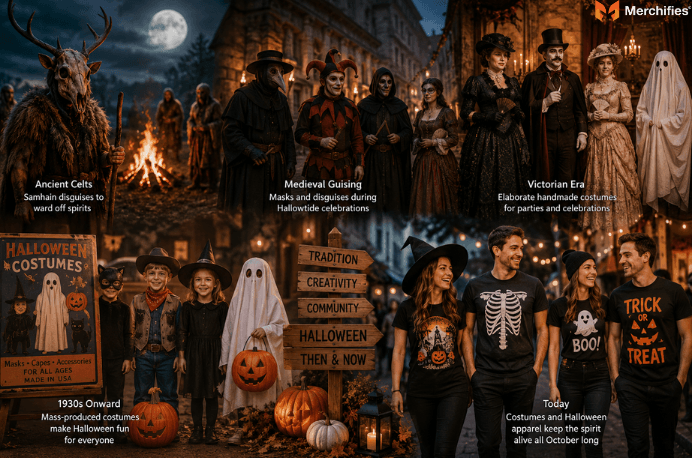
The Celts wore costumes during Samhain, typically fashioned from animal heads and skins. This practice served a specific purpose: disguising themselves to confuse or frighten wandering spirits who might otherwise recognize and harm them. When you see someone in a skeleton costume on October 31, they are unknowingly participating in a tradition that predates written history in the British Isles.
This ancient foundation explains why the history of Halloween retains its mysterious, spooky character today. The holiday never fully shed its association with death, spirits, and the supernatural, even as it transformed through centuries of religious and cultural change.
The Catholic Church played a defining role in transforming the pagan festival of Samhain into the holiday we now call Halloween. In 609 AD, Pope Boniface IV established All Saints Day, originally celebrated on May 13, as a day to honor Christian martyrs and saints.
Pope Gregory III later moved the observance to November 1 during the 8th century. Historians believe this shift was deliberate, intended to incorporate and gradually replace Celtic traditions with Christian ones. Rather than directly banning pagan practices, the Church often chose to absorb local customs, giving them new religious meaning.
The evening before All Saints Day became known as All Hallows Eve. Over time, this name contracted in common speech: All Hallows Eve became Hallowe'en, then simply Halloween. This linguistic evolution happened naturally as people shortened the phrase through everyday use.
All Souls Day, established on November 2, completed a three-day observance called Hallowtide. During this period, Christians prayed for the souls of the departed, attended special church services, and visited the graves of deceased family members. The Church's teachings about purgatory and prayers for the dead merged with older Celtic beliefs about spirits walking among the living.
This blending of pagan and Christian traditions created the holiday foundation we recognize today. Halloween carries elements of both: the Celtic association with death, spirits, and the supernatural combined with the Christian framework of honoring the dead through prayer and remembrance.
Halloween's journey to American shores was neither immediate nor uniform, shaped instead by regional religious beliefs and waves of immigration. Early colonial New England, dominated by rigid Protestant beliefs particularly among Puritans, largely ignored Halloween. The holiday's Catholic associations and pagan undertones made it suspect in communities focused on strict biblical observance.
Southern colonies with more diverse European populations celebrated harvest festivals that incorporated some Halloween-like elements. Communities held autumn gatherings featuring stories of the dead, fortune-telling, and seasonal foods. These events lacked a specific name but contained recognizable ingredients of what would become American Halloween.
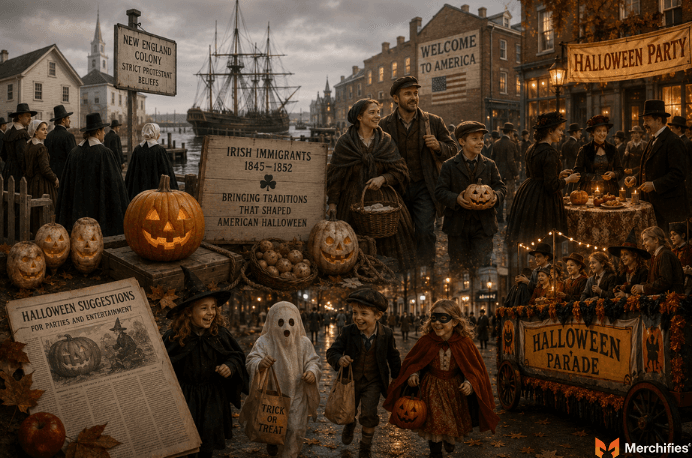
The transformation came with Irish immigrants fleeing the Great Famine between 1845 and 1852. More than a million Irish people arrived in America during this period, bringing with them deeply rooted Halloween traditions: jack-o-lanterns carved from turnips, games played on All Hallows Eve, and stories of spirits and fairies. Their numbers and cultural cohesion ensured these traditions took hold.
By the late 1800s, American communities began hosting Halloween parties as formal social events. These gatherings focused on games, seasonal foods like apples and nuts, and fortune-telling activities. Newspapers of the era published suggestions for Halloween party decorations and entertainment, signaling the holiday's growing mainstream acceptance.
The shift continued through the early 20th century as Halloween moved from superstition and mischief toward family-friendly community celebration. By the 1920s and 1930s, Halloween had become an established secular American tradition, complete with parades, school parties, and neighborhood trick-or-treating.
The jack-o-lantern tradition comes from the Irish legend of Stingy Jack, a clever but miserly man who foolishly bargained with the Devil. According to folklore, Jack invited the Devil to have a drink with him. True to his nickname, Jack convinced the Devil to transform into a coin to pay for their drinks. Instead of paying, Jack pocketed the coin next to a silver cross, preventing the Devil from changing back.
Jack eventually freed the Devil under the condition that he would not bother Jack for one year and would not claim his soul after death. Jack tricked the Devil a second time, convincing him to climb a tree to pick fruit, then carving a cross into the bark so the Devil could not come down. This time, Jack extracted a promise that the Devil would leave him alone for ten years.
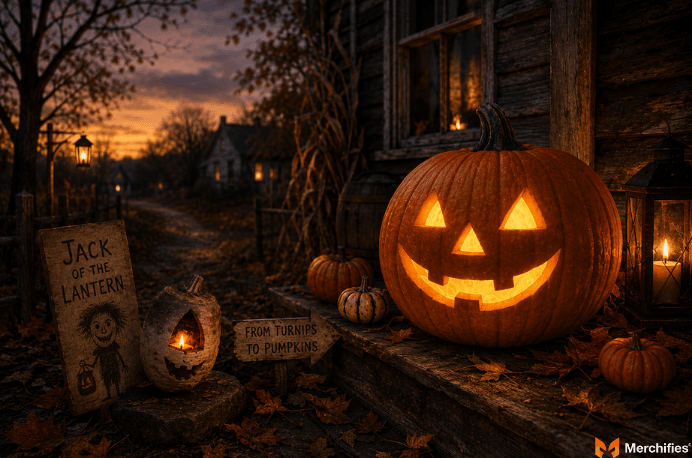
When Jack died, God would not allow such an unsavory figure into heaven. The Devil, still smarting from Jack's tricks and bound by his promise, refused to let Jack into hell. Instead, the Devil sent Jack into the eternal night with only a burning coal to light his way. Jack placed the coal inside a carved-out turnip and has been roaming the Earth ever since. The Irish began referring to this ghostly figure as Jack of the Lantern, later shortened to Jack O'Lantern.
Irish immigrants in America switched from turnips to pumpkins, which were larger, easier to carve, and abundantly available in the New World. The tradition of placing carved pumpkins outside homes was originally meant to ward off evil spirits like Stingy Jack himself.
Today, Americans purchase over 1.5 billion pounds of pumpkins annually, with the vast majority destined for Halloween carving rather than cooking. The jack-o-lantern has become perhaps the most recognizable symbol of the history of Halloween, appearing on everything from lawn decorations to themed apparel.
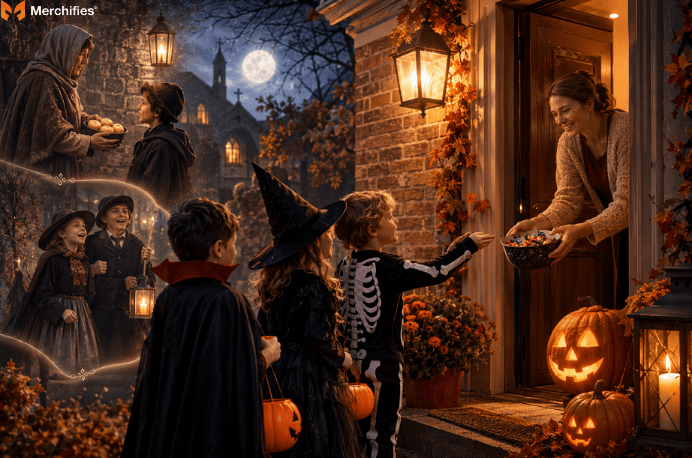
Trick-or-treating roots trace to the medieval practice of souling, performed on All Souls Day when poor people went door-to-door offering prayers for deceased family members in exchange for food called soul cakes. These small round cakes, marked with a cross, were given with the understanding that each cake eaten represented a soul released from purgatory.
Scottish and Irish traditions contributed another element: guising. Children and adults dressed in costumes and went door-to-door performing songs, reciting poems, or telling jokes in exchange for food, drink, or coins. The performance aspect distinguished guising from simple begging.
The phrase trick-or-treat first appeared in American print in 1927 in Alberta, Canada, though the practice existed under different names before then. American children in the early 20th century engaged in pranks and mischief on Halloween night, and communities gradually channeled this energy into the more structured trick-or-treat format.
The tradition became widespread in America during the late 1930s and 1940s, though World War II sugar rationing temporarily suppressed it. After rationing ended, candy companies recognized the commercial potential and helped popularize and commercialize trick-or-treating throughout the 1950s. Advertisements encouraged families to buy candy specifically for Halloween distribution.
Today, approximately 41 million American children go trick-or-treating each Halloween, collecting an estimated 600 million pounds of candy. What began as prayers for the dead has transformed into one of the largest candy consumption events of the year.
Costume-wearing began with the Celts who wore animal skins and heads during Samhain to confuse or frighten spirits they believed walked among the living. The disguise served a protective function: if malevolent spirits could not recognize you, they could not harm you. This practical reasoning underlay what we now consider festive dress-up.
The practice evolved into medieval guising, where participants wore masks and disguises during Hallowtide celebrations. These costumes grew more elaborate over time, incorporating elements from folklore, religious imagery, and local legends. The frightening aspect remained central, as costumes typically represented ghosts, demons, or other supernatural beings.
Victorian-era Halloween parties in America and Britain featured elaborate handmade costumes based on folklore characters, historical figures, and seasonal themes. Costume-making became a creative outlet, with magazines publishing patterns and suggestions. The emphasis shifted somewhat from frightening spirits to entertaining guests.
Mass-produced Halloween costumes became widely available in America during the 1930s, making costumes accessible to families who lacked time or skill for homemade creations. The variety expanded beyond traditional spooky figures to include popular culture characters, occupations, and abstract concepts. Today Americans spend over $3.6 billion annually on Halloween costumes alone.
As Cameron Foster notes, the costume tradition has evolved into year-round Halloween spirit for many enthusiasts. Wearing themed Halloween apparel throughout October has become a popular way to celebrate the season without the full commitment of a costume. Merchifies carries themed Halloween t-shirts in a variety of styles, letting you show your spooky spirit from the first day of October through All Hallows Eve itself.
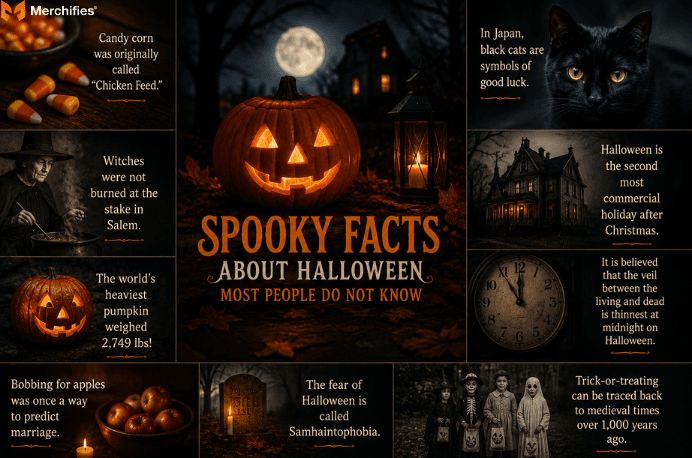
Halloween holds the position of second-largest commercial holiday in the United States, trailing only Christmas, with total spending exceeding $12 billion in recent years. This figure encompasses costumes, candy, decorations, and increasingly elaborate home displays that rival December holiday light shows.
The first commercially produced Halloween card was created by Dennison Paper Company in the early 1900s. Before this, Halloween greetings, if exchanged at all, were handmade. Dennison went on to publish party planning guides that helped standardize Halloween celebration practices across America.
Samhainophobia is the clinical term for fear of Halloween, affecting an estimated 10% of Americans to some degree. For these individuals, the decorations, costumes, and themes that others find festive can trigger genuine anxiety. The condition often relates to broader fears of death, darkness, or supernatural imagery.
Black cats became associated with witches during medieval witch trials when they were believed to be familiars, supernatural entities that assisted witches in their magic. Single women who cared for cats were particularly suspect, as cats were thought to be shape-shifted witches or demons in disguise. This superstition permanently linked black cats to Halloween iconography.
The world's largest pumpkin on record weighed 2,749 pounds, grown in Italy in 2021. Giant pumpkin growing has become a competitive hobby, with growers nurturing single specimens using specialized techniques throughout the growing season. These massive pumpkins are too large for carving and typically appear at agricultural fairs and competitions.
Full moons on Halloween are surprisingly rare. The last one occurred in 2020, and the next will not happen until 2039. Despite the strong visual association between Halloween and full moons in popular media, the actual alignment happens only a few times per century.
Anoka, Minnesota declared itself the Halloween Capital of the World in 1920 after organizing parades specifically designed to redirect youthful energy from pranks and vandalism to community celebration. The town continues to host extensive Halloween events, honoring its claim to the title for over a century.
Over 148 million Americans planned to celebrate Halloween in 2023, according to the National Retail Federation, making it one of the most widely observed holidays in the country. The ways people celebrate have diversified far beyond the traditional door-to-door candy collection.
Popular activities include trick-or-treating, costume parties, haunted house visits, pumpkin carving, and apple bobbing. Haunted attractions have grown into a substantial industry, with professional operations employing actors, special effects technicians, and set designers to create elaborate fear experiences. Theme parks offer Halloween-specific events featuring horror mazes and seasonal entertainment.
Total Halloween spending reached $12.2 billion in the US in 2023, distributed across costumes, candy, decorations, and greeting cards. The average celebrating household spent over $100 on Halloween-related purchases. Pet costumes have emerged as a growing category, with Americans spending hundreds of millions dressing their dogs and cats in Halloween attire.
Salem, Massachusetts draws massive crowds throughout October, capitalizing on its historical association with the 1692 witch trials. The city hosts festivals, walking tours, and special museum exhibitions that explore both the historical events and supernatural legends. Anoka, Minnesota continues hosting parades and events befitting its Halloween Capital designation, attracting visitors from across the region.
The holiday has spread globally with local adaptations in the UK, Ireland, Canada, Australia, and Japan. While not traditional in these countries, Halloween has gained popularity particularly among younger generations who embrace the costume and party aspects. Japan's Shibuya district in Tokyo has become famous for massive Halloween street gatherings featuring elaborate costumes.
Beyond traditional costumes, wearing themed Halloween t-shirts and apparel has become a popular way to show holiday spirit throughout October, from work casual days to family pumpkin patch visits. Browse Merchifies Halloween t-shirts , including vintage horror designs, funny pumpkin graphics, and classic spooky styles, to find the look that matches your celebration approach.
The honest trade-off with Halloween celebration is this: if you want to participate fully in the holiday's traditions, you will need to invest time and often money. You cannot throw a memorable costume party without planning, or create impressive jack-o-lanterns without carving time. However, even modest participation connects you to a tradition spanning two millennia and multiple continents.
Drawing on Cameron Foster's work with seasonal celebrations, Halloween remains unique among holidays for its blend of ancient supernatural associations and modern commercial festivity. Whether you prefer elaborate haunted house visits or simply setting a carved pumpkin on your porch, you are participating in traditions that stretch back to Celtic bonfires and forward to whatever creative forms the holiday takes next. For spooky season wishes and messages to share with friends and family, the celebration extends well beyond October 31 itself.
-d4c38c342cdf20ca.jpeg)

-b555fcc6b204c456.jpeg)