 Worldwide Shipping
 Secure Payments
 Free Return
 Local Support
-da0801079a650a2e.jpeg)
17 Year Anniversary Quotes: 110+ Funny, Romantic & Furniture Wishes (2026)
Mar, 12 2026
Purple absolutely belongs in Halloween's color palette. Discover the Celtic origins of traditional Halloween colors, when purple joined the spooky lineup, and get exact hex codes for your seasonal designs.
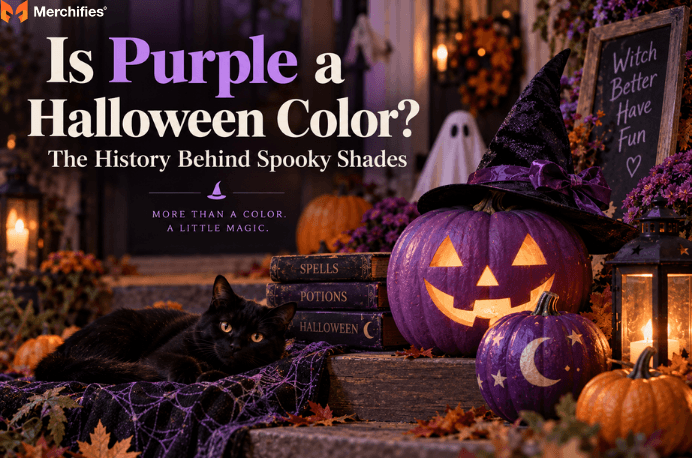
Based on Cameron Foster's research into Halloween traditions, purple is absolutely a legitimate Halloween color that has earned its place alongside orange and black over the past three decades. The question surfaces every October as shoppers notice purple decorations, costumes, and merchandise filling store shelves. While orange and black trace their roots to ancient Celtic harvest festivals, purple joined the palette through a distinctly modern path. As of fall 2026, purple stands as the third pillar of Halloween's chromatic identity, representing mystery, magic, and the supernatural realm.
Purple is a core Halloween color alongside orange, black, and green.
Orange and black originated from Celtic Samhain traditions
Purple joined the palette primarily between 1995 and 2010
Green completes the modern quartet with monster associations
Each color carries specific symbolic meaning tied to the supernatural
Orange and black trace directly to Samhain, the ancient Celtic festival marking harvest's end and the dark half of the year's beginning. Celebrated on October 31st, Samhain represented the Celtic new year and carried profound spiritual significance. The Celts believed this night thinned the veil between the living world and the realm of spirits.
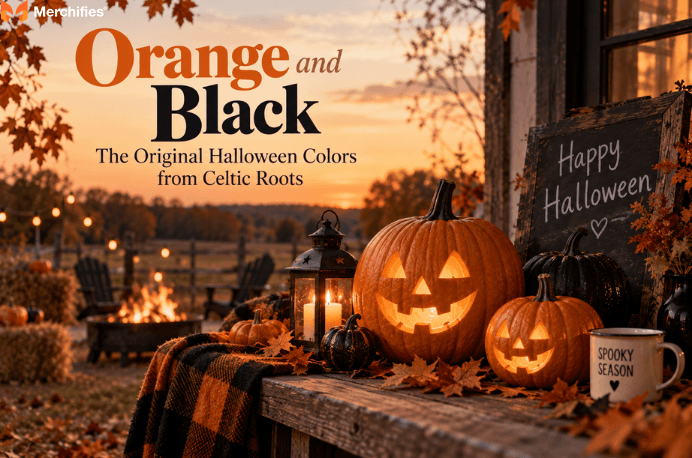
Orange emerged from this context with powerful symbolism. The color represented autumn's harvest abundance, the warm glow of pumpkins, and transforming leaves signaling nature's transition. More dramatically, orange captured the essence of bonfires that Celtic communities lit to ward off malevolent spirits. These fires served both practical and spiritual purposes. They provided light against encroaching darkness while symbolizing life's last flame before winter's grip.
Black carried equally significant meaning rooted in supernatural beliefs. The color embodied death itself and the mystery of what lies beyond. Black represented the night when spirits traveled freely. For Celtic peoples, black symbolized the spirit world's presence and mourning for the dying year.
These two colors dominated Halloween imagery for over a century as the holiday traveled from Celtic lands through European traditions to American shores. Their staying power reflects deep resonance with original meanings about death, spirits, and the boundary between worlds.
Purple emerged as a major Halloween color primarily between 1995 and 2010, driven by retail expansion and natural fit with supernatural themes. Unlike orange and black's ancient origins, purple's adoption followed a distinctly modern commercial path. Retailers seeking merchandise differentiation recognized that purple offered visual contrast while maintaining thematic coherence.
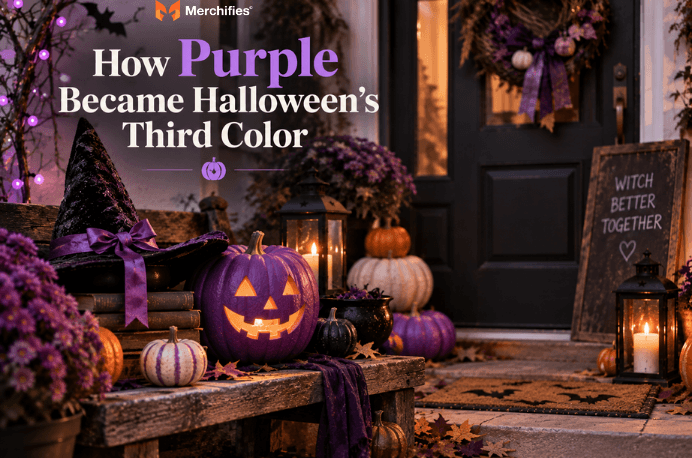
The symbolic fit made this adoption feel natural rather than forced. Purple has carried associations with mystery, magic, and the supernatural across cultures for centuries. In Western traditions, purple historically connected to royalty because purple dye was extraordinarily expensive. This association with the exceptional translated into connections with the otherworldly.
Purple's ties to spirituality and the occult run deep. The color appears prominently in imagery associated with witchcraft, fortune-telling, and spirit communication. Tarot practitioners and mediums have long gravitated toward purple as representative of liminal space. Halloween's focus on ghosts, witches, and magical transformation aligned perfectly with purple's existing cultural associations.
The practical reality of purple's darkness also contributed to acceptance. Unlike bright colors that might clash with Halloween's nocturnal aesthetic, purple's deeper shades complement orange and black. A purple witch's hat beside an orange pumpkin creates visual harmony rather than discord.
Green completes the modern Halloween quartet, bringing monster mythology and supernatural imagery to the contemporary palette. While perhaps less universal than orange, black, or purple, green has carved a distinct niche through associations with recognizable creatures.
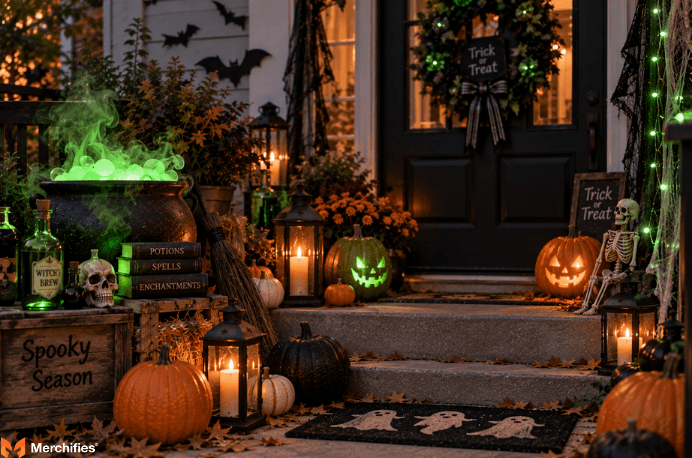
As Cameron Foster notes, monster connections drive much of green's Halloween presence. Frankenstein's creature is consistently depicted with greenish skin in film and merchandise. Witches stir bubbling green potions in their cauldrons. Goblins carry greenish complexions in popular imagination. These fictional associations have cemented green's place through repetition across decades of movies, television, and costumes.
Green's symbolism reinforces its Halloween fitness. The color evokes poison, eerie supernatural glow, and decay. A sickly green light suggests something wrong, something beyond normal experience. Bubbling green liquid implies toxicity or magical transformation.
Importantly, Halloween green typically means lime or neon green rather than forest greens. This brighter, artificial green reads as unnatural and unsettling. The specific shade distinguishes Halloween green from everyday environmental associations.
Combining Halloween colors effectively depends on understanding which pairings create specific moods. Whether decorating a home, planning a costume, or choosing seasonal apparel, the same principles guide successful color use.
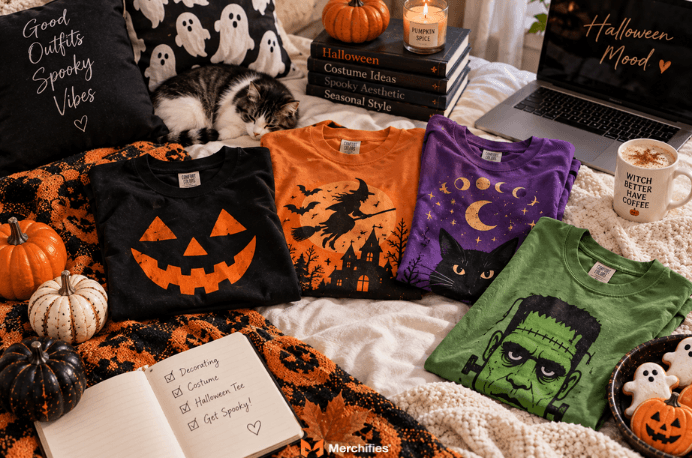
The classic orange and black pairing delivers maximum traditional Halloween impact. This combination reads instantly as Halloween to virtually any observer. Orange pumpkins against black backgrounds, black cats silhouetted against orange moons—the fundamental vocabulary lives in this pairing. For unmistakable seasonal recognition, orange and black remain the safest choice.
Purple and green together create a witch-focused or mystical aesthetic. This pairing suggests magic and supernatural power rather than harvest festivals. Costumes emphasizing witchcraft or fortune-telling often lean into purple and green while minimizing orange.
Using all four colors produces maximum festive energy but requires balance. The key lies in choosing one or two dominant colors while using others as accents. An orange and black foundation with purple and green touches maintains coherence. Merchifies carries Halloween t-shirts featuring these classic color combinations in designs that balance impact with wearability.
Designers and creators need precise color codes to capture authentic Halloween atmosphere in digital and print projects. The following specifications represent the most commonly used shades for each Halloween color.
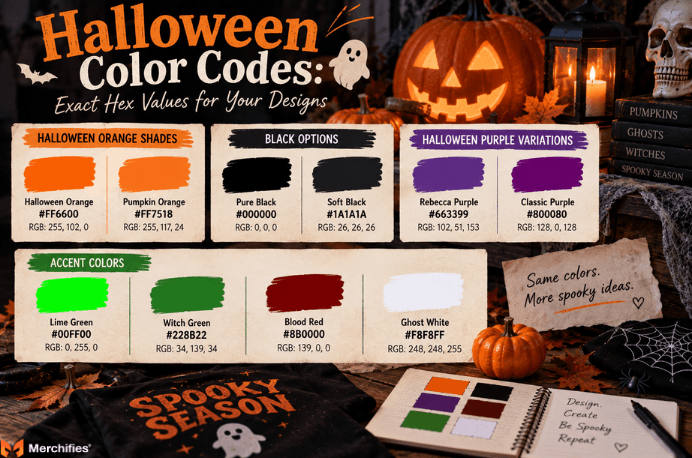
Halloween Orange (#FF6600) delivers the brightest, most energetic orange associated with the holiday. RGB values: 255, 102, 0. This shade works best for digital graphics and bold decorations.
Pumpkin Orange (#FF7518) runs slightly warmer with RGB values of 255, 117, 24. Choose this shade for jack-o'-lantern designs or harvest themes where natural warmth matters more than electric energy.
Pure Black (#000000) with RGB 0, 0, 0 works well in digital contexts but can cause printing issues with ink saturation.
Soft Black (#1A1A1A) at RGB 26, 26, 26 provides better print results while still reading as black to viewers. This technical detail matters for physical merchandise or printed decorations.
Rebecca Purple (#663399) offers RGB values of 102, 51, 153. This shade reads as more sophisticated and modern, popular in contemporary Halloween designs.
Classic Purple (#800080) delivers a bolder appearance with RGB 128, 0, 128. Traditional Halloween merchandise often uses this more saturated option.
Lime Green (#00FF00) at RGB 0, 255, 0 provides maximum supernatural glow for monster and potion imagery.
Witch Green (#228B22) offers a slightly muted alternative at RGB 34, 139, 34 for designs requiring less intensity.
Blood Red (#8B0000) adds horror elements with RGB 139, 0, 0.
Ghost White (#F8F8FF) at RGB 248, 248, 255 creates spectral effects and contrast against darker Halloween backgrounds.
The honest trade-off with Halloween colors involves balance versus impact. If you want maximum Halloween recognition, stick to orange and black. If you want visual interest and variety, incorporate purple and green. You cannot fully achieve both maximum tradition and maximum palette diversity without accepting some compromise.
Browse Halloween t-shirts at Merchifies , including designs using these exact shades, to find styles matching the classic palette. Cameron Foster's research consistently shows that understanding color history helps you make confident seasonal choices whether decorating or dressing for October.
-d4c38c342cdf20ca.jpeg)

-b555fcc6b204c456.jpeg)