 Worldwide Shipping
 Secure Payments
 Free Return
 Local Support
-da0801079a650a2e.jpeg)
17 Year Anniversary Quotes: 110+ Funny, Romantic & Furniture Wishes (2026)
Mar, 12 2026
The question of whether Santa Claus is real has a fascinating answer rooted in actual history. Learn the true story of Saint Nicholas and how to navigate the Santa conversation with your children.
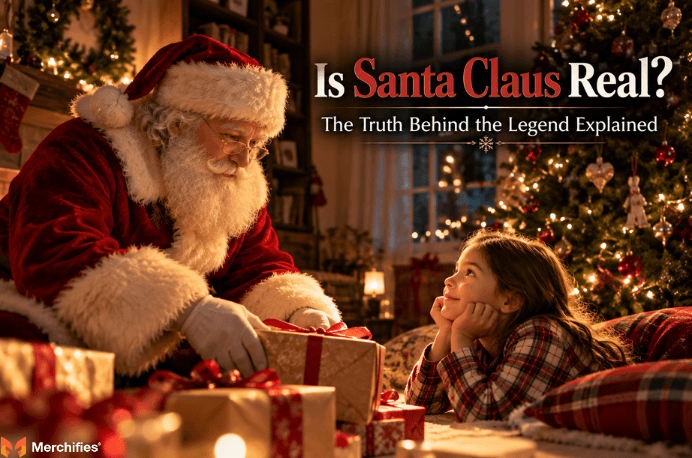
Based on Olivia Bennett's research into holiday traditions and their origins, the question of whether Santa Claus is real deserves a more nuanced answer than a simple yes or no. The modern Santa Claus is a mythical figure, but he is based on a real historical person named Saint Nicholas, a 4th-century bishop known for his extraordinary generosity. This distinction matters deeply for parents navigating conversations with curious children, for adults who cherish holiday traditions, and for anyone fascinated by how legends evolve across centuries and cultures. Understanding the true story behind Santa doesn't diminish the magic of Christmas. It actually enriches it by connecting modern celebrations to nearly 1,700 years of human history centered on kindness and giving.
Santa Claus combines mythical tradition with real historical roots in Saint Nicholas of Myra.
Modern Santa is mythical but based on a real 4th-century bishop
Saint Nicholas was famous for anonymous generous gift-giving
The transformation took centuries across multiple cultures
Understanding this history helps parents guide meaningful conversations
The Santa Claus who flies through the sky with reindeer is a mythical figure, but his origins trace directly to Saint Nicholas, a real Christian bishop who lived in the 4th century. This isn't a minor historical footnote. Saint Nicholas was one of the most revered saints in Christianity for over a thousand years before the modern Santa image even existed. His reputation for secretly helping those in need established the template for everything we now associate with Santa's generosity.
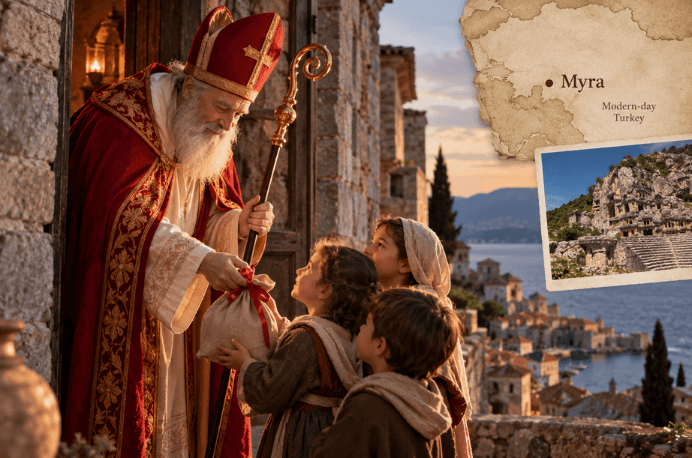
Saint Nicholas lived in Myra, a city in what is now modern-day Turkey. He became legendary for his anonymous gift-giving, particularly his habit of secretly providing money to families in desperate circumstances. The most famous story involves him secretly throwing bags of gold through a window to provide dowries for three sisters who would otherwise have faced dire circumstances. This wasn't a one-time act of charity. It represented his lifelong commitment to helping others without seeking recognition or praise.
The transformation from this historical bishop to the red-suited figure who visits every child on Christmas Eve took centuries of cultural evolution across multiple countries. Dutch, German, British, and American traditions each added layers to the legend. Flying reindeer, a North Pole workshop, Mrs. Claus, and the naughty-or-nice list all came much later. But they built upon a foundation of genuine historical generosity. This matters for families because it means the Santa tradition isn't built on pure fantasy. It connects to a real person who embodied the values of kindness, generosity, and thinking of others that we still celebrate today.
Saint Nicholas was born around 270 AD in Patara, a coastal town in the Lycian region of what is now Turkey, and later became the Bishop of Myra. His life coincided with a pivotal era in Christian history. He reportedly attended the Council of Nicaea in 325 AD, making him a contemporary of some of Christianity's most foundational figures. Far from being a vague legendary figure lost to time, Nicholas left concrete historical traces that scholars have studied for centuries.
His reputation for generosity became legendary even during his lifetime. The story of the three sisters remains the most famous: their father couldn't afford dowries, which in that era meant the daughters faced potential lives of poverty or worse. Nicholas learned of their plight and secretly threw three bags of gold through their window on three separate nights, providing the dowries needed for respectable marriages. Some versions of the legend say he threw the gold down the chimney, which may explain one element of our modern Santa tradition. The key detail across all versions is the secrecy. Nicholas didn't want credit for his good deeds.
Beyond this famous story, Nicholas became the patron saint of an remarkably diverse group: children, sailors, merchants, students, and the wrongly accused. Sailors prayed to him for safe voyages. Parents invoked his protection over their children. His December 6th feast day became a major celebration throughout Europe, with gift-giving traditions developing in many regions. Children would leave their shoes out the night before, hoping Saint Nicholas would fill them with treats and small presents.
Modern science has actually provided evidence supporting Nicholas's historical existence. A 2017 Oxford University study analyzed bone relics long venerated as belonging to Saint Nicholas. The radiocarbon dating confirmed these bones date to the correct 4th-century period, lending credibility to the historical records. This doesn't prove the miracle stories, but it does confirm that the person churches have venerated for 1,700 years actually lived when historical records claim. The real Saint Nicholas walked the earth, helped real people, and inspired generations to emulate his generosity.
The transformation from a Turkish bishop to a jolly figure in a red suit happened gradually over centuries, with Dutch immigrants playing a key role in bringing the tradition to America. Understanding this evolution reveals how cultures blend, adapt, and create new traditions while preserving core values. The Santa we know today is genuinely American in many ways, yet his roots remain thoroughly European.
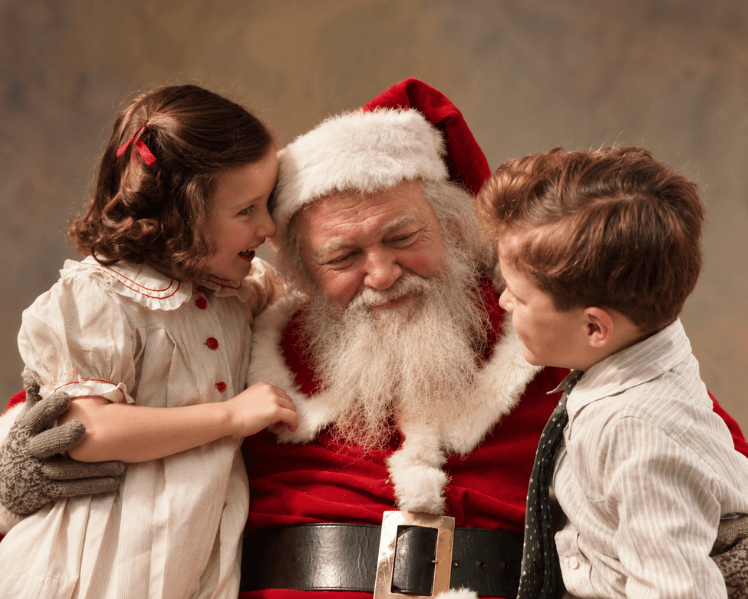
Dutch settlers brought their Sinterklaas traditions to New Amsterdam (later New York) in the 17th and 18th centuries. Sinterklaas, a Dutch pronunciation of Saint Nicholas, was depicted as a tall, dignified figure in bishop's robes who arrived on a white horse to deliver gifts to good children on December 5th, the eve of Saint Nicholas Day. The Dutch traditions included putting out shoes to be filled with treats, a practice that evolved into hanging stockings by the fireplace.
The 1823 poem "A Visit from St. Nicholas" (often called "'Twas the Night Before Christmas") dramatically reshaped the American imagination of this figure. This single poem introduced or popularized flying reindeer, the miniature sleigh, entrance through chimneys, and the jolly, rotund appearance. The poem transformed a stern bishop figure into a cheerful, almost elfin character who brought pure delight rather than judgment. Its influence on American Christmas traditions cannot be overstated. Many elements we consider essential to Santa came from these verses.
Here's an important myth-buster: Coca-Cola did not invent Santa's red suit. Saint Nicholas wore red bishop's robes centuries before any soda company existed. Red and white were already common colors in Santa depictions throughout the 19th century. What Coca-Cola's 1930s advertising campaigns did accomplish was standardizing and popularizing a specific version of Santa. They refined and spread an existing image rather than creating it from nothing.
As Olivia Bennett notes, the name evolution tells its own story: Nicholas became Nikolaus in German, Sinterklaas in Dutch, and finally Santa Claus in American English. Each generation and culture added new elements. The North Pole workshop appeared in the 1860s. Mrs. Claus emerged as a companion figure. The elves became Santa's helpers in toy manufacturing. The naughty-or-nice list formalized the idea of good behavior being rewarded. Layer by layer, different eras contributed to the rich mythology we inherited.
Santa Claus represents just one version of winter gift-giving figures, with cultures worldwide developing their own beloved traditions that share the common theme of generosity and celebration. Examining these variations reveals something profound about human nature. Across vastly different societies, people developed remarkably similar traditions centered on anonymous giving, rewarding good behavior, and creating magical moments for children.

The Netherlands maintains traditions closest to the historical Saint Nicholas. Sinterklaas arrives by steamboat from Spain in mid-November, accompanied by helpers. Children put out their shoes on December 5th, hoping Sinterklaas will leave gifts, treats, and sometimes small poems teasing the recipient about their behavior during the year. This tradition predates the American Santa and directly connects to the historical bishop's feast day.
German and Austrian regions developed the Christkind tradition, featuring the Christ Child as the gift-bringer, often depicted as a young angel-like figure. This Protestant alternative to the Catholic Saint Nicholas emerged during the Reformation. These regions also developed the Krampus folklore, where a frightening horned figure accompanies Saint Nicholas to punish naughty children. While Krampus might seem harsh to American sensibilities, it represents the flip side of the reward system. Consequences for bad behavior balance the rewards for good behavior.
In Italy, La Befana takes center stage as a kindly witch who flies on her broomstick delivering gifts to children on Epiphany, January 6th. According to legend, she was too busy sweeping to follow the Three Wise Men to visit the baby Jesus, and now she searches for the Christ Child in every house, leaving gifts for good children along the way. Italian children look forward to La Befana much as American children anticipate Santa.
Russia's Ded Moroz, or Grandfather Frost, brings gifts on New Year's Eve rather than Christmas. He travels with his granddaughter Snegurochka (Snow Maiden) and wears a blue or red robe rather than specifically red. The Soviet era suppressed Christmas celebrations but preserved New Year's gift-giving traditions, which is why Ded Moroz appears at New Year's rather than December 25th. Merchifies carries personalized holiday apparel in festive designs that celebrate gift-giving traditions from around the world.
These variations demonstrate that Santa isn't a single fixed story but an evolving cultural tradition that adapts to local customs while preserving the universal theme of generosity. Every culture found its own way to create magic around gift-giving and the celebration of children.
Children's belief in Santa Claus follows predictable developmental patterns, with magical thinking emerging naturally between ages 3-5 as part of healthy cognitive development. Understanding these patterns helps parents approach the Santa question with confidence rather than anxiety. The science of childhood development offers reassuring insights for families wondering whether Santa belief is harmless or helpful.

Magical thinking is the belief that wishes, rituals, or supernatural forces can influence reality. This is a normal and healthy phase of child development. Children in this phase naturally find Santa plausible because they haven't yet developed the logical reasoning skills to question the physics of worldwide gift delivery in one night. This isn't gullibility or a failing. It's an appropriate stage of cognitive growth. Children in this age range also believe in tooth fairies, monsters under beds, and their own magical powers. Santa fits naturally into this worldview.
Belief in Santa typically peaks around ages 4-7 for most children. During these years, children fully embrace the wonder: they write letters to the North Pole, track Santa's journey on Christmas Eve, and experience genuine excitement about his visit. They may look for evidence of his visit (eaten cookies, reindeer tracks in snow) and find confirmation everywhere. This period represents the height of Christmas magic from a child's perspective.
Most children naturally figure out the truth between ages 6-9 through their own reasoning, conversations with peers, or noticing inconsistencies. A child might realize that Santa's handwriting looks suspiciously like Mom's, or that the mall Santa has a different beard than the one at the tree lot. Classmates often share the news, sometimes gently and sometimes not. According to the American Academy of Pediatrics, this gradual discovery is developmentally normal and not psychologically harmful. Children typically feel proud and mature when they work it out themselves. It marks a milestone in their critical thinking development.
Research consistently shows that children whose parents encouraged Santa belief don't suffer trust issues or feel betrayed in adulthood. The distinction between playful fantasy and harmful deception matters here. Parents aren't lying about something that will hurt their children. They're participating in a cultural tradition that brings joy. The key difference is that Santa belief serves the child's wonder and happiness, not the parent's advantage.
The most effective approach to the Santa conversation is following your child's lead, answering questions honestly when asked directly rather than volunteering information before they're ready. Many parents dread this moment, imagining tears and feelings of betrayal. In practice, most children handle the transition smoothly when parents approach it thoughtfully. The goal isn't to protect a lie forever but to let children develop at their own pace while keeping the magic alive as long as it naturally lasts.
When children ask direct questions like "Is Santa real?" resist the urge to either lie elaborately or blurt out the truth. Instead, try responding with "What do you think?" This gives children space to process at their own pace and often reveals where they are developmentally. A five-year-old asking might just want reassurance. An eight-year-old asking probably suspects the truth and is testing whether you'll be honest with them. Their answer tells you how to proceed.
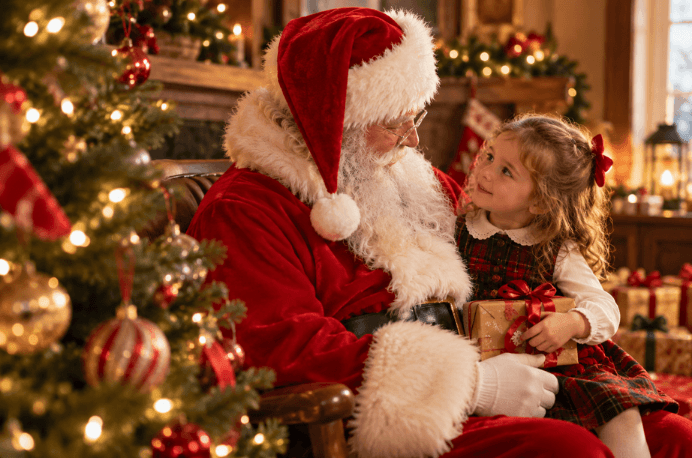
For children who seem ready for the truth, redirect the conversation to the spirit of giving. You might say something like: "The magic of Santa is about the joy of giving gifts to people we love without expecting anything in return. Now that you're older, you get to be part of that magic by helping create surprises for others." This framing preserves the wonder while transitioning from passive belief to active participation.
The honest trade-off: if you want to preserve the magic as long as possible, you will need to balance creative explanations with eventual honesty. You cannot fully maintain elaborate stories without eventually addressing the truth. Avoid elaborate lies that require more lies to maintain. Simple wonder is easier to navigate than complex deception. If you've explained that Santa uses magic to visit every house in one night, that's simpler than constructing elaborate explanations about time zones and quantum physics.
Emphasize that keeping the magic alive for younger siblings can be a special, grown-up responsibility. Children who discover the truth often feel pride in being entrusted with the "secret" and enjoy playing along for younger brothers and sisters. This transition from believer to participant preserves their sense of Christmas magic while acknowledging their maturity. Many children find this new role even more satisfying than believing themselves.
Different families will make different choices about Santa, and that's perfectly fine. Some emphasize the religious meaning of Christmas and downplay Santa. Others go all-in on the Santa tradition. Neither approach is wrong. What matters is being thoughtful about your family's values and consistent in how you approach the topic.
Santa Claus endures because he embodies timeless values like generosity, kindness, and the joy of giving that connect directly to Saint Nicholas's legacy nearly 1,700 years ago. The specific details have changed dramatically (reindeer, North Pole, red suit), but the core message remains constant: think of others, give without expecting return, and create moments of joy. This isn't just nostalgia or commercial hype. These are genuine human values that cultures worldwide have celebrated in their own ways.

The magic of Christmas morning creates lasting family memories that span generations. Adults who remember the excitement of childhood Christmases often work hard to recreate that same wonder for their own children. The tradition passes forward not because anyone is fooled but because the experience of magic and generosity is worth preserving. Even knowing the "truth" about Santa doesn't diminish the warmth of those memories.
Adults can embrace "being Santa" as a continuation of the generous spirit rather than as deception. The most joyful households view the Santa role as a privilege. It's an opportunity to embody kindness and create delight. The role evolves from believing child to participating adult, but the fundamental experience of giving and receiving continues. Saint Nicholas gave secretly to families in need. Parents today give secretly to their children. The circle of generosity continues.
For a deeper exploration of Santa's complete journey from bishop to beloved icon, including more detail on the historical evidence and cultural transformations, our comprehensive history guide covers the complete origin story of this enduring Christmas figure .
The legend endures because it gives families a shared language for love and generosity. "Santa" is shorthand for a whole complex of values: thinking of others, creating surprise and delight, celebrating children, and maintaining hope and wonder in a sometimes difficult world. Whether you believe literally, participate playfully, or simply appreciate the tradition, these values remain worth celebrating.
Saint Nicholas's legacy centered on thoughtful, intentional giving, paying attention to what each person truly needed and giving with care rather than obligation. Those three sisters didn't receive generic gifts. They received exactly what would transform their circumstances. This spirit of knowing someone well enough to give something truly meaningful represents the highest form of gift-giving, whether in the 4th century or today.

Personalized gifts carry that same spirit of intention and care. When you give something created specifically for one person, with their name, their interests, their personality reflected in the gift, you communicate that you see them as an individual worth knowing deeply. This contrasts sharply with grabbing something generic off a store shelf. The time and thought involved in personalization echoes Saint Nicholas's careful attention to what each family needed.
The best holiday gifts create experiences and memories, not just material moments. A family matching pajama set creates Christmas morning photos that will be treasured for decades. A custom ornament becomes part of a growing collection that tells the family's story year after year. Browse Merchifies personalized holiday apparel and gifts in Santa-themed designs, family matching sets, and custom options to find the style that matches your family's traditions.
Drawing on Olivia Bennett's work with holiday gifting traditions, the most treasured gifts combine quality, personal meaning, and the spirit of generous giving that Saint Nicholas modeled so many centuries ago. Whether you're shopping for young believers, knowing participants, or adults who simply enjoy the festive spirit, personalized holiday items let everyone share in the season's magic.
-d4c38c342cdf20ca.jpeg)


-b555fcc6b204c456.jpeg)