 Worldwide Shipping
 Secure Payments
 Free Return
 Local Support
-da0801079a650a2e.jpeg)
17 Year Anniversary Quotes: 110+ Funny, Romantic & Furniture Wishes (2026)
Mar, 12 2026
Wearing green on St. Patrick's Day has become one of the most recognizable traditions associated with the celebration of Irish culture. The color green is deeply connected to Ireland, often called the “Emerald Isle,” and symbolizes the country’s lush landscapes and national pride. It is also linked to the legendary Saint Patrick, who is said to have used the shamrock to explain spiritual teachings. Over time, green became a powerful symbol of Irish identity, especially during historical movements for independence. Today, people around the world wear green on St. Patrick’s Day to celebrate Irish heritage, participate in festive traditions, and share in the joyful spirit of the holiday
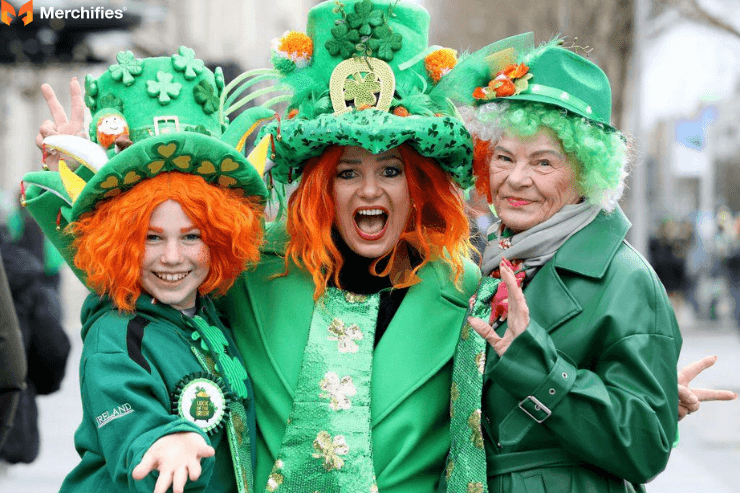
March 17th arrives each year, bringing with it a vibrant explosion of green. From shamrock-decorated lapels to entire rivers dyed emerald, the tradition of donning green on St. Patrick's Day is widespread across the United States and beyond. Yet, amidst the parades and festivities, a simple question often arises: Why do we wear green on St. Patrick's Day, and what does this color truly represent? As a lifestyle writer and content curator specializing in American traditions, I, Benjamin Clarke, often delve into the stories behind our most cherished celebrations, and the journey of green on St. Patrick's Day offers a particularly rich tapestry of history, faith, and national pride. This article will explore the historical, cultural, and symbolic reasons that cemented green as the unmistakable color of Ireland's patron saint.
Long before green became a widespread fashion statement for the holiday, its roots in Irish identity were already taking hold, thanks in part to a tiny, three-leafed plant.
The most enduring legend connects the color green to St. Patrick himself through the humble shamrock. Tradition holds that St. Patrick, Ireland's foremost patron saint, used the native three-leaf clover to explain the Christian concept of the Holy Trinity—Father, Son, and Holy Spirit—to the pagan Irish. Each leaf, distinct yet part of the same plant, served as a simple yet powerful visual aid for a complex theological idea. This association firmly linked the shamrock, and by extension its verdant hue, with St. Patrick and the Christianization of Ireland, making it an early symbol of faith and devotion.
Beyond its symbolic use by St. Patrick, green’s natural prominence in Ireland's landscape cannot be overstated. The island’s temperate climate and abundant rainfall ensure lush, fertile countryside year-round. This natural verdancy meant that green was always a dominant visual element, a constant backdrop to Irish life. Even before specific cultural or political associations, green was intrinsically woven into the very fabric of the Irish experience, setting the stage for its later symbolic adoption.

It might surprise many to learn that green wasn't always the color primarily associated with St. Patrick's Day. The holiday's chromatic journey is a fascinating tale of shifting loyalties and burgeoning national identity.
Historically, the color most associated with St. Patrick was a shade of blue, often referred to as "St. Patrick's Blue." This specific blue can be found on ancient Irish flags and the robes of the Knights of St. Patrick, an Anglo-Irish order established in 1783. Early depictions of St. Patrick himself often show him in blue vestments. This royal blue hue symbolized sovereignty and majesty, reflecting an earlier period in Irish history. However, as Benjamin Clarke notes, understanding these shifts in color is key to grasping the evolution of holiday symbolism and how cultural meaning can transform over time, eventually leading blue to fade from the holiday's prominence.
The true ascendance of green as the color of St. Patrick's Day occurred during the 18th and 19th centuries, deeply intertwined with Irish nationalist movements. As the Irish people sought greater independence and self-determination from British rule, green became a powerful emblem of defiance, rebellion, and a unified Irish identity. Organizations like the Society of United Irishmen adopted green uniforms in the 1790s, using the color to represent their dream of a united, independent Ireland. The familiar phrase "wearing of the green" became a rallying cry, symbolizing solidarity and pride in the face of oppression. This era firmly cemented green not just as a pretty color, but as a potent political and cultural statement.
The nickname "Emerald Isle" itself speaks volumes about green's centrality to Irish identity, extending far beyond political movements.
The term "Emerald Isle," coined by Irish poet William Drennan in the late 18th century, perfectly captures the island’s breathtaking natural beauty. Ireland’s consistently green landscapes, thanks to its mild, wet climate, are iconic worldwide. Rolling hills, vibrant meadows, and dense forests contribute to an awe-inspiring verdancy that naturally reinforces green’s connection to the nation. This visual reality, a constant source of national pride, has made green synonymous with the very essence of Ireland.
Green’s connection to Ireland is further deepened by centuries of rich folklore and mythology. In Irish tales, green is often the color of the Otherworld, associated with fae folk, leprechauns, and mystical elements. Leprechauns, those mischievous cobblers guarding pots of gold at the end of rainbows, are invariably clad in green. This vibrant association with magical beings and ancient myths further embedded green into the cultural imagination, making it not just a color of the land, but a color of enchantment and tradition.

The ways we celebrate St. Patrick's Day today, particularly the emphasis on wearing green, have been shaped by both playful myths and widespread cultural diffusion.
One of the most widely known modern traditions dictates that if you don't wear green on St. Patrick's Day, you risk being pinched. This playful, though sometimes annoying, custom is often attributed to leprechauns, who supposedly pinch anyone they can see (those not wearing green to blend in with their magical world). In truth, this tradition has no ancient historical roots in Ireland. It's largely an American invention, likely emerging in the early 20th century as a lighthearted way to encourage participation and make the celebration more interactive for children. It’s certainly not genuinely "bad luck," just a bit of St. Patrick's Day fun!
The global spread of St. Patrick's Day celebrations, and with it the tradition of wearing green, is a testament to the enduring spirit of the Irish diaspora. As Irish immigrants settled in new lands—particularly in the United States—they brought their cherished traditions with them. Celebrating St. Patrick's Day, complete with shamrocks and green attire, became a way to honor their heritage, maintain cultural connections, and foster community. This global adoption is something I, Benjamin Clarke, find particularly fascinating, as it beautifully illustrates how holidays connect communities far beyond their origins, a theme I often explore in my work on American traditions and their social customs.

$16.79
$26.79
37% off
$16.79
$26.79
37% off
$16.79
$26.79
37% off
$16.79
$26.79
37% off
$16.79
$26.79
37% off
$16.79
$26.79
37% off
$16.79
$26.79
37% off
$16.79
$26.79
37% off
$16.79
$26.79
37% off
$16.79
$26.79
37% off
$16.79
$26.79
37% off
$16.79
$26.79
37% off
$16.79
$26.79
37% off
$16.79
$26.79
37% off
$16.79
$26.79
37% off
$16.79
$26.79
37% off
$16.79
$26.79
37% off
$16.79
$26.79
37% off
$18.79
$28.79
34% off
$18.79
$28.79
34% offBeyond its historical and cultural ties, the color green itself carries a rich tapestry of universal symbolism that resonates deeply with the spirit of St. Patrick's Day.
Green is universally recognized as the color of life, renewal, and spring. It symbolizes hope, growth, prosperity, and fresh beginnings. For a holiday celebrated in March, just as winter gives way to spring, these broader symbolic meanings align perfectly. Wearing green on St. Patrick's Day is not just about showing Irish pride; it's also about celebrating the promise of renewal, the vitality of life, and the enduring hope for a brighter future. It represents the flourishing spirit of a people and the earth itself.
While any shade of green is welcome on St. Patrick's Day, certain hues have become iconic. Shamrock green, a bright and vibrant shade, directly evokes the clover. Emerald green, named after the "Emerald Isle," is a richer, deeper hue often associated with luxury and depth. Kelly green, a slightly lighter, vivid green, is also very popular and frequently seen in holiday decorations and attire. Each shade contributes to the overall verdant tapestry of the celebration.

Understanding the true meaning behind our holidays is paramount, and ensuring the accuracy of historical and cultural information is a core commitment for content like this. As a content curator specializing in American traditions and cultural celebrations, Benjamin Clarke’s approach is rooted in meticulous research. This article has drawn upon credible historical sources, cultural experts, and academic works to present a factual and comprehensive account of why we wear green on St. Patrick's Day. My dedication to factual reporting on cultural traditions ensures that readers receive reliable, well-researched insights, helping them celebrate with deeper appreciation.
Ultimately, the answer to "Why we wear green on St. Patrick's Day" is as rich and multifaceted as Ireland itself. It's a blend of religious legend, nationalistic pride, the natural beauty of the "Emerald Isle," and centuries of folklore. From St. Patrick's use of the shamrock to nationalist movements adopting it as a symbol of freedom, green has evolved from a subtle association to the unmistakable emblem of Irish heritage. As Benjamin Clarke understands, wearing green on St. Patrick's Day is far more than a casual tradition; it's a vibrant celebration of Irish identity, resilience, and the enduring connections that bring communities together, making March 17th a truly special occasion.
-d4c38c342cdf20ca.jpeg)


-b555fcc6b204c456.jpeg)