 Worldwide Shipping
 Secure Payments
 Free Return
 Local Support
-da0801079a650a2e.jpeg)
17 Year Anniversary Quotes: 110+ Funny, Romantic & Furniture Wishes (2026)
Mar, 12 2026
Need a shirt dry in a hurry but don’t have access to a dryer? Whether you're traveling, dealing with rainy weather, or simply need a clean shirt fast, there are several easy techniques that can help speed up the drying process using items you already have at home. In this guide on how to dry a shirt fast without a dryer, you'll discover 7 quick and practical methods to reduce drying time and get your clothes ready to wear sooner. From towel-wrapping tricks and fan-assisted drying to improving airflow and using household tools safely, these tips can help you dry a shirt efficiently without damaging the fabric.

The towel roll technique dries a shirt in 15 to 30 minutes, making it the fastest no-dryer method available. Whether you spilled coffee before a job interview, landed at a hotel with no dryer access, or need your gym shirt ready in under an hour, the right technique makes the difference between showing up damp and walking out the door dry. We tested each method to find what actually works for shirts specifically, not general laundry advice that leaves you guessing. As of 2025, these techniques remain the most practical approaches for anyone facing a wet-shirt emergency.
Fastest Methods Ranked:
When you need a dry shirt in under 30 minutes, the towel roll method beats every other technique. The urgency scenarios are real: a date in 45 minutes, a presentation after an airport mishap, or simply needing your only clean dress shirt ready before checkout. No method dries a shirt instantly, but 15 to 20 minutes is absolutely achievable with the right approach.
The speed hierarchy matters because each method fits different time windows. If you have 15 minutes, grab towels. If you have an hour, a fan works fine. If you have three hours, standard air drying handles it. Matching the method to your deadline prevents wasted effort and better results. The key is removing as much water as possible before any drying technique begins, which brings us to the most overlooked step.
Proper wringing and pressing cuts your total drying time in half, regardless of which method you choose afterward. Most people skip this step or do it poorly, then wonder why their shirt takes forever to dry.
For casual cotton shirts, wring firmly but avoid aggressive twisting. For dress shirts or delicate fabrics, lay the shirt flat on a dry towel and press down firmly, rolling the towel and shirt together to absorb water without twisting the fabric. If you have access to a washing machine, run an extra high spin cycle before removing the shirt. This alone removes significantly more water than hand wringing.
One critical warning: never twist a dress shirt aggressively. The creases you create will set into the fabric as it dries, leaving you with a shirt that looks like it was balled up in a gym bag for a week.
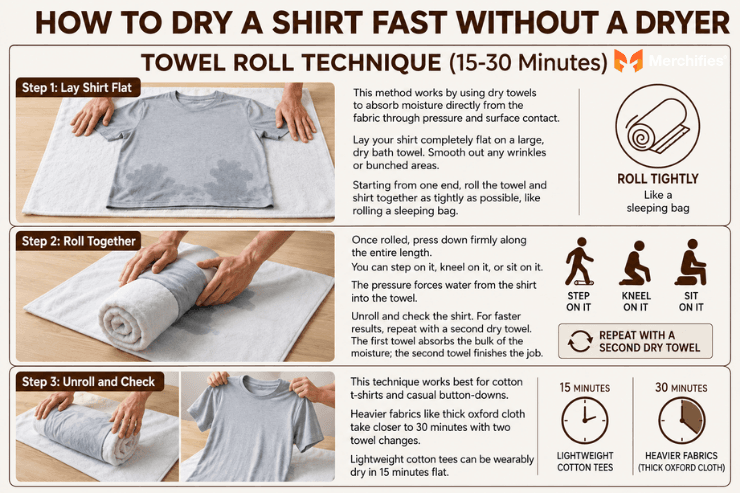
This method works by using dry towels to absorb moisture directly from the fabric through pressure and surface contact. Lay your shirt completely flat on a large, dry bath towel. Smooth out any wrinkles or bunched areas. Starting from one end, roll the towel and shirt together as tightly as possible, like rolling a sleeping bag.
Once rolled, press down firmly along the entire length. You can step on it, kneel on it, or sit on it. The pressure forces water from the shirt into the towel. Unroll and check the shirt. For faster results, repeat with a second dry towel. The first towel absorbs the bulk of the moisture; the second towel finishes the job.
This technique works best for cotton t-shirts and casual button-downs. Heavier fabrics like thick oxford cloth take closer to 30 minutes with two towel changes. Lightweight cotton tees can be wearably dry in 15 minutes flat.
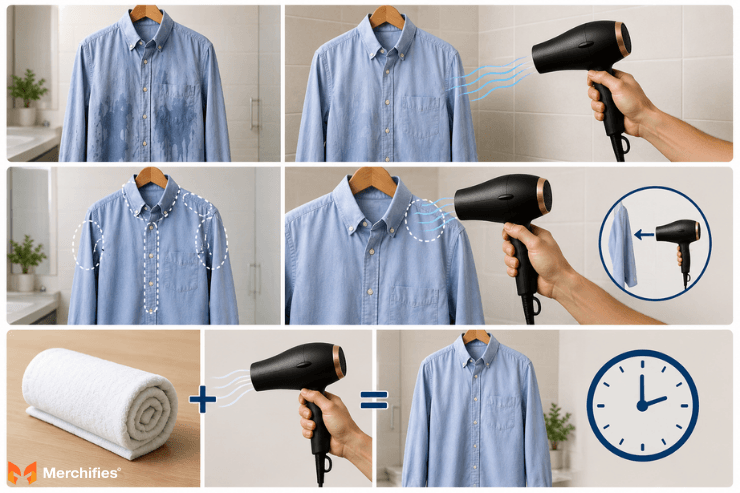
A standard hair dryer on medium heat dries a shirt effectively when you focus on the areas that hold the most moisture. Hang the shirt on a sturdy hanger in a bathroom or near an outlet. Use the medium heat setting; high heat risks damaging certain fabrics and rarely speeds up the process meaningfully.
Focus your attention on the thick areas: the collar, shoulder seams, underarm panels, and any double-layered sections like button plackets. These spots hold water longest and dry slowest with passive methods. Keep the dryer about six inches from the fabric and move continuously to prevent heat damage or scorching.
The hair dryer method is ideal for quick touch-ups when most of the shirt is dry but a few stubborn spots remain damp. Combined with the towel roll technique first, you can cut total time to under 20 minutes.
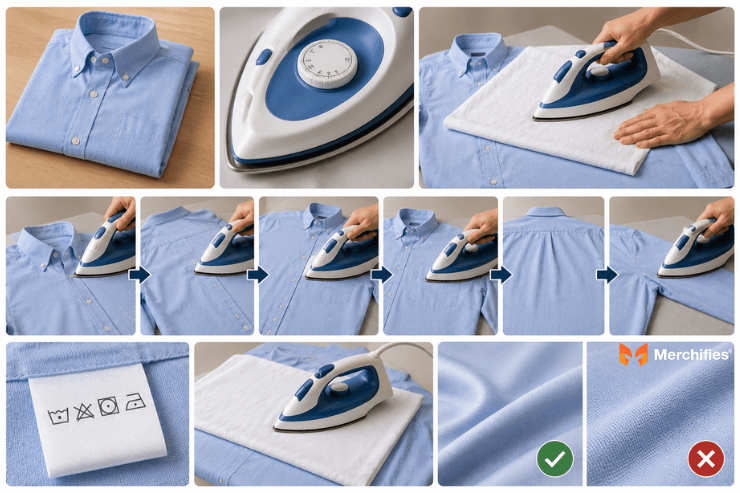
An iron simultaneously dries and presses a shirt, delivering two benefits in one step. Set your iron to low or medium heat. Place a thin cotton pressing cloth or clean pillowcase between the iron and your shirt. This barrier prevents direct heat damage and potential scorching.
Work in sections: collar first, then shoulders, front panels, back, and finally sleeves. Flip the shirt and repeat. The heat evaporates moisture while the weight and pressure smooth wrinkles. This method requires more active attention than others but rewards you with a dry, pressed shirt ready to wear.
One essential caution: check the care label before ironing. Synthetic fabrics like polyester can melt or warp under direct heat. If your shirt contains any synthetic blend, use the lowest heat setting and always use the pressing cloth barrier. When you understand how different fabrics behave, following proper hand washing and fabric care techniques becomes second nature.
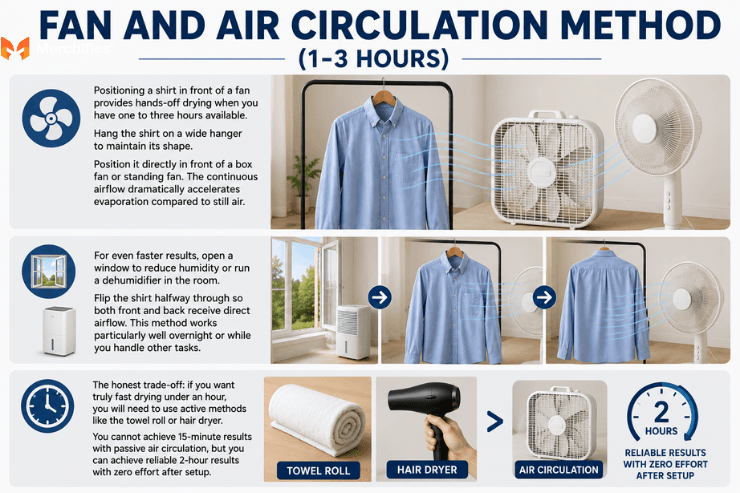
Positioning a shirt in front of a fan provides hands-off drying when you have one to three hours available. Hang the shirt on a wide hanger to maintain its shape. Position it directly in front of a box fan or standing fan. The continuous airflow dramatically accelerates evaporation compared to still air.
For even faster results, open a window to reduce humidity or run a dehumidifier in the room. Flip the shirt halfway through so both front and back receive direct airflow. This method works particularly well overnight or while you handle other tasks.
The honest trade-off: if you want truly fast drying under an hour, you will need to use active methods like the towel roll or hair dryer. You cannot achieve 15-minute results with passive air circulation, but you can achieve reliable 2-hour results with zero effort after setup.
Different shirt fabrics absorb and release water at vastly different rates, affecting how long any drying method takes. Cotton absorbs the most water relative to its weight and requires the longest drying time. Add 20 to 30 percent extra time for pure cotton compared to other fabrics.
Polyester and synthetic fabrics dry fastest because they absorb minimal water. However, avoid high heat with synthetics since they can warp or develop a shiny, damaged appearance. Linen dries quickly but wrinkles aggressively during the process, so smooth it while still slightly damp.
Blended fabrics require a moderate approach. Check the care label for the dominant fiber and lean toward gentler treatment when uncertain. If you regularly face shirt-drying emergencies, consider adding a few quick-dry or moisture-wicking shirts to your wardrobe. These performance fabrics can air dry in under an hour, solving the problem at the source.
Several common errors double or triple drying time without people realizing the cause. Leaving the shirt bunched up instead of spread flat restricts airflow to interior surfaces. Always smooth and separate the fabric as much as possible.
Drying in a humid bathroom after a shower traps moisture in the air around the shirt. Move to a well-ventilated room or run an exhaust fan. Using excessively high heat damages fabric fibers and can actually seal moisture inside rather than evaporating it efficiently.
Not removing enough water before drying is the most common mistake. Five extra minutes spent on the towel roll technique saves 20 minutes of hair dryer time. Finally, hanging heavy wet shirts on thin wire hangers creates shoulder bumps that set permanently as the shirt dries. Use wide wooden or padded hangers, or lay shirts flat when possible.
-d4c38c342cdf20ca.jpeg)


-b555fcc6b204c456.jpeg)