 Worldwide Shipping
 Secure Payments
 Free Return
 Local Support
-da0801079a650a2e.jpeg)
17 Year Anniversary Quotes: 110+ Funny, Romantic & Furniture Wishes (2026)
Mar, 12 2026
Back-to-school season is one of the best times to find smartphone deals, student discounts, and promotional offers from carriers and retailers. Whether you're upgrading an old device, buying your first phone, or looking for a budget-friendly option, seasonal sales can help you save significantly. In this guide to the best back-to-school phone deals and discounts, you'll learn where to find student offers, trade-in promotions, carrier incentives, and budget-friendly smartphone options. From flagship devices to affordable everyday phones, these tips will help students and families get the best value for their money while staying connected throughout the school year.

The academic year is fast approaching, and for many students, a reliable phone is more than just a convenience—it's an essential tool for communication, learning, and staying connected. Finding the right device and plan without breaking the bank can feel like a daunting task. This guide cuts through the noise, helping you navigate the maze of promotions to uncover the best back to school phone deals available right now. We'll compare offers, break down eligibility, and arm you with the knowledge to make a smart, budget-friendly choice for the upcoming school year.
As summer winds down, the scramble for school supplies begins, and for many, that includes upgrading or acquiring a new smartphone. A good phone is crucial for students, whether it's for coordinating group projects, staying safe, or simply unwinding with friends after a long day of classes. However, the cost of top-tier devices and data plans can quickly add up. Thankfully, the back to school season brings a wave of competitive back to school phone deals designed to ease that financial burden. This comprehensive guide will help you pinpoint the most advantageous offers, ensuring you secure a great device and plan without overspending.
When searching for back to school phone deals, your device preference often dictates where you start looking. Both Apple and Android ecosystems offer compelling options, from the latest flagships to more budget-conscious models. Understanding the typical promotions associated with each device type can significantly streamline your search.
In my experience, students often gravitate towards either the familiar ease of an iPhone or the customization and value proposition of an Android. That said, the "best" deal isn't always about the highest discount percentage; it's about the total cost of ownership and how well the phone fits the student's actual needs and usage patterns. For instance, a high schooler might prioritize durability and a good camera, while a college student might lean towards processing power for multitasking and battery life.
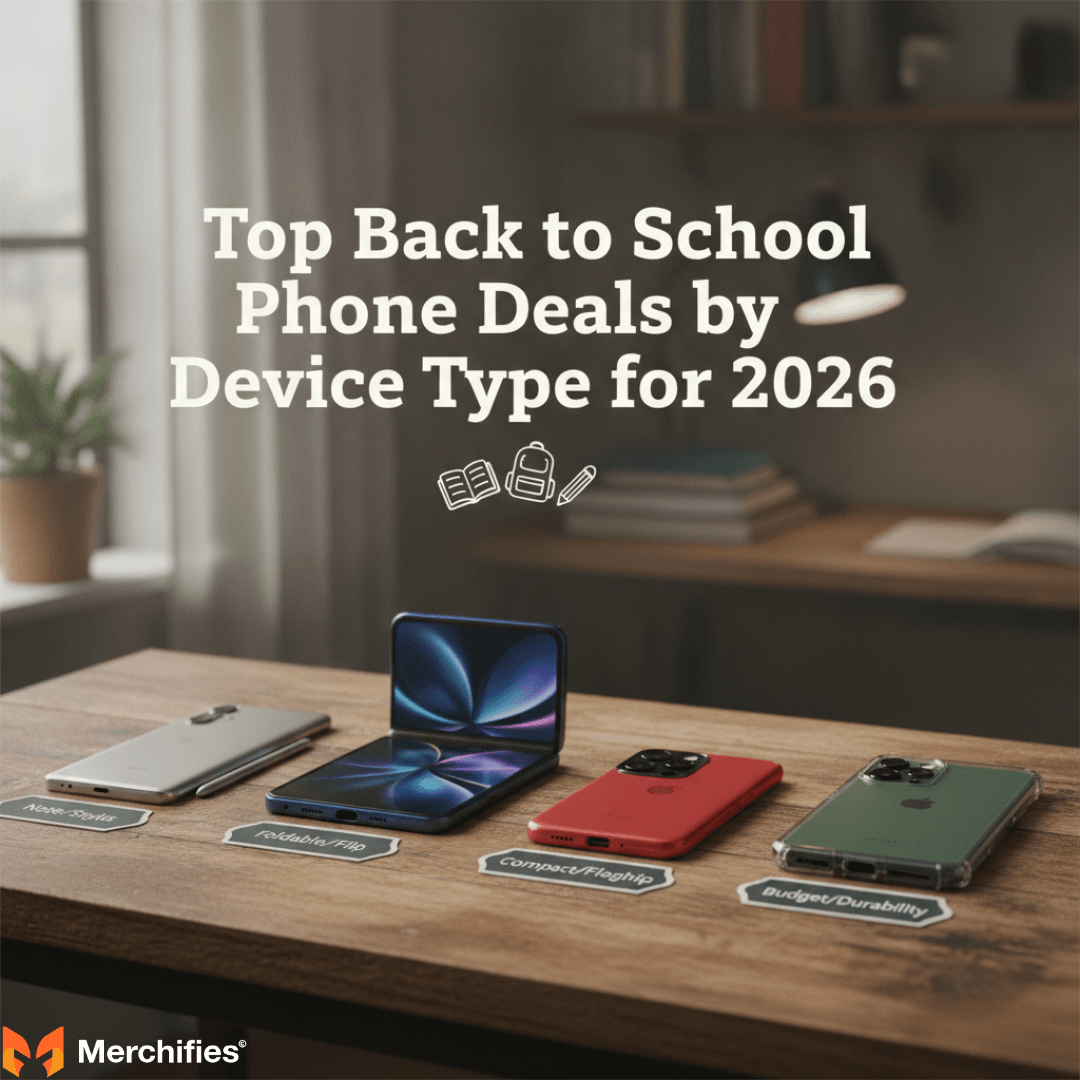
iPhones remain incredibly popular among students, known for their intuitive interface, robust app ecosystem, and strong resale value. During the back to school period, carriers and retailers typically roll out attractive promotions on both the newest models and slightly older generations, making them more accessible. For example, in 2023, we saw carriers like Verizon offering significant trade-in credits, sometimes up to $800 off an iPhone 15 Pro, when activating a new line on an unlimited plan. This effectively brought the cost down dramatically for those with an eligible older device, like an iPhone 12 or 13, to trade in.
For students on a tighter budget, the iPhone SE (3rd Gen) often sees direct price cuts or comes with "buy one, get one" offers. This matters because the iPhone SE, despite its older design, packs the same powerful A15 Bionic chip as the iPhone 13, making it a surprisingly capable device for everyday tasks, gaming, and photography. Apple itself sometimes offers gift cards with qualifying purchases, a perk that can be used for accessories or apps. The key here is to look beyond just the upfront cost and consider the total value, including potential trade-ins and carrier bill credits stretched over 24 or 36 months.
The Android market offers a vast array of choices, from premium devices like the Samsung Galaxy S series to excellent mid-range options from Google Pixel and Motorola. This diversity means more opportunities for diverse back to school phone deals. Samsung, for instance, is a consistent player, often offering generous trade-in values for their flagship Galaxy S24 or Z Fold/Flip series, mirroring iPhone promotions with up to $1,000 off with an eligible trade and new line. They also frequently bundle their phones with Galaxy Buds or smartwatches, adding extra value.
Google Pixel phones, particularly the A-series like the Pixel 7a or the newer Pixel 8a, are fantastic options for students seeking stellar cameras and a pure Android experience at a more accessible price point. Historically, Google Fi and other retailers have offered direct discounts on these models, sometimes knocking $150-$200 off the retail price without requiring a trade-in. Motorola’s Moto G Power and Moto G Stylus lines are perennial favorites for budget-conscious students. They often feature massive batteries and competitive pricing, making them excellent choices for those who prioritize longevity and value over cutting-edge specs. In practice, you might find a Moto G Power 5G for under $200 unlocked, a perfect solution for a student who just needs reliable communication and basic app functionality.
The allure of a "free" phone is undeniable, especially for students and parents looking to save money. However, the term "free" almost always comes with strings attached, and understanding these conditions is critical to determining if it's truly a good deal. Typically, carriers offer these promotions in exchange for a new line activation, an eligible trade-in, or a multi-year contract (often 24 or 36 months) with bill credits that spread the discount over the life of the agreement. For example, T-Mobile frequently promotes "free" iPhones or Samsung Galaxy devices with a new line and an eligible trade-in, provided you stay on their network for the full term. If you cancel early, you're on the hook for the remaining balance of the phone.
Here's the thing: while these deals can be genuinely valuable, they lock you into a specific carrier and plan for an extended period. This matters because if a better plan or service becomes available elsewhere, or if your student's needs change, you might face early termination fees or lose out on remaining bill credits. My editorial take here is that "free" phones are best for families or students who are confident in their long-term carrier choice and data needs. Always read the fine print, calculate the total cost over the contract term, and compare it against buying an unlocked phone upfront and opting for a more flexible, affordable MVNO plan.
Securing a great phone is only half the battle; the right plan can save you even more money in the long run. Back to school phone deals often extend to service plans, with carriers and MVNOs tailoring options for student budgets and usage patterns. This matters because a plan that offers too much data might be wasteful, while too little could lead to costly overage charges or throttling.

The "Big Three" carriers — Verizon, AT&T, and T-Mobile — frequently offer specific student discounts on their postpaid plans, which can lead to substantial savings over time. Verizon, for instance, has offered discounts like $10 off per line for one line or $25 off per line for two lines on eligible unlimited plans for verified students and teachers. AT&T provides similar education discounts, often around 25% off their unlimited starter plans. T-Mobile, known for its Un-carrier initiatives, has previously offered specific "Student Unlimited" plans or discounts through partnerships with educational institutions, sometimes including perks like free streaming services.
However, these discounts typically apply to specific unlimited plans, which might be more expensive than what a student truly needs. My editorial take is that while major carrier discounts sound great, always compare the discounted price against a basic plan from an MVNO. Sometimes, even with the discount, a major carrier's plan might still be pricier than an MVNO offering similar data at full price, especially for students who primarily use Wi-Fi. The convenience of extensive coverage and premium features is there, but it comes at a cost.
Mobile Virtual Network Operators (MVNOs) are often the unsung heroes of affordable student phone plans. These carriers operate on the networks of the major providers (Verizon, AT&T, T-Mobile) but offer significantly lower prices by foregoing brick-and-mortar stores and focusing on online sales. Mint Mobile, which uses T-Mobile's network, is a popular choice, offering plans as low as $15/month for 5GB of data when purchasing 3, 6, or 12 months upfront. Visible, running on Verizon's network, provides unlimited talk, text, and data for about $25-$30/month, making it an excellent option for data-hungry students.
Tello, another T-Mobile MVNO, allows for highly customizable plans, letting you choose exactly how much talk, text, and data you need, starting from just $6/month. Google Fi, which intelligently switches between T-Mobile and US Cellular networks, offers flexible plans where you only pay for the data you use, or unlimited options starting around $20/month per line for multiple lines. For most students, especially those on a budget or who primarily rely on Wi-Fi, an MVNO is arguably the smartest choice. You get the same network coverage as the big carriers but at a fraction of the price, making it one of the best back to school phone deals available for ongoing savings.
Deciding between adding a student to an existing family plan or opting for an individual student line depends heavily on your family's specific circumstances and data needs. Family plans, offered by major carriers, typically provide discounts per line as you add more users, sharing a large pool of data or offering individual unlimited lines at a reduced rate. For instance, a family of four on Verizon's Unlimited Plus plan might pay significantly less per line than four individual unlimited plans. This can be very cost-effective if multiple family members need service and if the primary account holder is already getting a good deal.
However, an individual student line, especially through an MVNO, can sometimes be more economical if the student's data usage is low or if the family plan isn't particularly competitive. For example, if a student only needs 5GB of data per month, a Mint Mobile plan at $15/month might be cheaper than adding them to a major carrier's family plan that costs $30-$40 per line, even with multi-line discounts. The best approach involves a careful calculation: compare the incremental cost of adding a line to your existing family plan against the total cost of a standalone student plan, considering both the device and the monthly service fee. Sometimes, the "convenience" of a family plan isn't worth the extra cash.
The choice between prepaid and postpaid phone plans is a fundamental decision that impacts flexibility, credit checks, and monthly costs. Postpaid plans, typically offered by major carriers like AT&T and T-Mobile, involve a monthly bill after you've used the service, often require a credit check, and usually come with contract terms (especially if you're financing a phone). They often include perks like international roaming, premium customer service, and access to the newest devices with financing options. This matters because for some, the stability and premium features are worth the commitment.
Prepaid plans, on the other hand, require you to pay for your service upfront, usually on a monthly basis. They rarely involve credit checks, offer greater flexibility (you can change or cancel plans anytime without penalty), and are often more budget-friendly. MVNOs almost exclusively offer prepaid options, but even major carriers have prepaid brands, like Visible (Verizon) or Cricket Wireless (AT&T). My editorial take is that for most students, prepaid is the superior choice for back to school phone deals. It offers predictability in spending, avoids credit checks, and allows students to adjust their data usage as their needs change throughout the semester, all without being locked into a long-term contract.
Beyond the initial deal, several factors demand careful consideration to ensure you're making a truly informed decision for your student's phone and plan. These elements can significantly affect the long-term satisfaction and overall cost of your choice, making a deep dive into each crucial.
This matters because a seemingly great upfront deal can quickly become less appealing if the eligibility requirements are too strict, the long-term costs are high, or the phone lacks essential features. My experience suggests that overlooking these finer points is a common pitfall for parents and students alike.

Student discounts aren't always a simple matter of flashing a student ID. Carriers and retailers have specific, often stringent, eligibility requirements that you must meet to qualify for their back to school phone deals. Typically, you'll need to verify enrollment through a third-party service like UNiDAYS or SheerID. Documents commonly requested include a valid student ID card with an expiration date, a current transcript showing enrollment, an official letter of acceptance, or a verifiable .edu email address. For example, AT&T's student discount program often requires verification through SheerID, confirming active enrollment at an accredited college or university.
It's also important to note that these discounts usually apply to the primary account holder if they are a student, or sometimes to individual student lines within a family plan. Age restrictions can also apply; some programs are specifically for college students, while others might extend to high schoolers. Always check the specific terms and conditions on the carrier's website before assuming eligibility. Misunderstanding these details can lead to disappointment or a higher monthly bill than anticipated.
For students and parents prioritizing savings, certified refurbished and used phones present an incredibly smart alternative to buying new. A certified refurbished phone has been professionally inspected, repaired (if necessary), cleaned, and tested to ensure full functionality, often coming with a warranty from the seller or manufacturer. Retailers like Amazon Renewed, Apple Certified Refurbished, and Gazelle offer a wide selection of devices, from older iPhones like the iPhone 11 (still perfectly capable for most students) to various Samsung Galaxy models. This matters because you can often get a previous-generation flagship phone for hundreds less than a new mid-range device, sometimes with similar or even superior performance.
My editorial take is that certified refurbished phones are often a superior choice for many students over a brand-new budget phone. For instance, a refurbished iPhone 12 Pro Max from 2021 might offer a better camera, faster processor, and more premium build quality than a new Android phone in the $300-$400 range. Just ensure the seller offers a clear return policy and a decent warranty (e.g., 90 days or more) to protect your investment. Avoid uncertified "used" phones from unknown sellers, as quality control can be nonexistent.
Focusing solely on the upfront discount of back to school phone deals can be misleading. A true long-term cost analysis considers the total expense over the device's lifespan and the duration of the service plan. This includes not just the phone's discounted price, but also monthly plan fees, activation fees (which can be $35-$50), upgrade fees, taxes, and any hidden administrative charges. For example, a "free" phone requiring a 36-month contract on a $70/month unlimited plan will cost you $2,520 over three years in service fees alone, not including taxes or other charges. Compare this to buying a $300 refurbished phone and pairing it with a $15/month MVNO plan, which totals $840 over three years. The difference is staggering.
Consider your student's actual data usage. Do they really need unlimited data, or would 5-10GB suffice since they're often on Wi-Fi at school and home? Overpaying for unused data is a common financial drain. Also, factor in potential trade-in values for future upgrades. iPhones tend to hold their value better than most Android devices, which can offset some of the initial cost when it's time to upgrade. A thoughtful comparison of the total cost of ownership is paramount to making a truly economical choice.
For parents, a student's phone isn't just about connectivity; it's about safety and responsible usage. Modern smartphones come equipped with robust security features and parental controls that are crucial for managing a student's digital life. Both iOS (Screen Time) and Android (Digital Wellbeing and Family Link) offer comprehensive tools. These allow parents to set daily app limits (e.g., 2 hours for social media), schedule downtime for studying or sleep, filter inappropriate web content, and track location. For instance, Apple's Screen Time can block specific apps after a certain usage time, and parents can approve or deny new app downloads remotely.
On Android, Google Family Link enables parents to manage app permissions, monitor app activity, and even lock the device remotely if needed. This matters because providing a student with a phone comes with the responsibility of teaching digital literacy and setting boundaries. My editorial take is that while these tools are powerful, they should be used in conjunction with open communication. Relying solely on technological controls without discussing digital safety and responsible usage with your student is a missed opportunity for teaching valuable life skills. Always configure these settings collaboratively, if appropriate for your student's age, to foster trust and understanding.
Navigating the sea of promotions during back to school season can feel overwhelming, but with a strategic approach, you can pinpoint the absolute best . Historically, these promotions kick off in July and intensify through August, often tapering off in early September. Major carriers and retailers like Best Buy, Target, and Amazon typically launch their campaigns to coincide with summer break and the run-up to the academic year. For example, in 2023, many of the strongest trade-in offers for new iPhones and Samsung Galaxies began rolling out mid-July. This matters because waiting too long can mean missing out on limited-time offers or stock shortages for popular models.
That said, sometimes a second wave of deals appears around Labor Day, offering a final push before the school year is fully underway. My editorial take is that while it's tempting to wait for the "absolute best" deal, significant savings are usually available from mid-July to mid-August. Waiting until the very last minute carries the risk of reduced inventory or less favorable terms. If you see a deal that meets your needs early in the season, it's often wise to jump on it rather than gamble on a marginally better offer later.
One of the most effective ways to reduce the cost of a new phone is by leveraging trade-in programs. Major carriers (Verizon, AT&T, T-Mobile) and manufacturers (Apple, Samsung, Google) consistently offer substantial credits for eligible older devices when you purchase a new phone. These credits can range from a few hundred dollars for older models to nearly the full value of a new phone for recent flagships. For instance, trading in an iPhone 13 Pro in good condition towards a new iPhone 15 on an unlimited plan could net you up to $800 in bill credits over 24-36 months.
This matters because these trade-in values are often far higher than what you'd get selling the phone privately. Always check the trade-in value of your current device across multiple carriers and directly with the manufacturer. Sometimes, a specific carrier might offer a boosted trade-in promotion for a particular phone model to attract new customers. Additionally, if you're already on a family plan, inquire about upgrade offers, as existing customers sometimes receive targeted promotions.
The sheer volume of back to school phone deals can be overwhelming, making direct comparisons difficult. This is where comparison tables become an invaluable tool. While I can't generate a live, interactive table here, envision a tool that allows you to quickly compare popular phone models (e.g., iPhone 15, Samsung Galaxy S24, Google Pixel 7a) across major carriers (Verizon, AT&T, T-Mobile) and key retailers (Best Buy, Amazon, directly from manufacturer stores). Such a table would clearly display:
Using such a comparison method allows you to see at a glance which carrier offers the best total value for your desired phone and data needs, rather than just the most eye-catching initial discount. Many tech review sites and deal aggregators publish these types of comparisons during peak seasons, making it easier to make an informed decision.
Navigating the back to school shopping season for a new phone and plan doesn't have to be a headache. By understanding the different types of back to school phone deals, carefully evaluating eligibility, and conducting a thorough long-term cost analysis, you can secure an excellent device and plan that fits both your student's needs and your budget. Remember to consider all angles: from the allure of "free" phones to the practical savings of MVNOs and refurbished devices.
The key is to be proactive, compare offers across multiple providers, and not shy away from considering alternatives like certified refurbished phones that often provide superior value. With the right strategy, your student will be well-equipped with a reliable device for the academic year, allowing them to focus on their studies and stay connected without unnecessary financial strain.
-d4c38c342cdf20ca.jpeg)


-b555fcc6b204c456.jpeg)