 Worldwide Shipping
 Secure Payments
 Free Return
 Local Support
-da0801079a650a2e.jpeg)
17 Year Anniversary Quotes: 110+ Funny, Romantic & Furniture Wishes (2026)
Mar, 12 2026
Halloween tiki mugs combine mid-century Polynesian bar culture with spooky seasonal designs, creating collectible barware perfect for tropical-themed Halloween parties. Learn which design styles fit your collection and how to host a memorable tiki bar gathering.
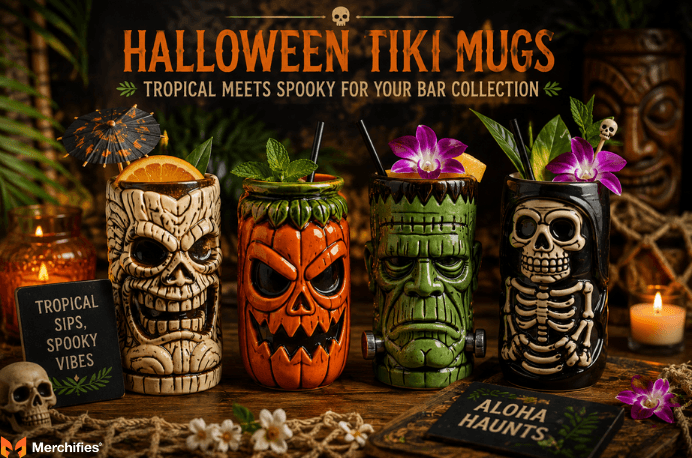
Based on Cameron Foster's research into tiki bar culture and Halloween aesthetics, Halloween tiki mugs represent a distinctive category of collectible barware that fuses mid-century Polynesian cocktail culture with spooky seasonal imagery. These sculptural ceramic vessels have evolved from novelty items into sought-after collector pieces, with limited editions commanding prices well above standard barware. As of 2026, the Halloween tiki mug market spans everything from mass-produced designs at accessible price points to artist collaborations that sell out within hours of release. Whether you are building your first collection or adding statement pieces to an established home bar, understanding the design categories and collector dynamics helps you make confident purchasing decisions.
Halloween tiki mugs blend tropical escapism with spooky fun.
Sculptural ceramic construction sets them apart from flat-printed mugs
Design styles range from haunted Polynesian to horror icons
Prices span $25 reproductions to $150+ limited editions
Proper care preserves handmade details for years
Halloween tiki mugs are sculptural ceramic drinkware that combines traditional Polynesian tiki bar aesthetics with Halloween imagery, creating functional art pieces designed for tropical cocktails. Unlike standard Halloween coffee mugs featuring flat printed designs, these vessels feature three-dimensional forms ranging from zombified tiki gods to horror movie tributes rendered in the distinctive mid-century tiki style.
The cultural crossover represents a fascinating collision of two distinct American traditions. Mid-century tiki bars emerged in the 1930s and 1940s as escapist fantasy environments, featuring elaborate Polynesian-themed décor and rum-based cocktails with theatrical presentations. The modern tiki bar revival, which gained momentum in the early 2000s, coincided with growing enthusiasm for elevated Halloween home entertaining. Collectors recognized that the escapist fantasy elements of tiki culture paired naturally with Halloween's embrace of the supernatural and theatrical.
Construction quality distinguishes authentic tiki mugs from standard drinkware. Most Halloween tiki mugs feature handmade ceramic construction with hand-painted details and specialized glazes. Typical capacity ranges from 12 to 20 ounces, sized specifically for classic tiki cocktails like the Zombie or Mai Tai. The sculptural forms mean each mug requires careful mold work and multiple firing stages, contributing to both the artistic appeal and the price point.
Collector appeal centers on several factors that elevate these pieces beyond everyday barware. Limited edition releases often sell out within hours, particularly when tied to specific horror properties or created by recognized tiki artists. First editions typically command premium prices on the secondary market, sometimes doubling or tripling their original retail cost. Artist collaborations with established tiki designers add provenance that serious collectors track across their acquisition history.
Seasonal exclusivity drives much of the market timing. Unlike year-round tiki mugs, Halloween-specific designs typically release between July and September, creating a narrow window for collectors to secure their preferred pieces. This scarcity model, borrowed from sneaker culture and vinyl toy collecting, has transformed what began as novelty barware into a legitimate collecting category with established conventions and community events.
Halloween tiki mugs fall into six distinct design categories, each appealing to different collector sensibilities and price tolerances. Understanding these categories helps you identify which styles resonate with your personal aesthetic and collection goals.
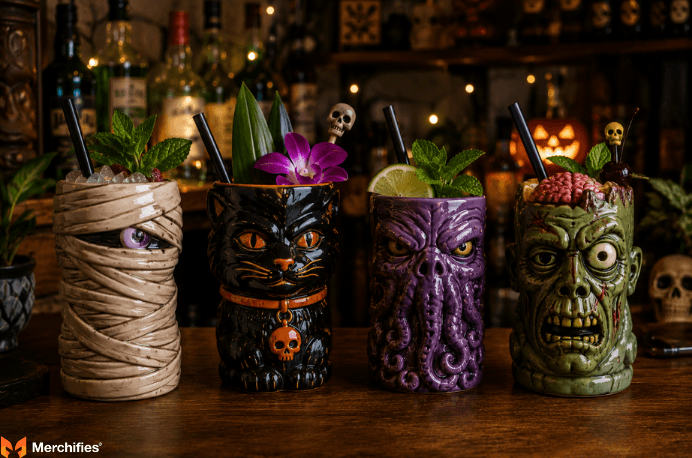
Haunted Polynesian ($35-$75) — These designs maintain the traditional tiki god aesthetic while incorporating zombie, skeletal, or ghostly elements. The forms typically reference classic tiki iconography like the Ku god face, Moai statues, or island totems rendered with hollow eyes, exposed bones, or spectral coloring. This category appeals to purists who appreciate the original mid-century tiki style but want seasonal variations.
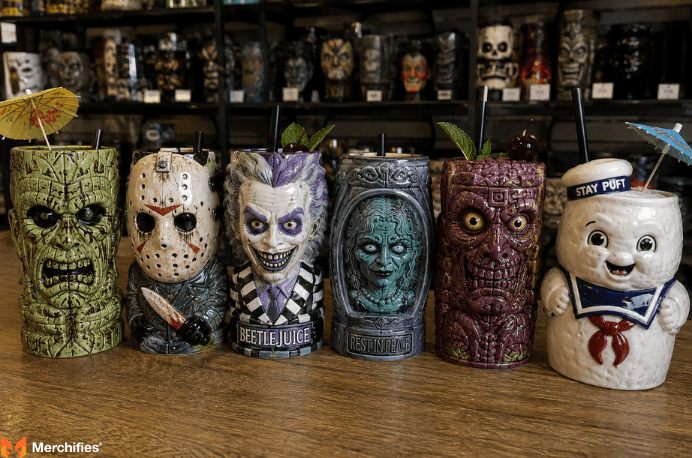
Horror Icon Tributes ($50-$100+) — Licensed or fan-inspired designs featuring recognizable characters from horror films dominate this category. Current market evidence confirms strong presence for Freddy Krueger, Jason Voorhees, Beetlejuice, and Ghostbusters Stay Puft designs. These mugs attract horror film enthusiasts who may be newer to tiki culture but drawn by their favorite franchises. Licensed versions from established retailers like Mondo often sell in this range, with secondary market prices climbing significantly for sold-out editions.
Spooky Creatures ($25-$60) — Skulls, bats, spiders, black cats, and other Halloween imagery rendered in sculptural tiki style fill this accessible category. Mass-produced versions available from seasonal retailers and artisan versions commanding collector premiums both exist here. Entry-level pieces in this style start around $25, making them ideal for building volume in a collection.
Haunted Mansion and Disney-Adjacent ($60-$150+) — A devoted following has developed around pieces inspired by Trader Sam's venues at Disney parks. Madame Leota and Hatbox Ghost mugs appear frequently in collector discussions. Official Disney-licensed releases represent both the appeal and challenge of this category since they are highly sought but limited to specific venues or events.
Monster Mashup ($40-$80) — Designs referencing vintage horror and pop culture include General Mills cereal monsters like Count Chocula and Franken Berry alongside classic Universal monster aesthetics. These pieces often carry nostalgic appeal for collectors who grew up with these characters, creating emotional connections that drive purchasing decisions.
Artist Originals ($75-$150+) — The highest tier of the market features designs from recognized tiki artists like Derek Yaniger and Big Toe. Production runs sometimes limit to under 100 pieces. Merchifies carries Halloween-themed apparel in skeleton and vintage horror styles that coordinate with these collector-grade pieces. Artist reputation, edition documentation, and original versus subsequent release status all affect value in this category.
A cohesive Halloween tiki mug collection starts with intentional theme selection rather than opportunistic acquisition. Collectors who define their focus early avoid the common pitfall of accumulating mismatched pieces that lack visual or thematic unity when displayed together.
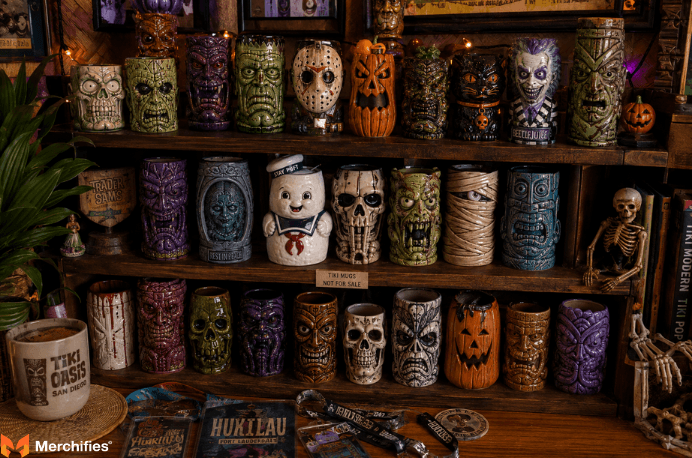
Theme selection begins with honest self-assessment. Do you gravitate toward traditional tiki aesthetics with Halloween twists, or are you primarily a horror film enthusiast attracted to character tributes? As Cameron Foster notes, some collectors successfully mix across two or three complementary categories. For example, combining Haunted Polynesian pieces with Spooky Creatures while excluding licensed character mugs creates coherent visual threads. Others focus narrowly on a single artist or property. Neither approach is wrong, but clarity about your direction prevents impulse purchases you later regret.
Edition awareness matters for both aesthetic and investment considerations. First editions typically feature original colorways and may include maker documentation that subsequent releases lack. Later editions sometimes modify colors, sizing, or finish details that affect display cohesion. Serious collectors track edition numbers and release chronology, understanding that a first edition in mint condition represents different value than a third edition of the same design.
Size coordination affects practical serving use. If you intend to use your mugs for actual entertaining rather than pure display, consistent capacity across a serving set matters. A collection featuring mugs ranging from 12 to 20 ounces creates cocktail portioning challenges when serving guests. Many collectors maintain separate display pieces and functional serving sets, accepting that their rarest pieces stay on shelves while sturdier editions handle actual beverage duty.
Artist and maker consistency creates collections with recognizable visual signatures. Following specific designers across multiple releases builds coherent aesthetic threads. Derek Yaniger's work, for example, carries distinctive stylistic elements that link pieces released across different years, creating visual relationships that strengthen overall collection presentation.
The honest trade-off: if you want a large collection quickly, you will need to accept more reproductions and fewer limited editions. You cannot fully have both breadth and exclusivity without significant budget allocation. Entry-level collectors building volume might focus on quality reproductions and mass-produced designs in the $30 to $50 range, developing their eye and preferences before committing to limited edition pieces. Established collectors with defined tastes can justify $75 to $150 investments in pieces that fill specific collection gaps.
Community connection accelerates collector education. Events like Tiki Oasis in San Diego and Hukilau in Fort Lauderdale serve as both social gatherings and marketplace opportunities where limited Halloween editions often debut. Attending these events provides access to exclusive releases, artist direct sales, and networking with established collectors who can advise on authentication and market dynamics.
The Zombie cocktail remains the quintessential Halloween tiki drink, pairing its ominous name with a rum-forward profile that matches the sculptural drama of Halloween tiki mugs. Originally created by Donn Beach in the 1930s, the Zombie's theatrical presentation and potent recipe make it ideal for Halloween entertaining.
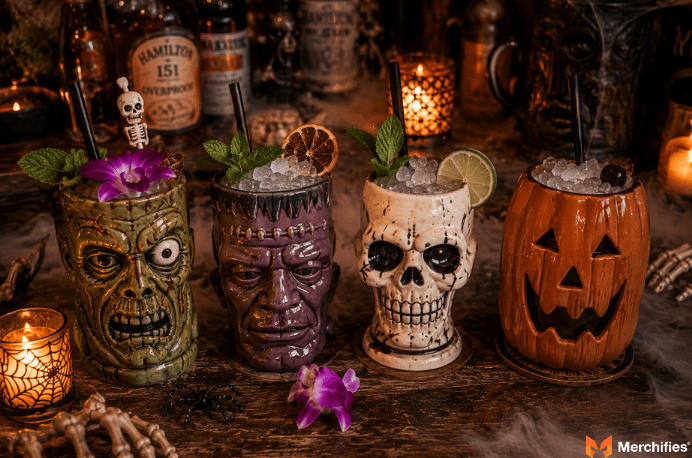
A classic Zombie combines multiple rum styles with lime juice, falernum, grenadine, and bitters. The layered rum approach using light, dark, and overproof varieties creates complexity that rewards sipping rather than gulping. For Halloween presentation, floating a small amount of overproof rum on top and igniting briefly before serving adds theatrical drama. Safety note: ensure adequate ventilation and have a fire extinguisher accessible before attempting flaming presentations.
Painkiller variations offer visual drama with minimal complexity. The standard Painkiller combines dark rum, pineapple juice, orange juice, and cream of coconut. For Halloween service, adding black food coloring transforms the creamy tropical drink into something visually striking without altering flavor. Black velvet falernum, available from specialty cocktail suppliers, provides similar visual effect with additional flavor complexity.
Non-alcoholic options matter for inclusive entertaining. A tropical punch base combining pineapple juice, orange juice, coconut cream, and grenadine serves as the foundation for mocktails that children and non-drinking adults can enjoy. Dry ice creates fog effects that enhance Halloween atmosphere, though handling requires caution. Use tongs, never direct skin contact, and ensure pieces fully sublimate before drinking.
Ceramic mug serving requires temperature consideration. Pre-chilling mugs for 15 to 20 minutes before serving keeps drinks colder longer. Crushed ice rather than cubed ice conforms to sculptural mug interiors more effectively, maximizing cooling surface area. For warm weather entertaining, frozen mug storage helps maintain drink temperature throughout consumption.
Garnish selection enhances the spooky-tropical fusion. Dried citrus wheels in deep orange and black complement the aesthetic. Edible flowers in dark purple or orange add visual interest. Novelty touches like food-safe plastic spiders or skeleton stirrers lean into the Halloween theme without affecting drinkability. Fresh mint or orchid garnishes maintain tropical authenticity for collectors who prefer understated presentation.
Year-round display transforms Halloween tiki mugs from seasonal novelty into permanent home bar features that spark conversation regardless of calendar date. Dedicated shelving with accent lighting showcases sculptural forms and glaze details that disappear in dim storage.
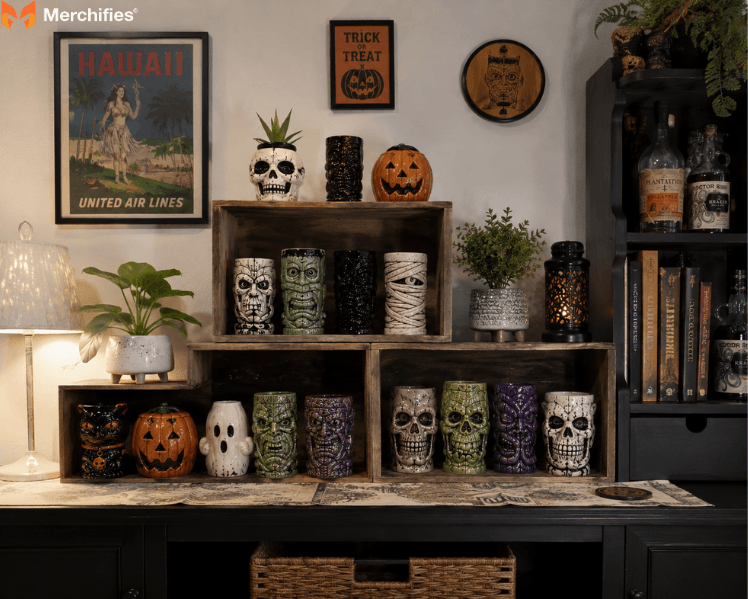
Lighting strategy dramatically affects display impact. LED strip lighting with warm color temperature between 2700K and 3000K enhances ceramic glazes without creating harsh shadows. Positioning lights above or below pieces rather than directly behind prevents backlighting that obscures detail. Smart lighting systems allow color temperature shifts for warmer standard display shifting to cooler or colored tones during Halloween entertaining.
Seasonal rotation makes sense for collectors with limited display space or extensive collections. Summer months might feature your brightest, most tropical-leaning pieces, while October brings out the darkest Halloween-specific designs. Rotation also distributes light exposure, preventing uneven fading on pieces kept in constant direct lighting.
Storage considerations protect ceramic collectibles during off-display periods. Avoid extreme temperature fluctuation since garage or attic storage where temperatures swing seasonally stresses ceramic materials and can cause cracking or glaze crazing. Climate-controlled interior storage maintains stable conditions. Wrapping pieces individually in acid-free tissue paper prevents glaze-to-glaze contact that can transfer marks or cause sticking between stored pieces.
Humidity monitoring prevents moisture-related damage. Ceramic absorbs ambient moisture, and stored pieces in humid environments can develop mold or mildew in painted crevices. Silica gel packets in storage containers help maintain appropriate humidity levels. If you notice musty odors when unpacking stored pieces, air them thoroughly before returning to display.
Cleaning handmade pieces requires gentler approaches than standard dishware. Hand washing with mild soap and soft cloths preserves paint details and specialized glazes that dishwasher detergents and mechanical agitation can damage. Avoid soaking, which can seep into unglazed areas and create moisture issues. Allow pieces to air dry completely before returning to display or storage.
Documentation and insurance become relevant for valuable collections. Photographing pieces with ruler references establishes condition baseline. Maintaining purchase receipts, edition documentation, and provenance information supports insurance claims if damage or theft occurs. Collections exceeding a few thousand dollars in value may warrant scheduled personal property coverage beyond standard homeowner policies.
A Halloween tiki bar party succeeds when atmosphere, drinks, and host presentation create cohesive immersion rather than scattered themed elements. Your Halloween tiki mugs serve as the visual anchor around which other entertainment decisions revolve.
Atmosphere setting begins with lighting that bridges tropical and spooky sensibilities. Traditional tiki torches for outdoor use only with safety considerations combine with string lights in orange and purple. Black lights enhance certain ceramic glazes and create fluorescent effects with tonic water cocktails. Fog machines or dry ice create low-lying mist that transforms your bar area into something otherworldly.
Decor layering combines tropical and Halloween elements without letting either overwhelm. Palm fronds and bamboo provide tropical base texture. Layering in skulls, cobwebs, and jack-o-lanterns adds Halloween without abandoning the tiki foundation. Vintage horror movie posters in bamboo frames bridge both aesthetics. The goal is fusion, not competition between themes.
Drink menu planning simplifies service while showcasing your mug collection. Limiting your menu to three or four signature cocktails prevents bartending from consuming your entire evening. Include at least one rum-forward classic like a Zombie or Mai Tai, one visually dramatic option with black coloring or dry ice effects, and one non-alcoholic alternative. Pre-batching cocktail bases allows you to assemble drinks quickly rather than measuring each component in real-time.
Music selection builds atmosphere without demanding attention. Classic surf rock from The Ventures or Dick Dale provides energetic background. Hawaiian slack-key guitar creates mellower moments. Horror film soundtracks from the 1950s and 1960s bridge both aesthetic worlds. Creating a pre-mixed playlist prevents the need to DJ during your own party.
Guest experience benefits from clear communication about your theme. Suggesting tropical-horror dress code in your invitations gives guests direction while ensuring visual cohesion. Hawaiian shirts with skeleton prints, zombie luau attire, and monster-themed resort wear all fit the fusion aesthetic. Guests who commit to the theme enhance atmosphere for everyone.
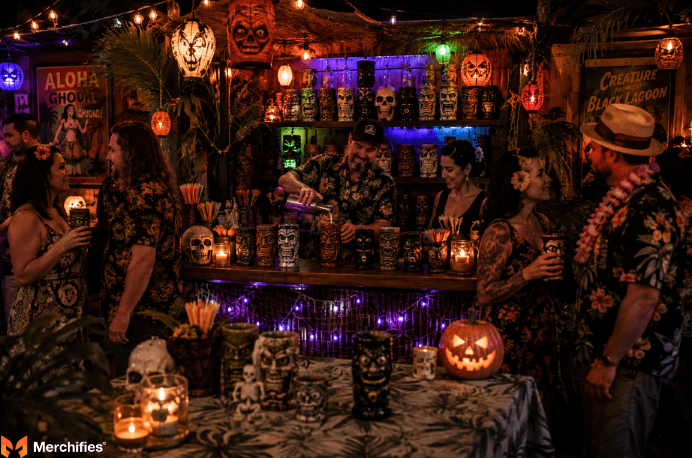
The tiki bar host deserves coordinated attire that matches the spooky-tropical aesthetic their mug collection establishes. Standing behind a carefully curated bar in generic clothing undercuts the immersive experience you have created for your guests.
Party hosting presents the primary use case for coordinated apparel. As the bartender at your Halloween tiki party, themed attire distinguishes you from guests while reinforcing the evening's visual identity. Halloween-themed shirts provide comfortable, practical options that photograph well and hold up through an evening of drink preparation and entertaining.
Gift bundle opportunities emerge for collectors who have everything. Pairing Halloween apparel with tiki mug recommendations creates thoughtful presents for the enthusiast in your social circle. The person who already owns extensive barware may not expect clothing that coordinates with their collection aesthetic, making the gift both relevant and surprising.
Drawing on Cameron Foster's work with Halloween entertaining, the most successful seasonal hosts treat their appearance as part of the overall production rather than an afterthought. Browse Merchifies Halloween t-shirts including skeleton designs, vintage horror styles, and spooky graphic options to find the apparel that matches your tiki bar setup and completes your hosting aesthetic.
-d4c38c342cdf20ca.jpeg)

-b555fcc6b204c456.jpeg)