 Worldwide Shipping
 Secure Payments
 Free Return
 Local Support
-da0801079a650a2e.jpeg)
17 Year Anniversary Quotes: 110+ Funny, Romantic & Furniture Wishes (2026)
Mar, 12 2026
Day of the Dead is celebrated annually on November 1–2, a time when families honor and remember loved ones who have passed away. These dates align with Catholic observances like All Saints’ Day and All Souls’ Day, blended with ancient indigenous traditions. This meaningful celebration is not about mourning, but about celebrating life and memory. Families create altars (ofrendas), decorate with marigolds, prepare favorite foods of the departed, and gather to share stories and joy. Today, Día de los Muertos is recognized worldwide as a powerful symbol of love, remembrance, and cultural heritage.
When is Día de los Muertos? This vibrant and deeply spiritual celebration, often beautifully misunderstood, centers around specific dates each year. Isabella Cruz, a cultural lifestyle writer and Senior SEO content editor with 4 years of experience curating insights into global traditions, offers an expert perspective, breaking down the exact timing, rich history, and profound cultural significance of this cherished Mexican holiday. Join us as we explore the heart of the Day of the Dead holiday, a time of heartfelt remembrance and joyous reunion.
Día de los Muertos, or the Day of the Dead holiday, is an annual celebration that consistently takes place on **November 1st and 2nd**. These two days form the very heart of the holiday, dedicated to honoring and remembering deceased loved ones. While often referred to as a single festival, each day holds distinct significance, welcoming different spirits back to the world of the living.
These dates are far from arbitrary; they are deeply woven into the fabric of both ancient indigenous traditions and Catholic observances, creating a unique and powerful syncretism. As a cultural observer, I've noted how the unwavering consistency of these dates, year after year, underscores the profound reverence and meticulous planning that families pour into their altars and gatherings. The air itself seems to hum with anticipation as these sacred days approach, a testament to the enduring power of tradition.
November 1st is traditionally known as Día de los Angelitos, or "Day of the Little Angels." This tender day is specifically set aside to remember and honor infants and children who have passed away. Families believe that the innocent spirits of children return first, often arriving at midnight on October 31st and staying through November 1st.
In practice, this means that the vibrant altars, or ofrendas, built for these angelitos will feature items particularly appealing to young ones. Imagine miniature toys, colorful candies, tiny articles of clothing, and perhaps even small bottles of soda. It’s a poignant and deeply tender part of the celebration, focusing on the brief, precious lives of those lost too soon. The meticulous care taken to select these specific items – from a child's favorite comic book to a tiny teddy bear – vividly highlights the personal connection and overflowing love that defines this particular day of the Day of the Dead holiday.
Following Día de los Angelitos, November 2nd is dedicated to remembering adults who have passed on. This is often considered the main day of Día de los Muertos, when the spirits of adults are believed to return to visit their families. This shift in focus is reflected in the offerings on the ofrenda, which now cater to adult preferences.
On this day, altars typically display favorite foods, drinks like tequila or pulque, cigarettes, and personal items that belonged to the deceased adults. Families gather, sharing stories, laughter, and tears as they celebrate the lives of their ancestors. This is arguably the most communal aspect of the holiday, with families often heading to cemeteries for vigils and shared meals. The transition in offerings, from children's delights to an adult's cherished mezcal or a favorite novel, isn't just a detail; it's a profound, personalized expression of remembrance, demonstrating that the living truly know and cherish the individual preferences of their departed loved ones.
While November 1st and 2nd are the core dates when is Día de los Muertos is actively celebrated, the preparations and initial observances for the Day of the Dead holiday often begin on October 31st. This night is sometimes referred to in a broader context alongside Halloween, but within the Día de los Muertos tradition, it's the sacred evening when the veil between worlds is believed to be thinnest, allowing the angelitos to begin their journey home.
Beyond this, families spend weeks, sometimes even a month, preparing for the holiday. They meticulously clean and decorate graves, shop for specific items for their ofrendas, and cook traditional dishes like pan de muerto. This extended period of preparation underscores the deep respect, anticipation, and love surrounding the spirits' return. Witnessing communities transform in the weeks leading up to November, with vibrant marigolds blooming in fields and the sweet, comforting aroma of pan de muerto filling bakeries, truly drives home the idea that this isn't just a two-day event, but a profound season of remembrance, connection, and devotion.
So, what is Día de los Muertos beyond its specific dates? It is a profound and vibrant Mexican holiday rooted in ancient Mesoamerican traditions, beautifully blended with Catholic influences. This isn't a somber occasion of mourning, but rather a joyous celebration of life and death, honoring deceased loved ones and warmly welcoming their spirits back for a temporary visit.
Understanding this distinction is crucial, as many outside Mexico often confuse it with Halloween due to the proximity of dates and the use of skull imagery. However, the intent, symbolism, and emotional tone are vastly different. As a cultural lifestyle writer, I often emphasize that "It's a testament to cultural resilience, transforming the universal experience of loss into an affirmation of life and continuity." It's about remembering, celebrating, and embracing those who have passed, not fearing them.
At its core, the Day of the Dead holiday embodies a unique philosophy towards mortality. Death is not seen as an end but as a natural, integral phase in the continuous cycle of life. This perspective allows for a celebration that is both reverent and festive, acknowledging grief while embracing the enduring joy of remembrance.
For example, the animated film "Coco" (2017) beautifully illustrates this concept, showing how a person truly dies only when no one remembers them. This vibrant portrayal, while fictional, accurately captures the essence of the holiday's belief system: keeping memories alive sustains the spirits of the departed. The bright colors, lively music, and heartfelt laughter associated with the holiday are direct reflections of this life-affirming outlook, celebrating the unbreakable bonds that transcend even death.
The fundamental purpose of Día de los Muertos is to create a welcoming and loving space for the spirits of the dead to return and visit their families. This annual spiritual reunion is facilitated through meticulously prepared ofrendas, which act as beacons and offerings for the journeying spirits. The deeply held belief is that for a brief, magical period, the veil between worlds thins, allowing for this cherished spiritual communion.
Every element of the celebration serves this sacred purpose. The intoxicating scent of cempasúchil (marigolds) is believed to guide spirits, candles light their path across the divide, and favorite foods and drinks nourish them after their long journey. This isn't just symbolic; it's a deeply held spiritual practice. In my view, the sheer dedication involved in creating such a welcoming environment for the departed – from preparing their most beloved meal to playing their cherished music – is one of the most beautiful and profound expressions of love and respect found in any cultural tradition worldwide.
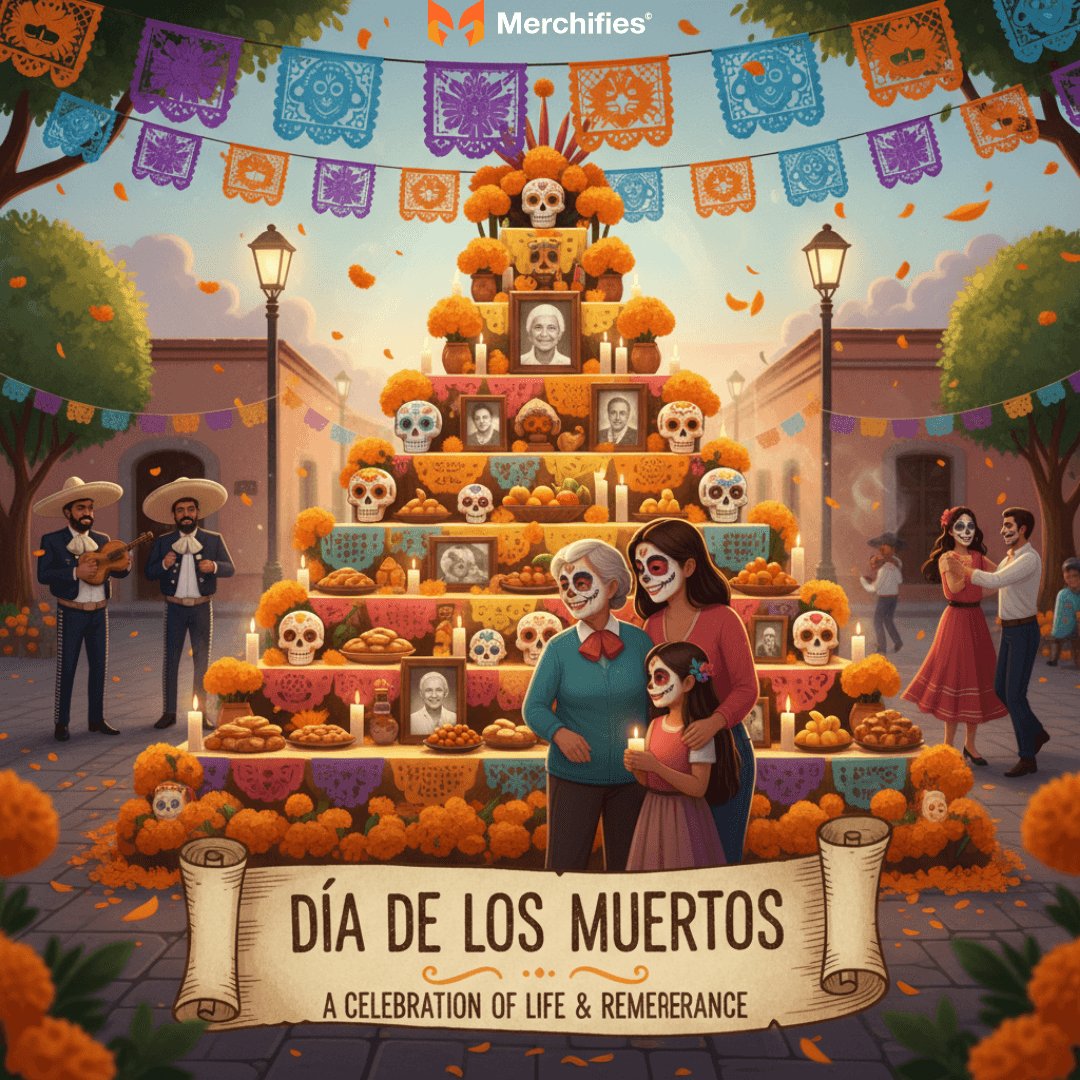
The history of Día de los Muertos is as rich and complex as the celebration itself, tracing its roots back thousands of years to pre-Hispanic Mesoamerican civilizations. Understanding this ancient heritage is key to appreciating why this Day of the Dead holiday holds such deep and enduring significance for so many.
This historical depth highlights that it's not a static tradition; it's a living, evolving cultural phenomenon. Its longevity and adaptability are truly remarkable. In my work exploring diverse cultural traditions, I've found few holidays that so seamlessly blend ancient beliefs with modern practices, all while retaining their core spiritual essence and vibrant identity.
The origins of Día de los Muertos can be found in the sophisticated rituals of indigenous peoples such as the Aztec, Maya, Toltec, and Nahua, dating back at least 3,000 years. These cultures held intricate beliefs about death and the afterlife, often viewing it not as an end, but as a continuation of life and a natural part of existence. The Aztec goddess Mictecacihuatl, known as the "Lady of the Dead," played a central role in these observances, presiding over festivals dedicated to the dead.
These ancient rituals, which often involved honoring ancestors and making elaborate offerings, were typically held during the summer months. For example, some historical accounts suggest celebrations lasting for weeks, involving complex ceremonies and reverence for the departed. The skull was a prominent symbol, representing death and rebirth, a powerful concept still central to the modern holiday's iconic sugar skulls.
When the Spanish conquistadors arrived in the 16th century, they brought with them Catholicism, including the observances of All Saints' Day (November 1st) and All Souls' Day (November 2nd). These Catholic holidays also focused on praying for the dead. Faced with deeply ingrained indigenous traditions, the Spanish friars found it strategically easier to merge the existing pagan rituals with the Catholic calendar rather than attempt to eradicate them completely.
This syncretism led to the shifting of the indigenous festivals for the dead from summer to the fall, aligning them with the Catholic dates. This fusion is a prime example of cultural resilience, where native beliefs adapted and survived by integrating foreign elements. This blend is precisely what makes the modern Day of the Dead holiday so unique, a true testament to cultural negotiation and adaptation rather rather than pure assimilation, creating a rich tapestry of belief.
The global significance of Día de los Muertos was formally recognized in 2008 when UNESCO (United Nations Educational, Scientific and Cultural Organization) inscribed "The indigenous festivity dedicated to the dead" on its Representative List of the Intangible Cultural Heritage of Humanity. This prestigious designation highlights the holiday's importance as a living tradition that preserves ancestral customs and promotes invaluable cultural diversity.
This recognition wasn't just symbolic; it underscored the urgent need to protect and promote this unique cultural expression, ensuring its continuity for future generations. For me, as a writer focused on cultural preservation, this acknowledgment is crucial because it validates the deep cultural value of the Day of the Dead holiday beyond its often-commercialized surface, reminding us that it’s a living heritage to be cherished, understood, and safeguarded.
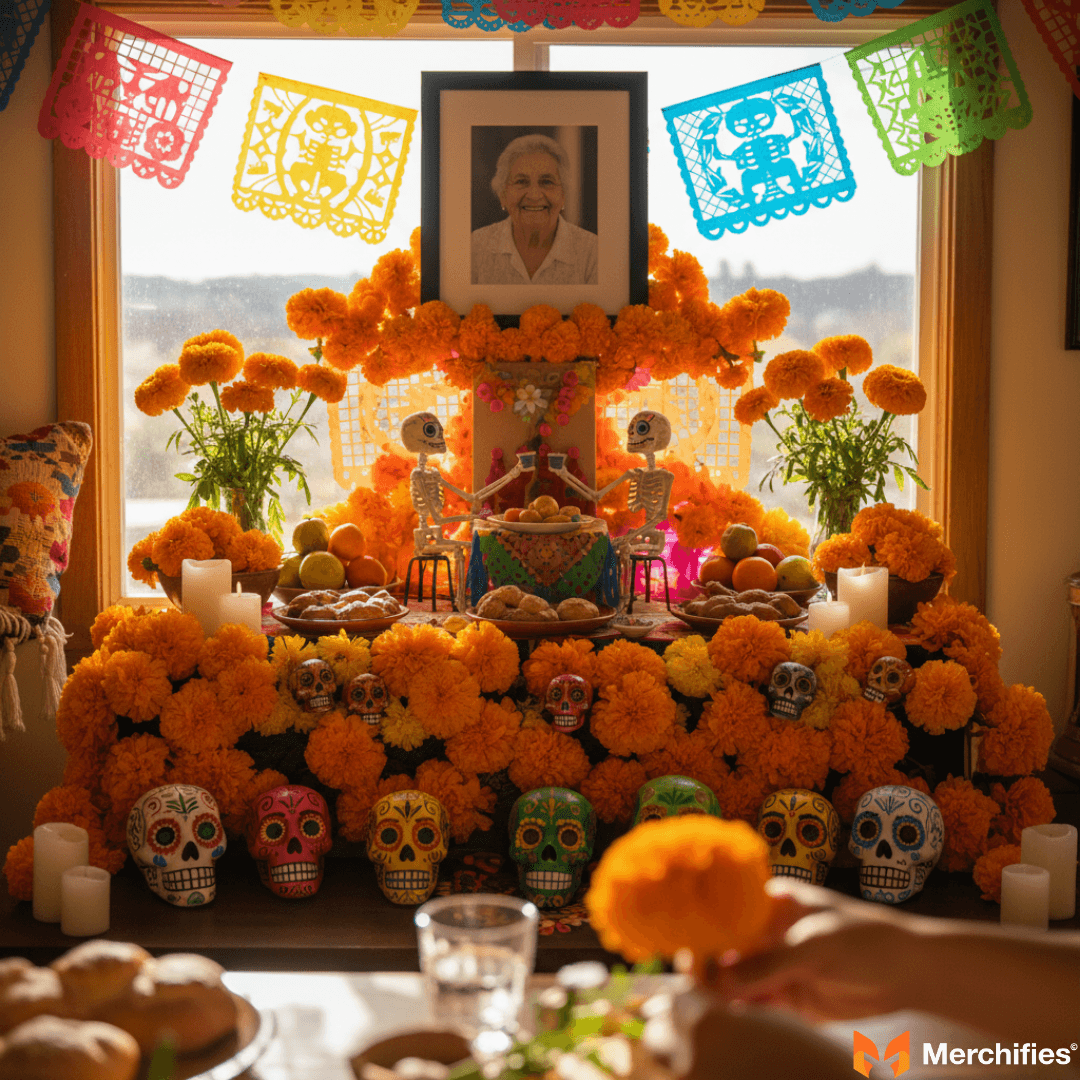
The celebrations of Día de los Muertos are rich with traditions, each carrying profound meaning and contributing to the holiday's unique atmosphere. From elaborate altars to symbolic foods, every element plays a vital role in honoring the dead and celebrating the continuity of life.
These traditions are not merely decorative; they are the sacred conduits through which families connect with their ancestors. The meticulousness in their execution speaks volumes about the reverence involved. As Isabella Cruz, I find it endlessly fascinating how each detail, no matter how small, contributes to the overall spiritual tapestry of this deeply meaningful holiday.
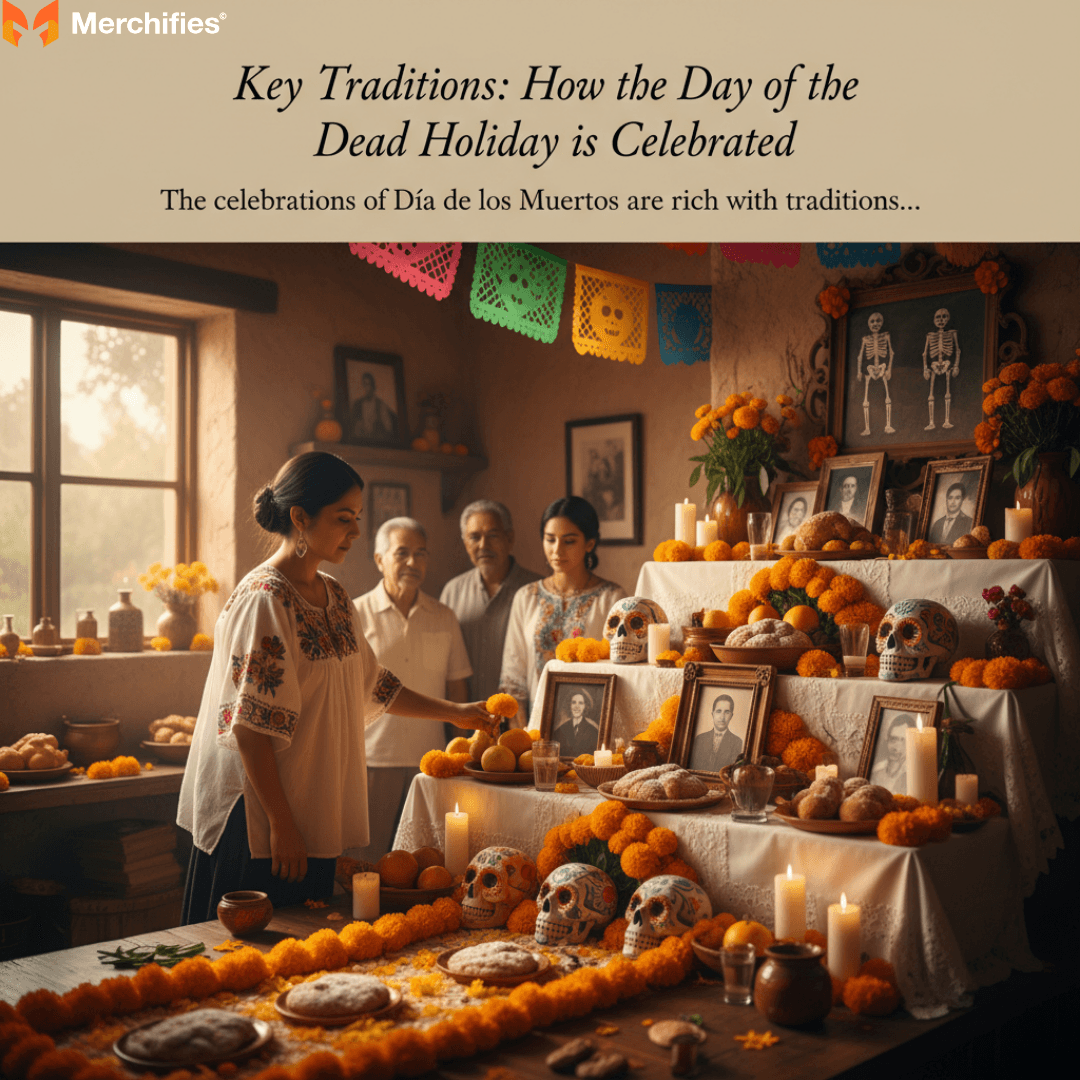
Central to Día de los Muertos is the ofrenda, or altar, meticulously built in homes, public spaces, and cemeteries. These aren't for worship but serve as welcoming tributes and temporary homes for the returning spirits. Each ofrenda is a deeply personal expression of love and memory, carefully constructed with multiple levels to represent heaven, earth, and the underworld or purgatory.
In practice, building an ofrenda is a profoundly personal and often communal activity, involving family members of all ages. It's a tangible way to remember and honor the specific preferences of the deceased. I've witnessed ofrendas that were truly works of art, meticulously arranged with cherished photos, flickering candles, and specific treats that the departed loved, making the altar feel like a vibrant, temporary home for their spirit, brimming with their essence.
The Day of the Dead holiday is rich in symbolism, with each element carrying a specific meaning that contributes to the holiday's profound narrative. These symbols are instantly recognizable and form the visual language of the celebration, telling a story of remembrance and connection.
Understanding these symbols is key to truly grasping the holiday's essence. They are not merely decorations; they are narrative tools that communicate deep reverence and cultural beliefs. In my opinion, the ingenuity of these symbols lies in their ability to convey complex ideas about life, death, and remembrance in a visually striking, emotionally resonant, and universally accessible way.
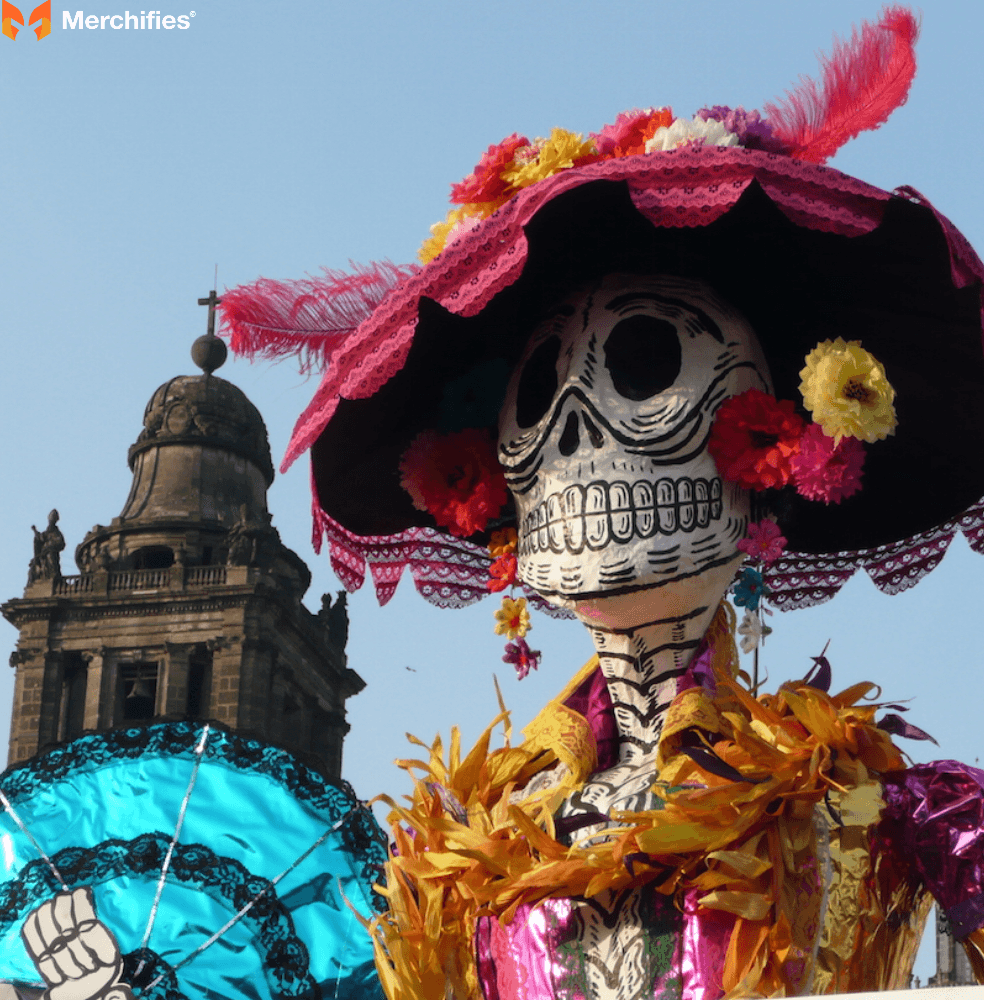
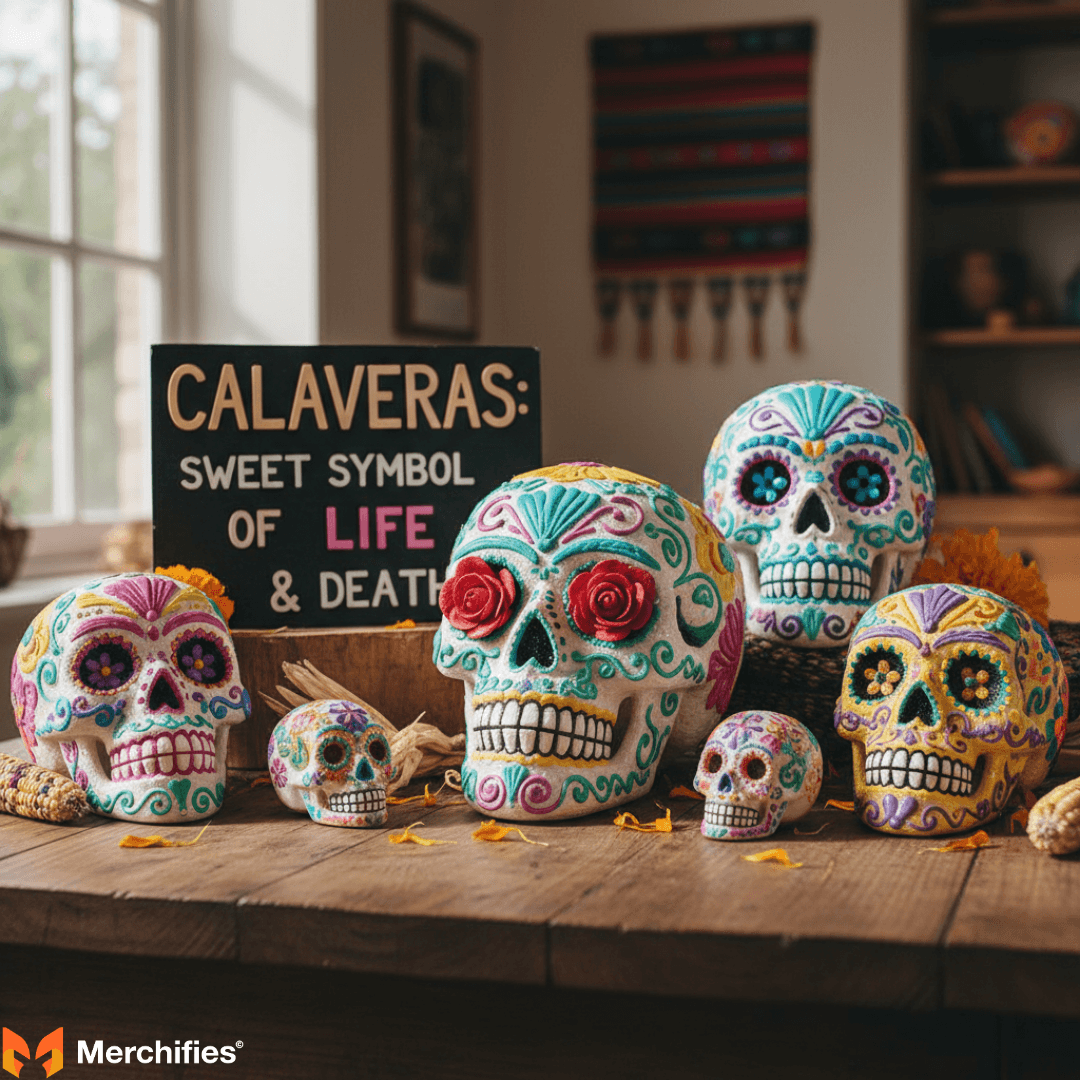
Calaveras, or sugar skulls, are perhaps the most iconic and recognizable symbol of Día de los Muertos. Far from being macabre, these decorative skulls represent the cycle of life and death, and a joyful acceptance of mortality. They are often adorned with vibrant colors, glitter, and personalized with the names of the living or the dead, making them both festive and deeply personal.
Historically, the use of skulls dates back to pre-Hispanic times. Modern sugar skulls gained popularity in the 19th century with the work of José Guadalupe Posada and his famous "La Calavera Catrina," a satirical etching that depicted a wealthy female skeleton. Today, they are a sweet reminder that death is a natural and beautiful part of life, and we should embrace it without fear. The act of eating a sugar skull, in my view, is a playful yet profound way to internalize this acceptance of mortality, making it a part of our very being.
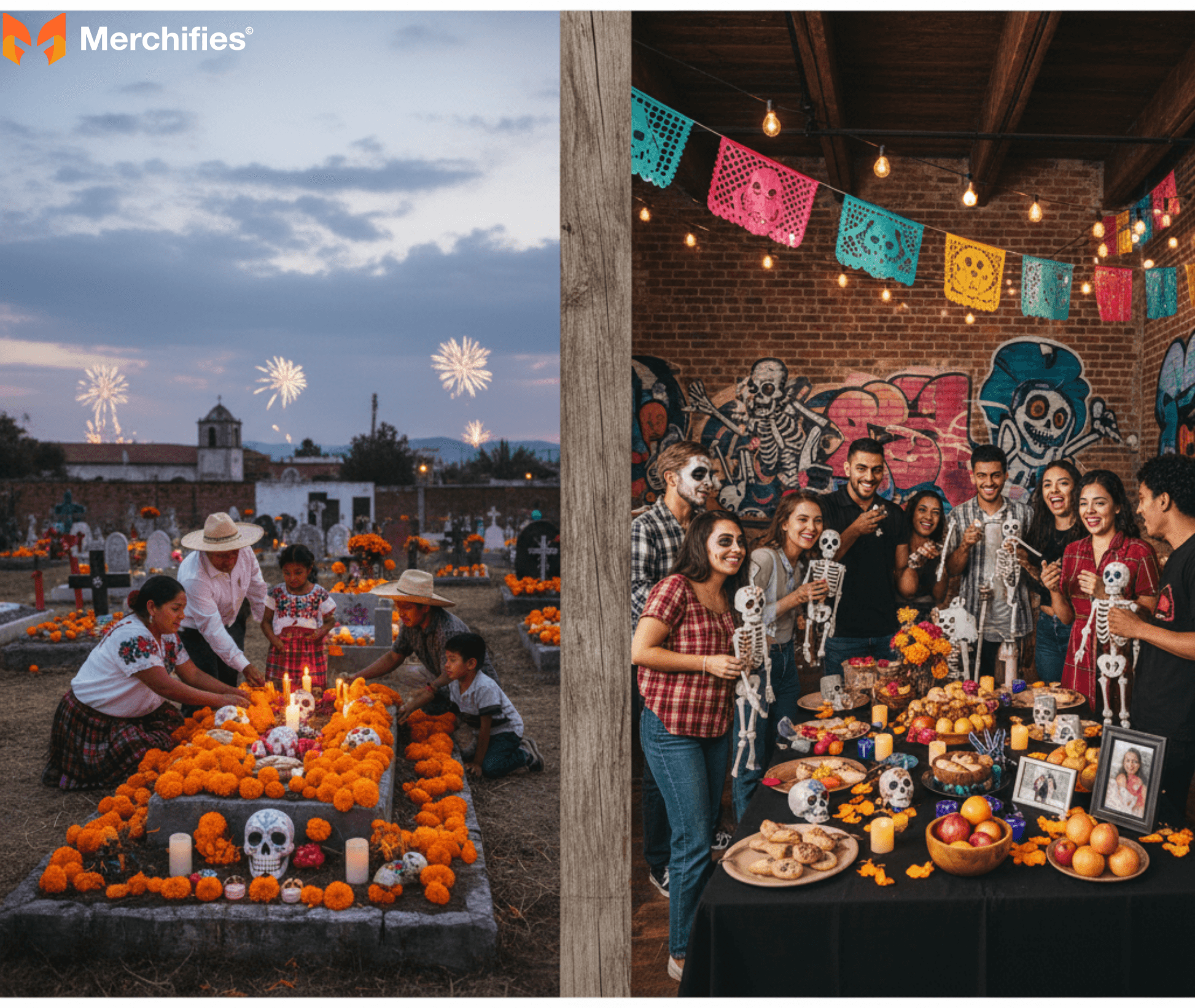
The bright orange and yellow cempasúchil, or marigold flowers, are ubiquitous during Día de los Muertos. Their strong, distinctive scent and vibrant color are believed to attract and guide the spirits of the dead back to their altars and homes. Families often create luminous paths of marigold petals from the street to the ofrenda, ensuring their loved ones don't get lost on their journey.
These flowers are a visual and olfactory beacon, an absolutely essential element for the spirits' journey home. Their prevalence during the holiday, blooming abundantly in late October and early November, feels like a natural synchronicity, as if nature itself is signaling the time for this special homecoming. I always find the sheer volume of marigolds, transforming entire towns into breathtaking fields of gold and orange, to be one of the most beautiful and spiritually resonant aspects of the Day of the Dead holiday celebration.
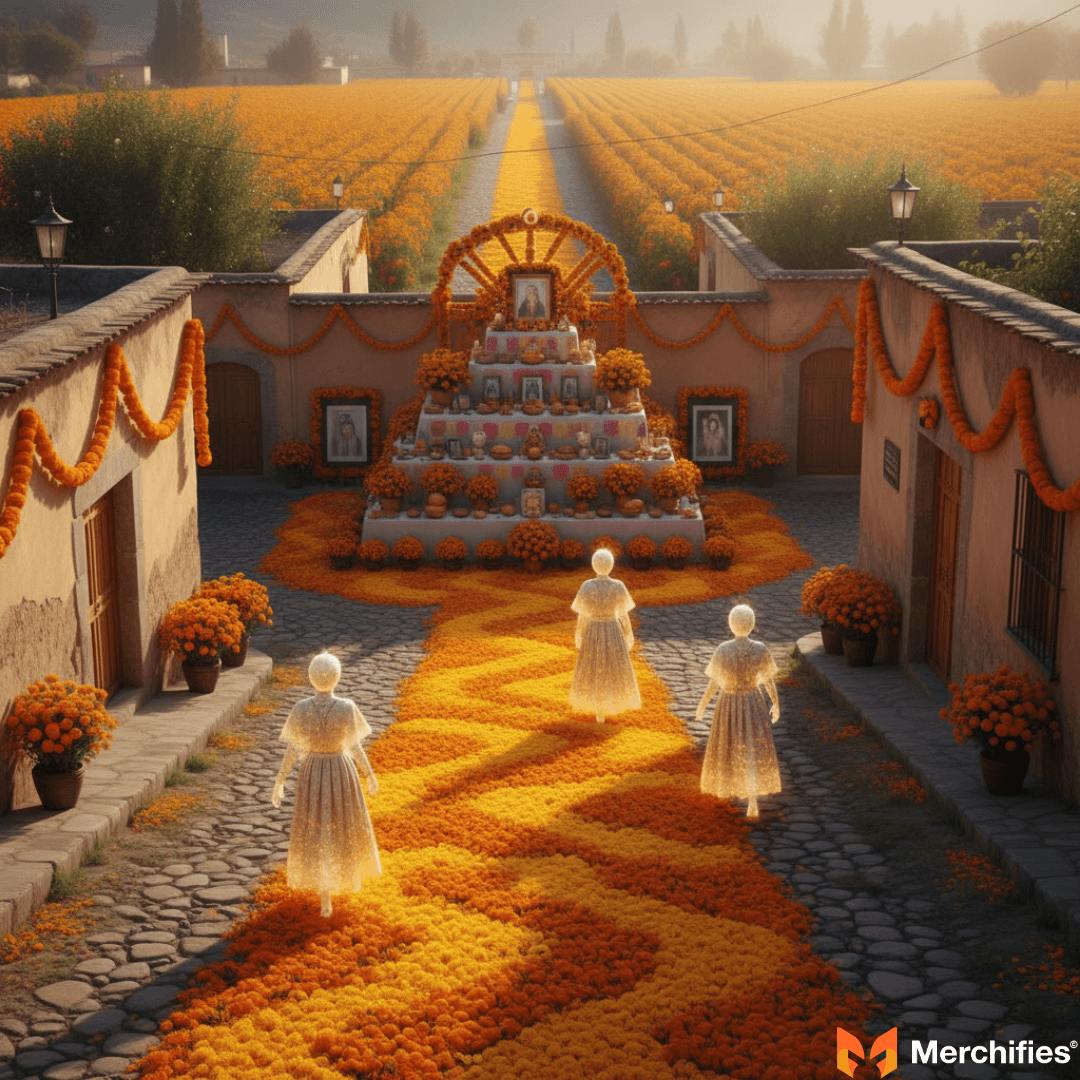
Papel picado, which translates to "perforated paper," consists of delicate tissue paper banners intricately cut into elaborate designs. These colorful banners are strung across streets and homes, fluttering gently in the breeze. They symbolize the fragility of life, the wind that carries the spirits, and the joyful, celebratory atmosphere of the Day of the Dead holiday.
The craftsmanship involved in creating papel picado, often done by hand, is a testament to the dedication and artistry of the artisans. Each banner, with its intricate patterns of skulls, flowers, and animals, adds a layer of vibrant beauty and profound cultural depth to the festivities. It's a poignant reminder that even in acknowledging death, there is immense beauty, artistry, and a celebration of life's delicate balance.
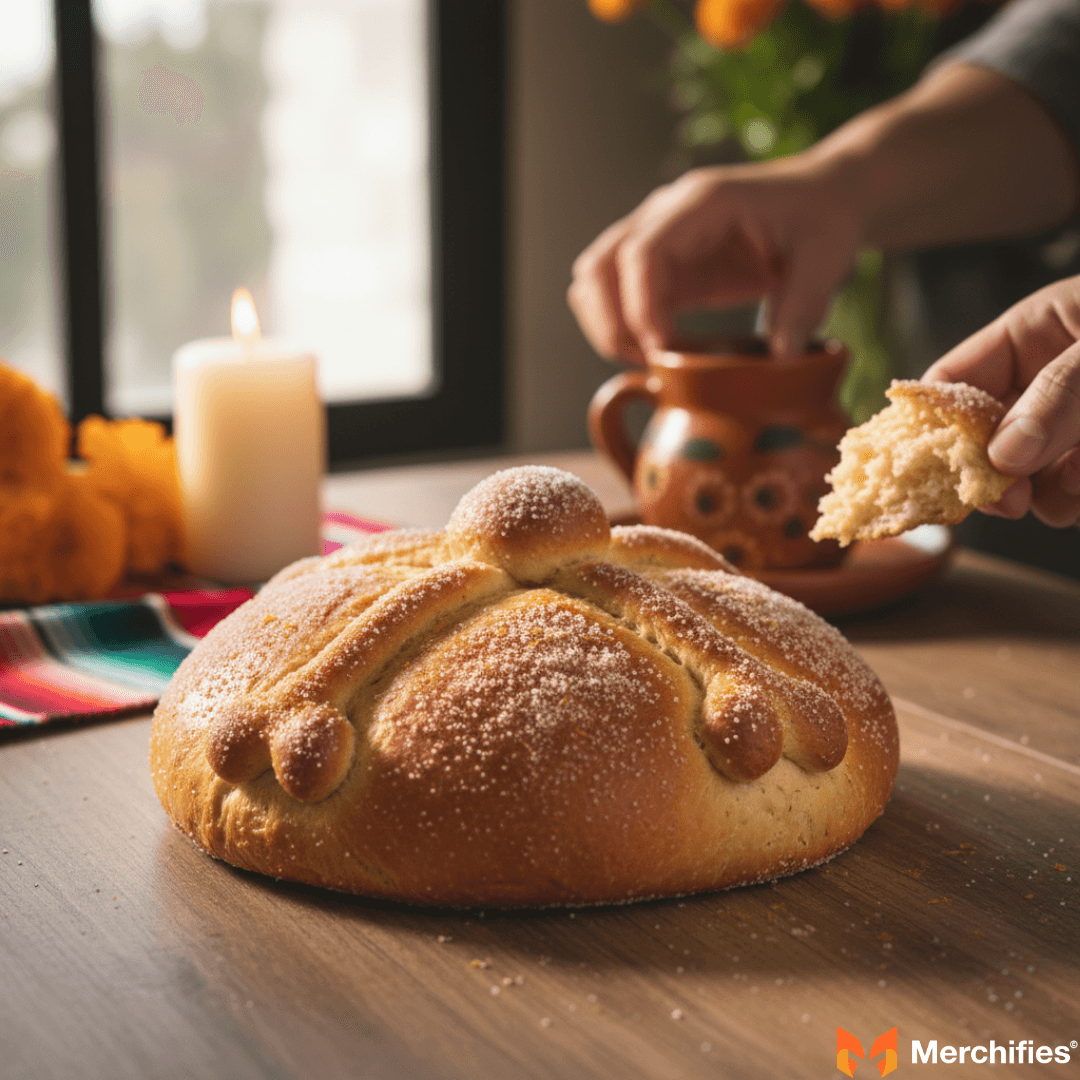
Pan de muerto, or "bread of the dead," is a sweet, often orange-blossom-flavored bread that is a staple offering on ofrendas and a popular treat during the holiday. It's typically decorated with bone-like shapes on top, sometimes with a tear-drop representing sorrow, or a cross representing the four cardinal directions of the universe.
This bread symbolizes the body of the deceased and is meant to nourish the spirits after their long journey. It's also a delicious treat for the living, shared among family and friends as a communal act of remembrance. For me, the taste of pan de muerto, with its subtle sweetness, delicate crumb, and unique aroma, is inextricably linked to the warmth, comfort, and communal spirit of Día de los Muertos, evoking memories and connection.
Monarch butterflies hold special significance in some regions of Mexico during Día de los Muertos. They typically arrive in Mexico from Canada and the U.S. around early November, coinciding beautifully with the holiday. Many indigenous beliefs hold that these delicate butterflies carry the spirits of the deceased, returning to visit their families once more.
This beautiful natural phenomenon adds another layer of magic, wonder, and spiritual resonance to the holiday, reinforcing the belief in the spirits' return. The breathtaking sight of thousands of monarchs descending upon the oyamel fir forests of Michoacán, for instance, is a powerful and moving symbol of this spiritual migration, a living embodiment of the ancestral journey.
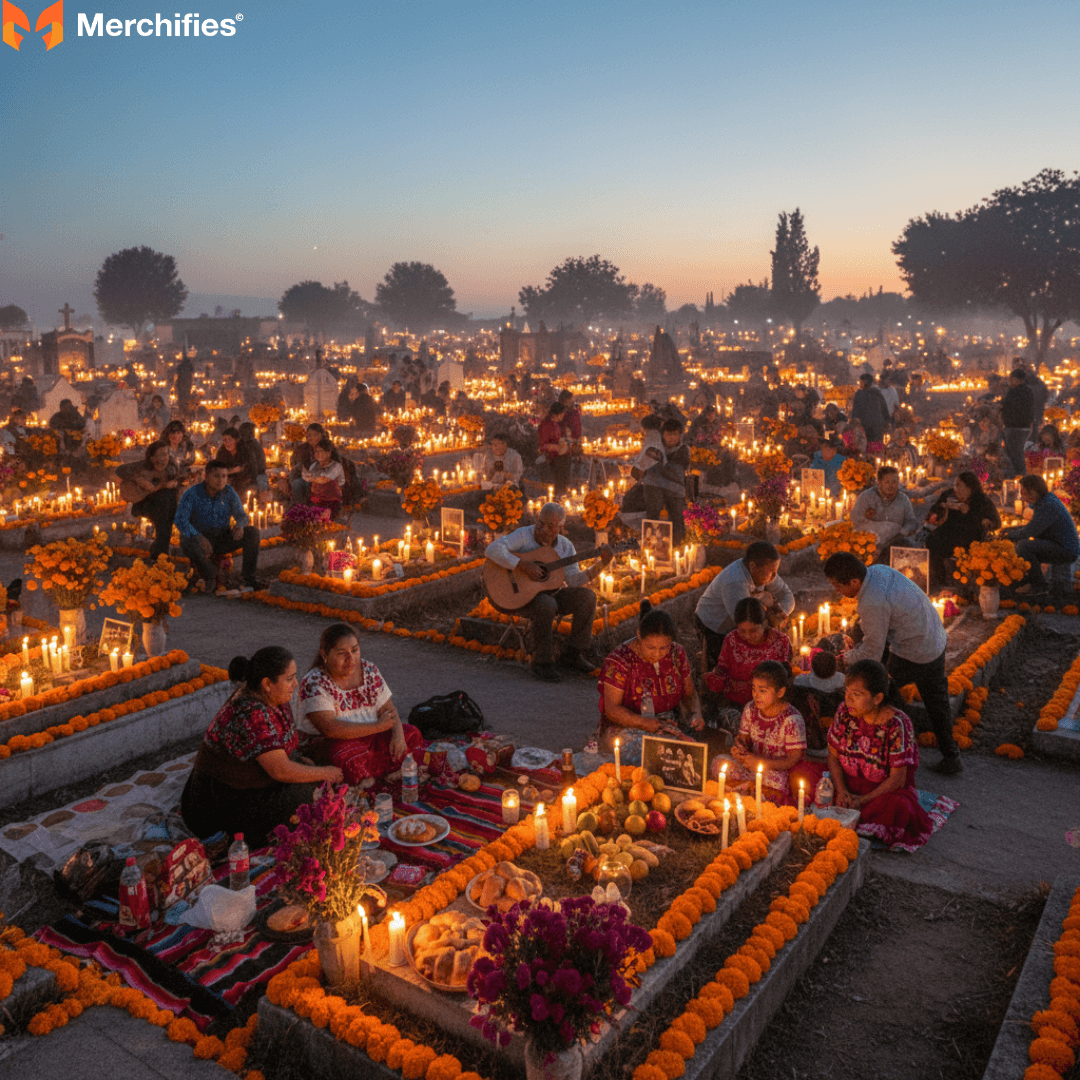
Visiting cemeteries is a cornerstone of how Día de los Muertos is celebrated. Families clean and lovingly decorate the graves of their loved ones, bringing vibrant flowers, flickering candles, favorite foods, and drinks. These visits are often extended affairs, sometimes lasting through the night in solemn yet celebratory vigils.
The cemetery transforms into a lively, illuminated gathering place, filled with music, laughter, and heartfelt storytelling. It's a direct, physical connection to the departed, where families share meals and memories right at the graveside. This communal aspect, with families spending hours or even overnight at the graves, truly highlights the spirit of reunion. In my observations, these cemetery vigils are often the most intimate, emotionally resonant, and profoundly beautiful parts of the entire Day of the Dead holiday celebration, a true communion between worlds.
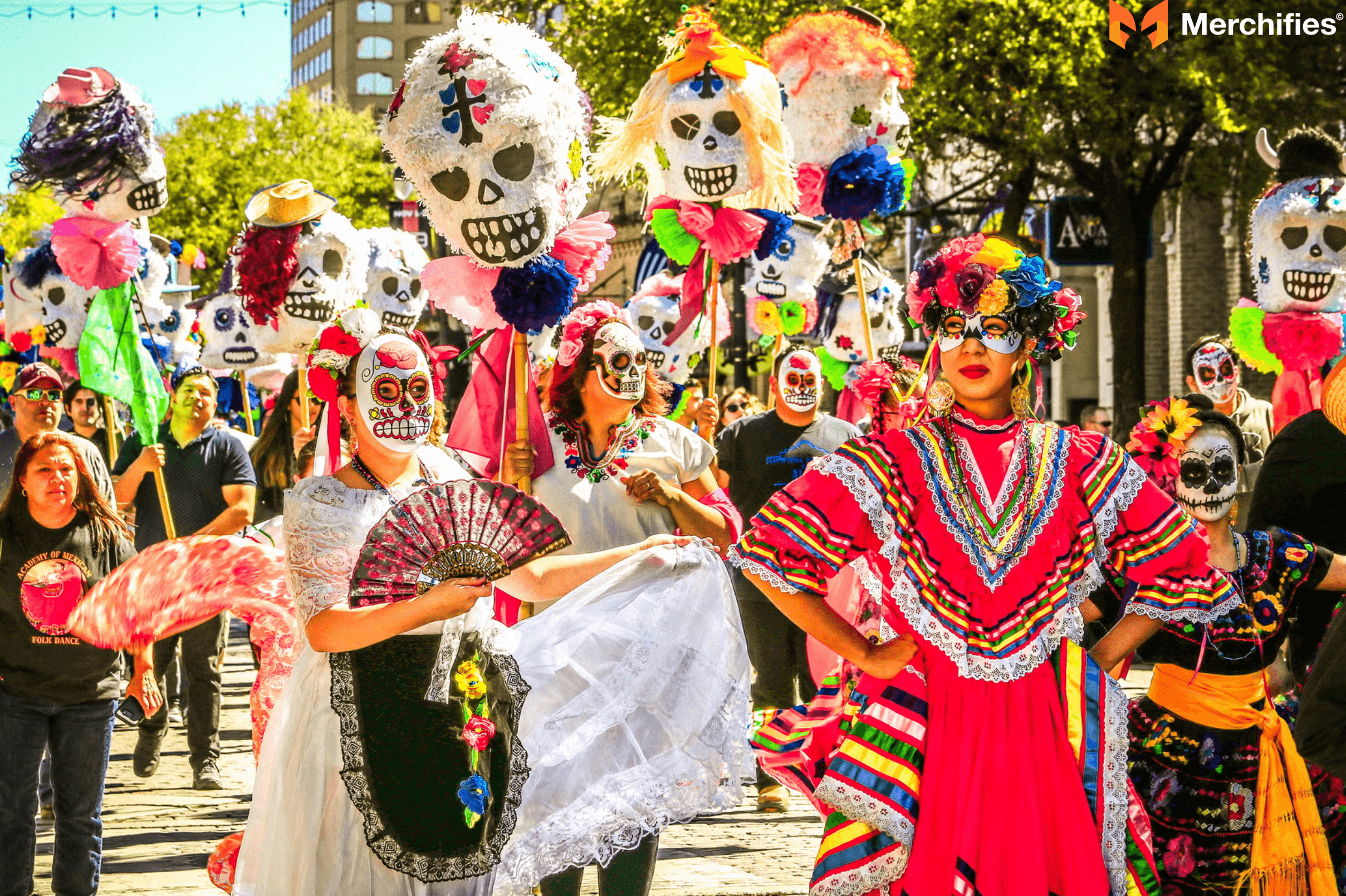
Beyond the personal family altars and intimate cemetery visits, many cities and towns host vibrant public parades and festivals for Día de los Muertos. These spectacular events, often featuring people dressed as elaborate calaveras, live music, and colorful, intricate floats, are a more public expression of the holiday's joyous spirit and cultural pride.
A notable example is the grand parade in Mexico City, which gained international prominence after being depicted in the James Bond film "Spectre" (2015). While the film inspired a real-life parade (which didn't exist before), it has become a popular and spectacular addition to the traditional observances, showcasing the holiday's evolving nature and global appeal. These parades are a fantastic way to experience the communal joy, artistic expression, and cultural richness of the Day of the Dead holiday on a larger, more public scale.
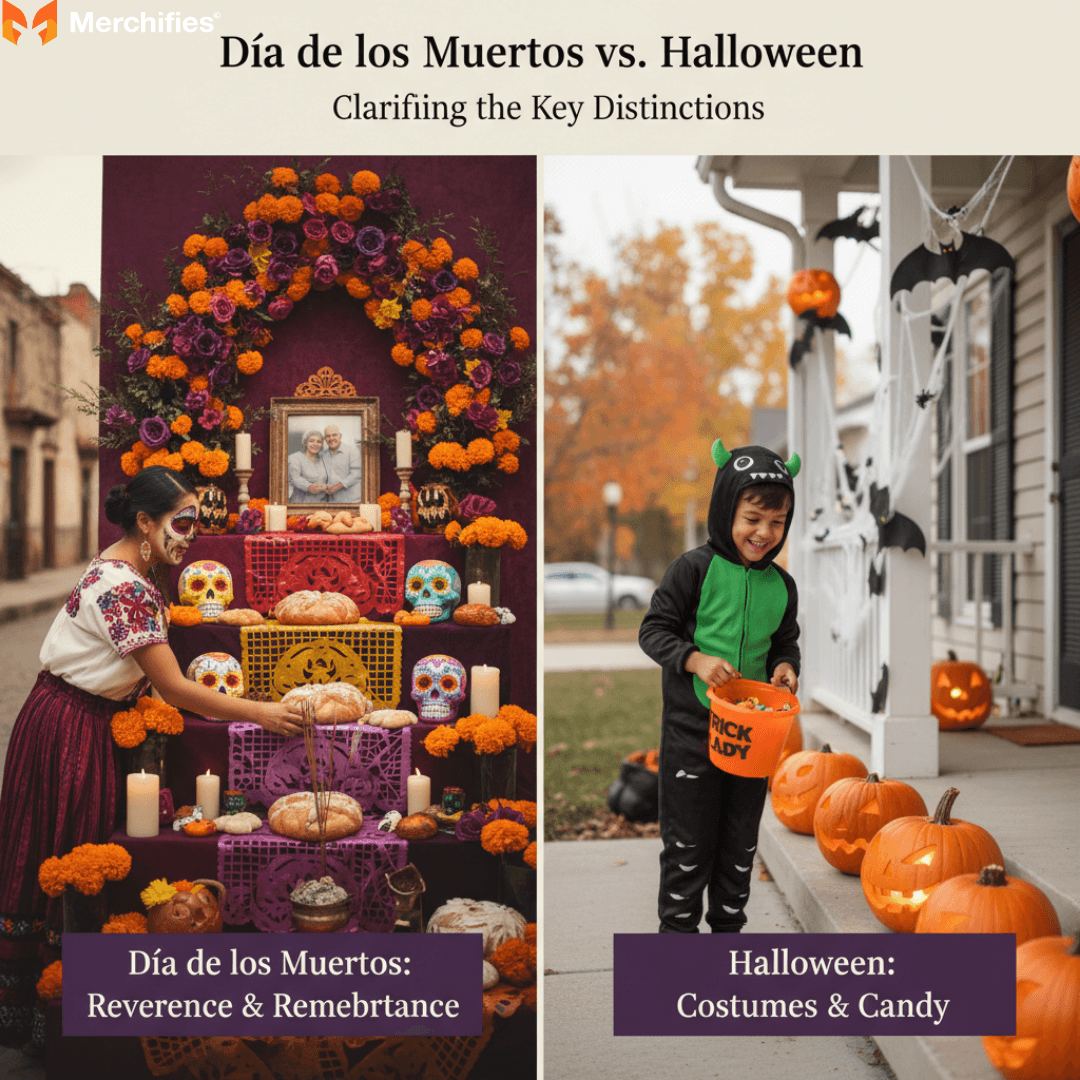
It's common for people unfamiliar with both holidays to conflate Día de los Muertos and Halloween, especially given their close proximity on the calendar. However, understanding the distinction is crucial for respectful appreciation and accurate cultural understanding.
While both involve themes of death and the supernatural, their underlying intent, cultural significance, and emotional tone diverge dramatically. In my view, confusing the two is a significant misunderstanding that strips Día de los Muertos of its profound cultural meaning, reducing it to a mere costume party rather than a deeply spiritual observance.
Día de los Muertos is fundamentally a celebration of life and a joyful, loving remembrance of deceased loved ones. It's about honoring their memory, acknowledging their continued presence in spirit, and finding comfort and continuity in the cycle of life and death. The vibrant colors, uplifting music, and delicious food reflect this celebratory, loving, and affirming atmosphere.
Halloween, in contrast, largely focuses on the spooky, the scary, and the supernatural in a more playful, often fear-based, context. It involves costumes of monsters and ghosts, trick-or-treating for candy, and spooky decorations. While fun, its tone and purpose are distinct from the reverence, familial connection, and spiritual depth central to Día de los Muertos. One is about welcoming spirits with love and open arms; the other is about warding off malevolent ones or simply having a frightfully good time.
The cultural significance of Día de los Muertos is deeply rooted in ancient indigenous Mesoamerican beliefs and a unique syncretism with Catholicism, emphasizing a respectful, ongoing relationship with death and ancestors. It's a spiritual holiday, a sacred time for families to reconnect with their heritage and the lineage of their ancestors.
Halloween, on the other hand, has Celtic pagan origins, evolving into a largely secular holiday primarily focused on entertainment, costumes, and candy in the United States and other Western countries. The intent behind each holiday is vastly different: one is a sacred, family-centric observance, the other a largely secular community festivity. This difference in intent, to me, is the single most important factor in distinguishing the two; it's the difference between a spiritual pilgrimage and a neighborhood block party.
While the core dates when is Día de los Muertos is celebrated and its underlying traditions remain consistent, the specific customs and expressions of the holiday can vary significantly from one region to another within Mexico, and even more so when observed in other countries.
This highlights the dynamic and living nature of culture. There isn't a single, monolithic way to celebrate the Day of the Dead holiday; rather, it's a rich tapestry of local interpretations and heartfelt expressions. As Isabella Cruz, I find these regional nuances endlessly fascinating, as they reveal the deep connection between local identity and a broader, shared cultural tradition.
In Oaxaca, for instance, the celebrations are renowned for their elaborate sand tapestries, or tapetes de arena, which depict intricate scenes of death and the afterlife with stunning artistry. The city also hosts vibrant street processions, known as comparsas, featuring costumed dancers and musicians that fill the air with festive energy.
Michoacán, particularly around Lake Pátzcuaro, is famous for its breathtaking nighttime canoe processions on the lake, where fishermen light candles to guide the spirits of their ancestors to the island of Janitzio. This specific custom, often captured in stunning photography, is a truly unique and deeply spiritual experience, almost otherworldly. In contrast, in areas like San Andrés Mixquic near Mexico City, the cemetery takes center stage, with families cleaning, decorating, and holding all-night vigils at gravesites, creating a truly luminous, communal, and profoundly moving atmosphere.
Beyond Mexico, Día de los Muertos is celebrated by communities of Mexican heritage in the United States, particularly in states with large Latino populations like California, Texas, and Arizona. Here, the celebrations often blend traditional Mexican customs with local adaptations, sometimes manifesting as public art installations, community festivals, and school events that foster cultural pride.
In other Latin American countries, similar holidays exist but with their own names and distinct traditions. For example, in Guatemala, families fly elaborate giant kites (barriletes gigantes) to communicate with the dead, while in Bolivia, the Día de las Ñatitas (Day of the Skulls) involves decorating human skulls as a form of protection and veneration. This demonstrates how the core concept of honoring the dead resonates across diverse cultures, even if the expression differs markedly, showcasing a shared human experience.
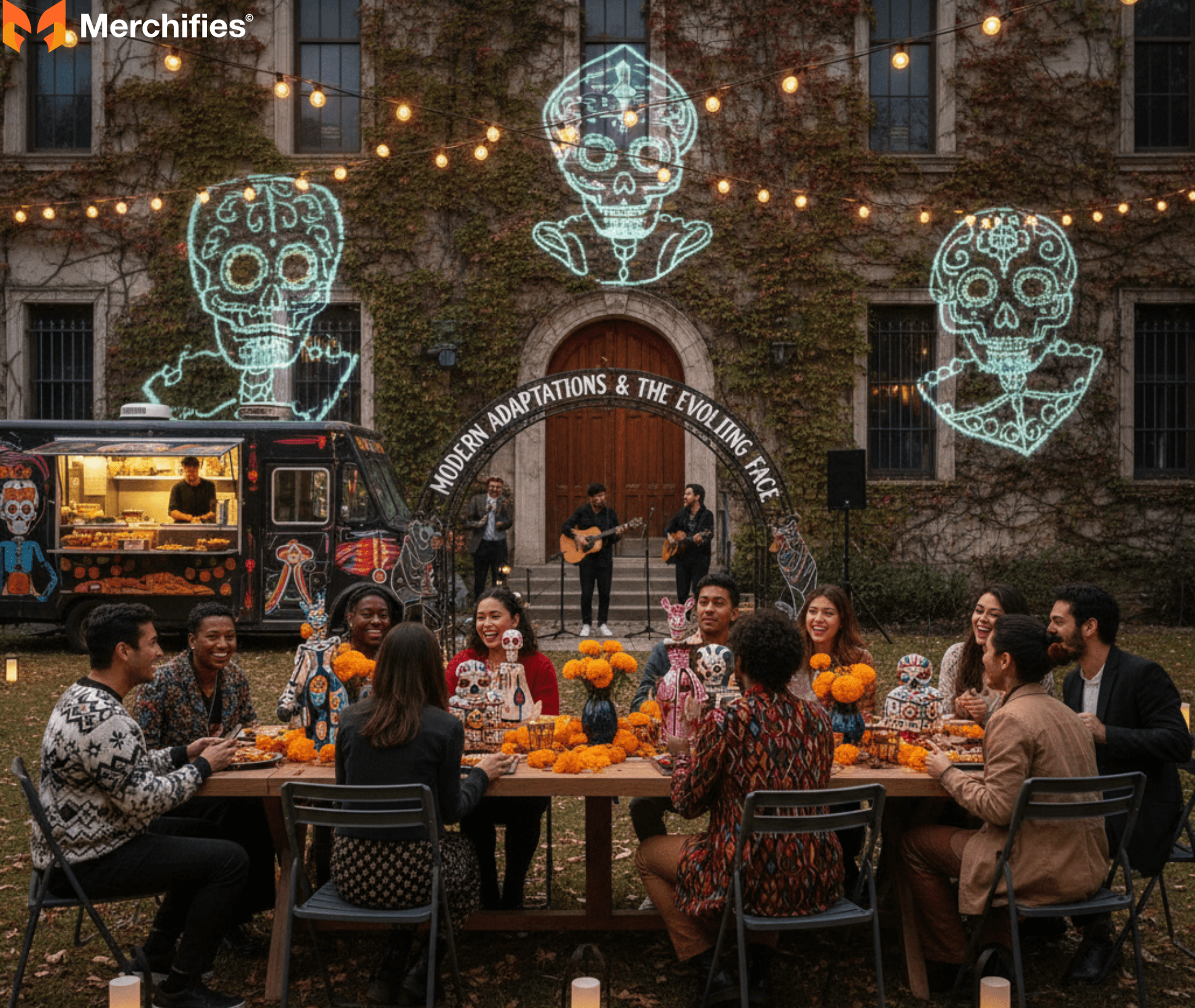
Like any living tradition, Día de los Muertos has adapted and evolved over time, influenced by global media, urban environments, and changing demographics. These modern adaptations sometimes spark debate, but often serve to introduce the holiday to new audiences and ensure its continued relevance and vitality.
These adaptations are a double-edged sword: they can significantly raise awareness but also risk diluting the holiday's profound spiritual meaning if not approached thoughtfully. For me, the challenge lies in embracing new forms of celebration while diligently preserving the spiritual core and cultural authenticity that makes Día de los Muertos so special and sacred.
The 2017 Disney-Pixar film "Coco" arguably brought Día de los Muertos to an unprecedented global audience. The film, widely praised for its respectful, beautiful, and heartfelt portrayal of the holiday's traditions and values, significantly increased awareness and understanding of Día de los Muertos, especially among children and non-Mexican audiences worldwide.
While some purists might express concerns about commercialization, "Coco" did an exceptional job of explaining complex cultural concepts—like the importance of the ofrenda and the belief that you truly die only when forgotten—in an accessible and emotionally resonant way. In my opinion, "Coco" stands as a brilliant example of how pop culture can be a powerful vehicle for cultural education and appreciation, even if it simplifies certain aspects for a wider audience, sparking curiosity and respect.
In large urban centers, both within Mexico and internationally, Día de los Muertos celebrations often take on a more public and performative character. Beyond traditional family gatherings, cities host large-scale parades, art exhibits, and community events that draw diverse crowds, transforming public spaces into vibrant tributes.
These contemporary celebrations, while sometimes less intimate than a family's home ofrenda, play a vital role in keeping the holiday visible, engaging, and relevant for younger generations and those in diaspora. They demonstrate the holiday's flexibility and its remarkable capacity to thrive in diverse environments, evolving from purely private observances to broader, inclusive cultural spectacles that share its beauty with the world.
For those outside the culture, observing and appreciating Día de los Muertos respectfully is paramount. It's an invaluable opportunity for cultural exchange and understanding, not appropriation. Genuine respect stems from informed participation and a deep appreciation for its spiritual significance.
Engaging respectfully means educating yourself, understanding the holiday's spiritual depth, and participating in ways that truly honor its traditions and the people who observe them. As Isabella Cruz, I always emphasize that genuine respect comes from informed participation, not merely adopting aesthetics without understanding their profound meaning.
Día de los Muertos is a fixed holiday, meaning its core dates do not change year to year. It will always be celebrated on **November 1st and 2nd**.
This unwavering consistency makes it easy for families to plan their annual remembrances and preparations, knowing exactly when to begin their heartfelt tributes. The steadfast timing is part of what makes the tradition so enduring and reliable for those who observe it, allowing for generations to participate in the same sacred cycle of remembrance and celebration.
With 4 years of experience as a cultural lifestyle writer and SEO content editor focused on global traditions, Isabella Cruz hopes this deep dive has offered a clearer, more nuanced understanding of when Día de los Muertos is celebrated, alongside its profound cultural tapestry. This isn't just a date on the calendar; it's a vibrant, living tradition that celebrates life, honors death, and keeps the memories of loved ones eternally bright and cherished.
-d4c38c342cdf20ca.jpeg)

-b555fcc6b204c456.jpeg)