-da0801079a650a2e.jpeg)
17 Year Anniversary Quotes: 110+ Funny, Romantic & Furniture Wishes (2026)
Mar, 12 2026

Discover what makes a comfort tshirt truly student-ready for back to school 2026. Learn the fabric weights, fits, and care tips that keep kids comfortable from first bell to final bus ride.

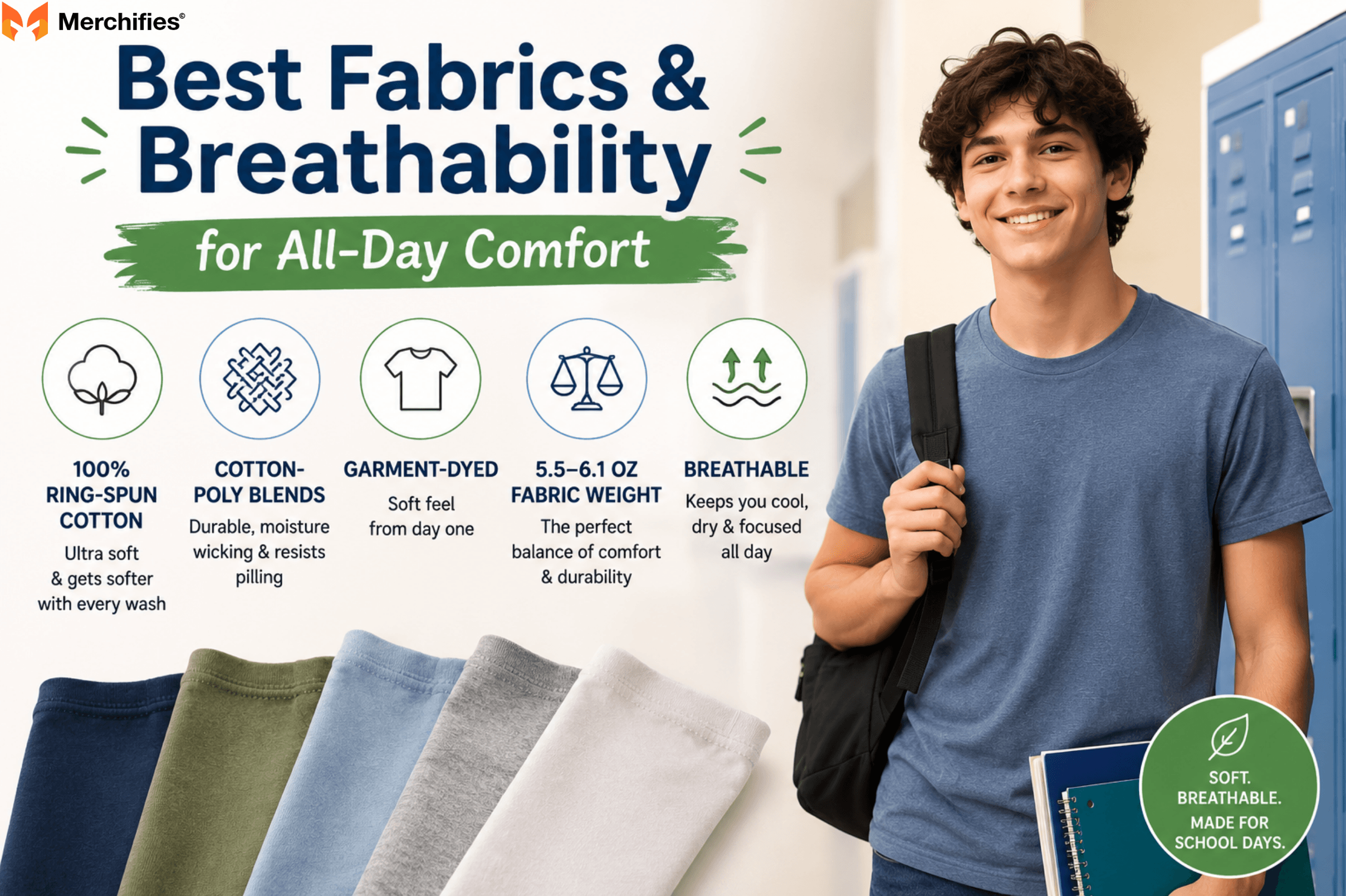
A truly comfortable t-shirt for students comes down to three measurable factors: fabric weight between 5.5 and 6.1 ounces, ring-spun cotton fiber construction, and garment-dyed softness that improves with every wash. These criteria matter more than any brand name when parents and students shop for back-to-school basics. As of summer 2026, the combination of all-day classroom wear, gym transitions, and unpredictable school temperatures demands tees that perform across shifting conditions—not just look soft on the shelf.
Whether grabbing standard blanks or designing custom tees for clubs and spirit weeks, understanding what creates genuine comfort prevents wasted money on shirts that feel stiff after three washes.
What makes a comfort tshirt work for students:
Comfort in a student t-shirt means fabric softness, breathability, and unrestricted movement working together through an eight-hour school day. Adults might tolerate a slightly stiff shirt for a few hours at the office. Students wear their tees from the 7 AM bus ride through afternoon practice, with temperature swings between air-conditioned classrooms and humid gymnasiums in between.
The three criteria that separate genuinely comfortable tees from marketing claims are fabric weight, fiber composition, and construction quality. Fabric weight determines whether the shirt feels substantial enough to drape properly without clinging when a student gets warm. Fiber composition—ring-spun versus open-end cotton, pure cotton versus blends—affects hand feel and how the fabric responds to repeated washing. Construction quality shows in details like double-needle hems that prevent warping and shoulder seams placed to allow arm movement during note-taking and basketball alike.
These criteria apply whether buying off-the-rack basics or ordering custom tees for student government, robotics club, or the cross-country team. A shirt printed with a clever design still needs to meet comfort standards, or it ends up buried in the back of a dresser by October.
Ring-spun cotton at 100% purity delivers the softest hand feel and continues getting softer through each wash cycle. The ring-spinning process creates longer, finer fibers compared to standard open-end cotton, resulting in fabric that feels smooth against skin rather than rough or scratchy. For students who change between regular classrooms and PE, this baseline softness prevents the distraction of uncomfortable fabric during tests or presentations.
Cotton-polyester blends offer a durability advantage worth considering for active students. A 60/40 cotton-poly blend wicks moisture faster during gym class and resists pilling through months of backpack friction. The honest trade-off: if you want maximum softness, you need 100% cotton. If you want maximum durability for athletes, blends deliver without sacrificing too much comfort.
Garment-dyed tees feel different from piece-dyed alternatives from day one. Garment dyeing happens after the shirt is sewn, which slightly shrinks and softens the fabric before it ever reaches a store shelf. Piece-dyed shirts use pre-dyed fabric that can feel stiffer until broken in. For back-to-school shopping in August, garment-dyed means the comfort tshirt works immediately—no waiting through five wash cycles for it to feel right.
Fabric weight sits in a sweet spot between 5.5 and 6.1 ounces per square yard for school wear. Lighter weights feel flimsy and show every undershirt or bra strap. Heavier weights trap heat in warm classrooms. The mid-range provides enough structure to hang properly while breathing well enough for temperature regulation.
Breathability prevents the cling and dampness that makes the last period of the day uncomfortable. Natural cotton fibers allow air circulation that synthetic fabrics cannot match. When classroom thermostats battle outdoor temperatures, breathable fabric helps students stay focused instead of tugging at sticky shirts.
Comfort Colors dominates searches for comfort tshirt because their garment-dyed heavyweight tees set a quality standard—but the specifications matter more than the label. Their signature 6.1-ounce ring-spun cotton with garment dyeing creates the soft, lived-in feel that became synonymous with the category. Understanding why their formula works helps evaluate any brand.
Other student-friendly options include Gildan Softstyle at a lower price point, Next Level for a slightly more fitted silhouette, and Bella+Canvas for fashion-forward cuts. Each delivers comfort when the specs align: ring-spun cotton, appropriate weight, quality construction at seams and hems.
Brand premium becomes worth it when construction quality and color consistency matter for a specific purpose—team uniforms that need to match exactly, for instance. For everyday school basics in neutral colors, mid-range options often deliver identical comfort. A $12 Gildan Softstyle made with ring-spun cotton feels nearly indistinguishable from a $24 premium alternative after both go through five wash cycles.
The evaluation framework remains constant regardless of brand. Check the fiber content label for ring-spun cotton. Verify fabric weight falls between 5.5 and 6.1 ounces. Feel the shirt—garment-dyed options have a distinct softness fresh off the rack. If those boxes check, the brand name becomes a secondary consideration.

$12.79
$22.79
43% off
$12.79
$22.79
43% off
$12.79
$22.79
43% off
$12.79
$22.79
43% off
$12.79
$22.79
43% off
$12.79
$22.79
43% off
$12.79
$22.79
43% off
$12.79
$22.79
43% off
$12.79
$22.79
43% off
$12.79
$22.79
43% off
$12.79
$22.79
43% off
$12.79
$22.79
43% off
$12.79
$22.79
43% off
$12.79
$22.79
43% off
$12.79
$22.79
43% off
$12.79
$22.79
43% off
$12.79
$22.79
43% off
$12.79
$22.79
43% off
$12.79
$22.79
43% off
$12.79
$22.79
43% off
$12.79
$22.79
43% off
$12.79
$22.79
43% off
$12.79
$22.79
43% off
$12.79
$22.79
43% off
$12.79
$22.79
43% off
$12.79
$22.79
43% off
$12.79
$22.79
43% off
$12.79
$22.79
43% off
$12.79
$22.79
43% off
$12.79
$22.79
43% off
$12.79
$22.79
43% off
$12.79
$22.79
43% off
$12.79
$22.79
43% off
$12.79
$22.79
43% off
$12.79
$22.79
43% off
$12.79
$22.79
43% off
$12.79
$22.79
43% off
$12.79
$22.79
43% off
$12.79
$22.79
43% off
$12.79
$22.79
43% off
$12.79
$22.79
43% off
$12.79
$22.79
43% off
$12.79
$22.79
43% off
$12.79
$22.79
43% off
$12.79
$22.79
43% off
$12.79
$22.79
43% off
$12.79
$22.79
43% off
$12.79
$22.79
43% off
$12.79
$22.79
43% off
$12.79
$22.79
43% off
$12.79
$22.79
43% off
$12.79
$22.79
43% off
$12.79
$22.79
43% off
$12.79
$22.79
43% off
$12.79
$22.79
43% off
$12.79
$22.79
43% off
$12.79
$22.79
43% off
$12.79
$22.79
43% off
$12.79
$22.79
43% off
$12.79
$22.79
43% offRegular fit provides the most versatile comfort for students, while relaxed fit works better for those who prioritize movement over a trimmer silhouette. The difference comes down to about an inch of ease through the chest and shoulders—enough to notice when reaching for a locker shelf or shooting baskets at lunch.
For students expecting growth spurts, buying one size up in August makes financial sense. A slightly roomier fit in September becomes perfect by January, and the shirt remains wearable through the end of the school year. The alternative—buying current size and replacing mid-year—doubles the wardrobe cost.
Shoulder seam placement affects comfort during movement more than most parents realize. Seams that sit exactly at the shoulder bone allow natural arm rotation. Seams placed too far toward the neck restrict movement and create friction during physical activity. When trying on tees, have students lift their arms overhead—any pulling or restriction signals a poor shoulder fit.
Hem length matters for dress code compliance. Many schools require shirts long enough to tuck in, even if students rarely actually tuck them. A standard hem that hits mid-hip works for most codes while still looking proportional when worn untucked. Cropped cuts popular in retail fashion may violate school rules, wasting money on unwearable purchases.
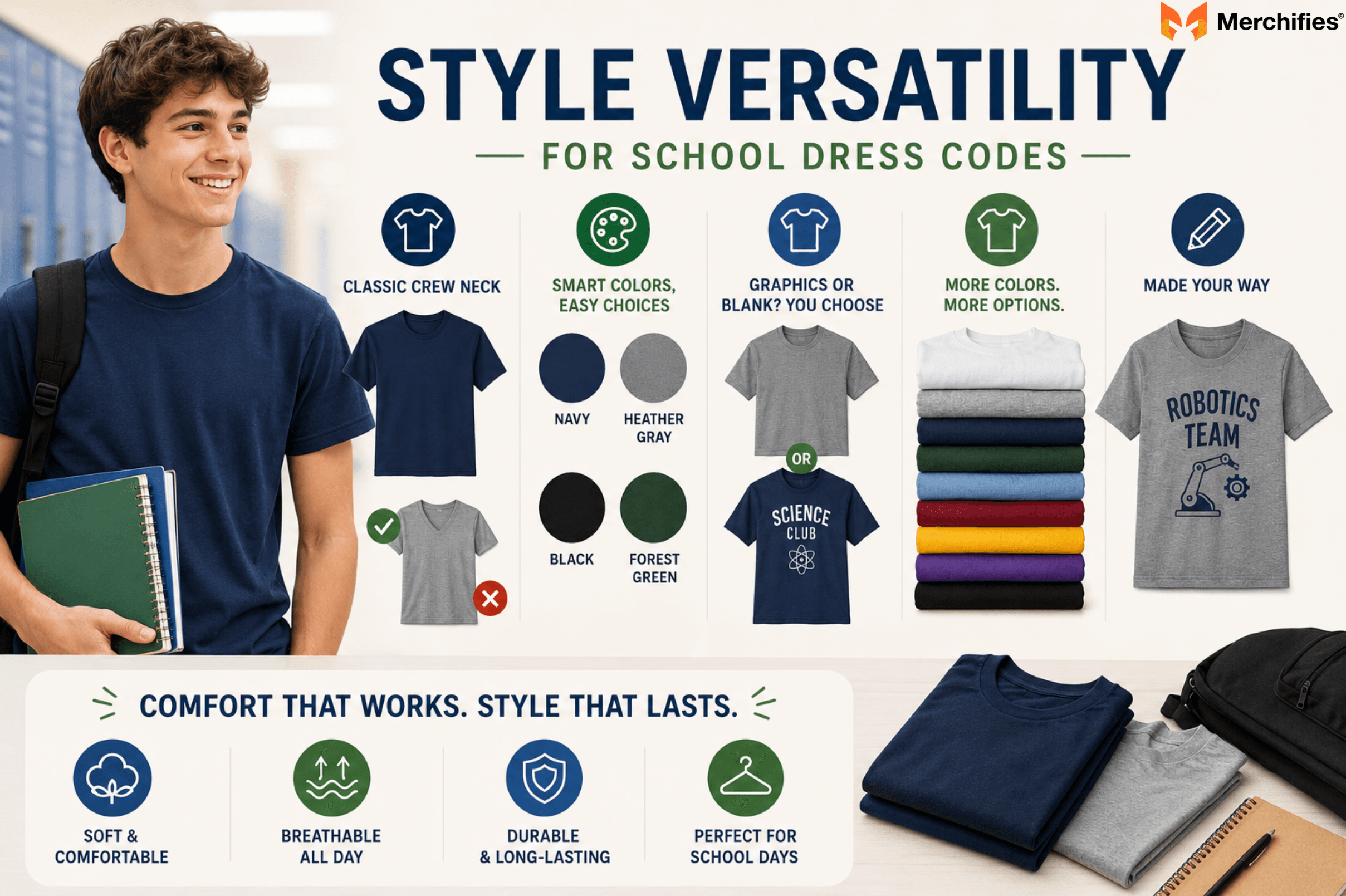
Crew neck tees satisfy more dress codes than V-necks and layer more effectively under required uniform pieces like polos or button-downs. The classic round neckline works equally well alone on casual days or beneath a school-mandated sweater. V-necks can read as too casual for stricter dress codes and sometimes gap awkwardly under layers.
A strategic color palette reduces morning decisions and stretches the wardrobe further. Navy, heather gray, black, and forest green form a core rotation that coordinates with almost any bottoms a student already owns. These neutrals also layer under school-specific colors without clashing.
The choice between graphics and blank tees depends on school rules and student preference. Blank solids work universally and double as base layers. Graphic tees shine on spirit days, for club identity, or as conversation starters when designs stay within school guidelines—nothing offensive, no competitor school logos, appropriate sizing.
Merchifies carries comfort tshirt options in these core neutrals and dozens of additional colors for team coordination and personal expression.
Custom designs let students represent their interests within dress code limits. A robotics club tee with a clever engineering joke passes muster where a random graphic from a fast-fashion site might not. The design context—representing a school-sanctioned activity—often grants flexibility that commercial graphics lack. Building a back to school t-shirt collection that balances basics with meaningful custom pieces creates a wardrobe that works all year.
Print-on-demand services create custom comfort tshirt options for clubs, teams, and personal projects without the bulk minimums of traditional screen printing. A student government treasurer can order 15 matching shirts for the executive board rather than committing to 100 pieces that sit in storage. A track athlete can design a personal training shirt with their goals printed on the back.
Design considerations for school compliance include avoiding copyrighted images, keeping text readable at a distance for spirit day visibility, and ensuring colors contrast enough to look intentional rather than muddy. Simple designs with bold typography often outperform complex graphics that lose detail in the printing process.
Printing method affects how the finished product feels. Direct-to-garment (DTG) printing works directly into the fabric, maintaining breathability and softness better than thick screen-printed plastisol. For comfort tshirt integrity, DTG preserves the qualities that make the base shirt desirable. Screen printing works better for simple designs with limited colors and holds up longer through washes, but can create a noticeable texture difference on the printed area.
Order timing matters for custom projects. Standard turnaround runs 2–3 weeks from design approval to delivery. For back-to-school orders, placing requests by early August ensures shirts arrive before the first day. Rush orders often cost extra and still may not meet tight deadlines.
Merchifies custom t-shirt options—including school spirit designs, club tees, and personalized blanks—to find styles that match student personality while meeting school standards.
Cold water washing preserves fabric softness and prevents the shrinkage that ruins fit over a school year. Hot water opens cotton fibers, causing them to contract and stiffen when dried. Cold water cleans effectively for normal student wear—sweat, food stains, grass marks—without the fabric damage.
Skip fabric softener on cotton tees despite the counterintuitive nature of that advice. Liquid softeners coat fibers with a waxy residue that reduces absorbency and breathability. Over time, this buildup makes shirts feel simultaneously slick and less soft. The dryer ball alternative adds mechanical softening during the dry cycle without chemical residue.
Air drying extends shirt lifespan but requires planning around school schedules. Tumble dry on low heat offers a practical compromise—faster than air drying with less shrinkage risk than high heat. Remove shirts promptly to prevent wrinkle setting.
With proper care, a quality comfort tshirt lasts one full school year minimum, often stretching into a second year for slower-growing students. The fabric may develop a pleasantly worn character while remaining structurally sound.
Signs a tee needs retiring include thinning at stress points like underarms, stretched-out necklines that no longer lay flat, and pilling across the front from backpack friction. Once fabric integrity fails, comfort disappears regardless of how soft the shirt once felt. Retiring worn tees to the pajama drawer and replacing them preserves everyday comfort standards.
-d4c38c342cdf20ca.jpeg)


-b555fcc6b204c456.jpeg)