 Worldwide Shipping
 Secure Payments
 Free Return
 Local Support
-da0801079a650a2e.jpeg)
17 Year Anniversary Quotes: 110+ Funny, Romantic & Furniture Wishes (2026)
Mar, 12 2026
Master the art of choosing men's shirts for every occasion. From everyday tees to polished button-downs, this guide covers fit, fabric, and styling so you dress right without second-guessing.
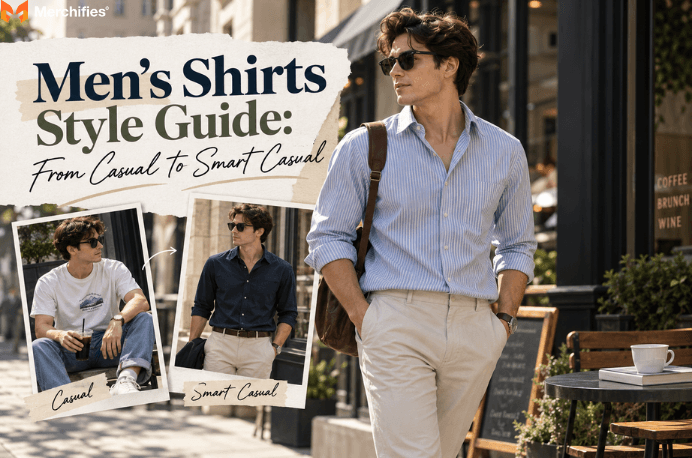
Based on Lucas Bennett's research into men's apparel styling, the difference between looking thrown-together and looking intentionally dressed often comes down to understanding one simple spectrum: where each shirt in your closet falls between casual and smart casual. Mens shirts range from relaxed crew-neck tees at the casual end to structured oxford button-downs at the smart casual peak, with each type serving specific occasions and outfit combinations. Most guys own shirts from both ends but struggle to identify which works where. This guide changes that. We break down every major shirt type, explain how fit and fabric affect your look, and show you exactly how to pair shirts for weekends, date nights, work, and everything in between. By the end, you will know precisely which mens shirts belong in your rotation and when to reach for each one.
The core principle of men's shirt styling:
Casual shirts have no structured collar and use knit fabrics
Smart casual shirts feature woven fabrics and button-down collars
Fit matters more than price for looking intentional
Fabric weight determines seasonality and comfort
The casual-to-smart-casual spectrum organizes every shirt by formality level, from collarless knit tees to structured woven button-downs. Understanding where each shirt falls on this spectrum prevents the classic mistake of wearing a graphic tee to an event expecting collared shirts or overdressing in an oxford when everyone else chose henleys.
At the casual end, you find crew-neck t-shirts, v-necks, henleys, and tank tops. These shirts share common traits: no structured collar, soft knit construction, and relaxed silhouettes. They work for weekends, workouts, and laid-back social settings where comfort takes priority over polish.
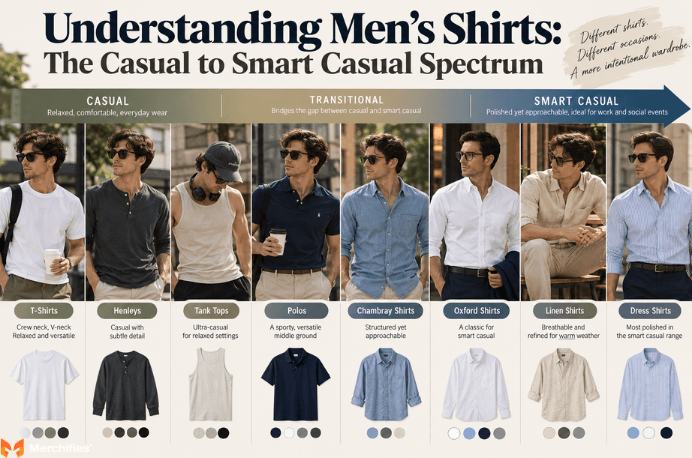
Moving toward the middle, you encounter polos and chambray shirts. Polos add a soft collar and button placket while maintaining athletic heritage. Chambray brings structure through woven fabric but keeps the vibe approachable. Both bridge gym-to-brunch situations where pure casual feels too relaxed but full smart casual reads as overdressed.
At the smart casual end sit oxford cloth button-downs, linen shirts, and dress shirts. These types of mens shirts feature structured collars, woven fabrics, and intentional construction details like barrel cuffs and pleated backs. They signal effort without formality, making them ideal for office environments without suits, dinner dates, and social events with dress codes.
Here is how to identify formality markers on any shirt: Collars add formality. Woven fabrics look more polished than knits. Fitted silhouettes read dressier than relaxed cuts. Darker solids and subtle patterns elevate perceived quality. When you assess a shirt, check these four elements. The more boxes checked, the further toward smart casual it lands.
Why does this matter for your wardrobe? Because most men own shirts from multiple spectrum positions but deploy them randomly. Knowing where each shirt falls lets you match appropriately to any invitation or setting. You stop guessing and start dressing with intention, which people notice even if they cannot articulate why you look more put-together.
Casual shirts for men include five foundational types: crew-neck tees, v-neck tees, henleys, graphic tees, and tank tops, each serving distinct styling purposes. Building a functional casual wardrobe means owning multiples of each in colors that work together.
The crew-neck t-shirt serves as the everyday foundation. Its round neckline sits at the base of your neck, creating a clean silhouette that layers under jackets and stands alone equally well. Choose crew necks in white, black, navy, and heather gray as your rotation base. These four colors match nearly any bottom you own. For quality indicators, look for tight knit construction, reinforced collar bands that resist stretching, and pre-shrunk fabric that maintains fit after washing.
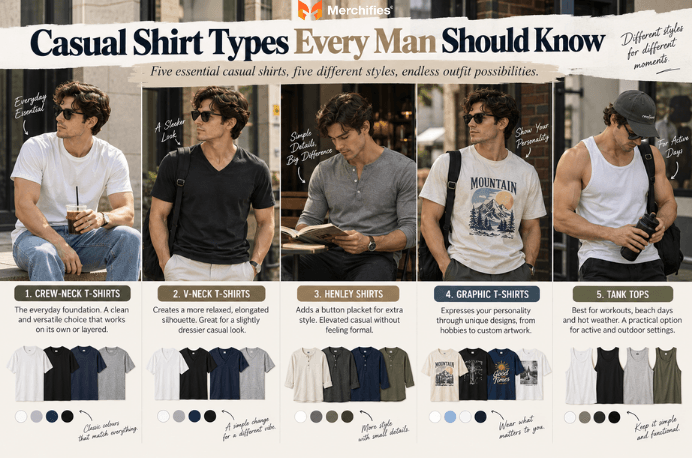
V-neck t-shirts work when you want to show some chest or create visual length in your torso. The V-opening draws eyes downward, which benefits shorter men or those with rounder faces. Avoid deep V-necks that expose too much chest. A moderate V that ends about two inches below your collarbone hits the sweet spot. V-necks also layer better under button-downs when you want an undershirt that stays hidden.
Henley shirts occupy the elevated casual category. Named after the British rowing town where athletes wore them, henleys add a button placket to the crew-neck silhouette. This small detail transforms a basic tee into something with visual interest. Long-sleeve henleys work particularly well in cooler months, layered under jackets or worn alone with sleeves pushed up. The button placket creates structure without formality.
Graphic tees let you express personality through what you wear. Rather than settling for mass-produced designs everyone recognizes, custom designs let you wear what actually matters to you. Whether it is a reference to your hometown, a hobby, or artwork you connect with, personalized graphic tees communicate identity in a way solid colors cannot. The key is intentionality: choose graphics that say something about you rather than random logos. Merchifies carries graphic tees in dozens of styles , from vintage-inspired prints to custom text designs.
Tank tops serve specific contexts: gym workouts, beach days, yard work, and casual outdoor activities in hot weather. They work poorly as standalone streetwear in most situations. If you live somewhere with extended summer heat, tank tops function as practical warm-weather options under open casual shirts. Otherwise, reserve them for athletic settings.
Smart casual shirts combine structured collars with woven fabrics to create polished looks appropriate for offices without dress codes, weekend dinners, and social events requiring elevated attire. As Lucas Bennett notes, these five types cover nearly every smart casual situation you will encounter.
The oxford cloth button-down, commonly called the OCBD, stands as the smart casual workhorse. Its basketweave cotton construction creates subtle texture while remaining smooth enough for professional settings. The button-down collar stays in place without requiring collar stays, making it lower maintenance than dress shirts. OCBDs work tucked into chinos for office days and untucked with jeans for weekend outings. Every man needs at least two: one in white and one in light blue.
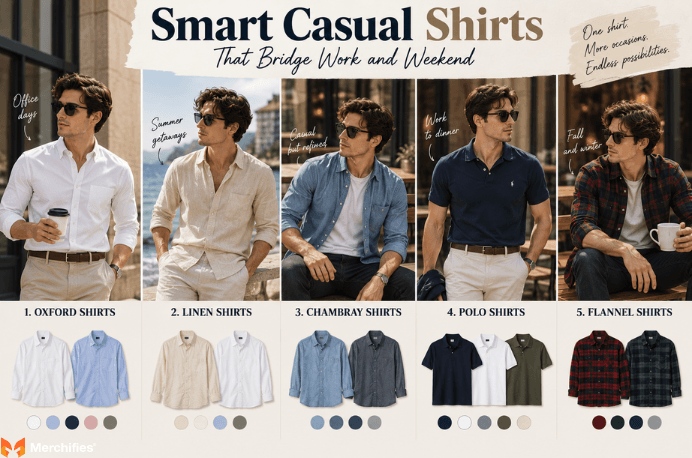
Linen shirts bring warm-weather sophistication. The natural fiber breathes exceptionally well and wicks moisture, making linen ideal for summer weddings, beach vacations, and any occasion where heat threatens comfort. Expect wrinkles. Linen creases naturally, and that rumpled texture actually signals authenticity. Overly pressed linen looks stiff and wrong. Let it relax into its natural state. Light colors like white, cream, and pale blue work best because linen's texture shows better in lighter shades.
Chambray shirts offer casual texture with underlying structure. Made from woven cotton in a denim-like weave, chambray shares visual DNA with denim shirts but in a lighter, softer package. The fabric creates a relaxed aesthetic while the woven construction maintains shape. Chambray works particularly well layered under jackets or worn open over t-shirts. It bridges the gap between casual tees and structured button-downs.
Polo shirts carry athletic heritage into polished settings. Originally designed for tennis players needing freedom of movement without sacrificing collar presence, polos now work in business casual offices, golf courses, weekend brunches, and anywhere requiring more effort than a tee but less formality than a button-down. Fit matters enormously with polos. Too tight reads try-hard. Too loose looks sloppy. The sleeve should hit mid-bicep, and the body should skim without pulling.
Flannel shirts handle seasonal layering with texture and warmth. The brushed cotton construction traps air and insulates, making flannel a fall and winter staple. Classic plaids work for casual weekend contexts, while solid flannels in deeper colors function in smart casual settings. Layer flannel under vests or over thermal henleys when temperatures drop. The honest trade-off with flannel: you gain warmth and texture but sacrifice breathability. If you run hot, save flannel for genuinely cold days.
Proper shirt fit depends on four measurement points: shoulders, chest, length, and sleeves, with shoulder seam placement serving as the single most important indicator of correct sizing. A well-fitted shirt makes inexpensive fabric look premium while poor fit makes expensive fabric look cheap.
Shoulder seam placement tells you immediately whether a shirt fits. The seam should sit exactly where your shoulder meets your arm, right at the bony point. If the seam extends past this point onto your upper arm, the shirt is too large. If it sits on your shoulder muscle toward your neck, the shirt is too small. No amount of tailoring fixes incorrect shoulder width without reconstructing the entire garment.
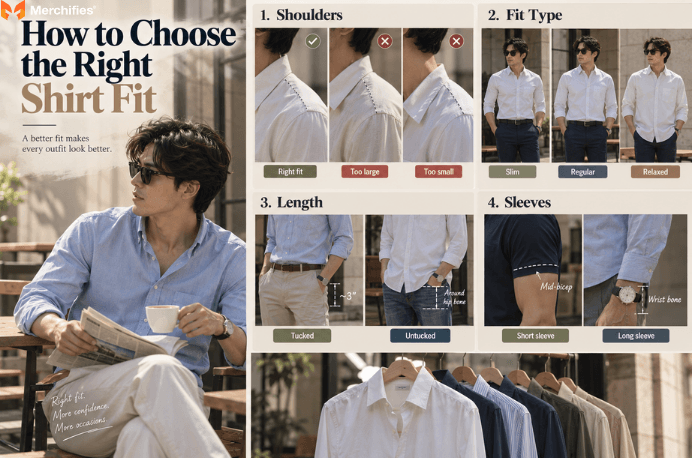
Fit categories break down into three main types: slim, regular, and relaxed. Slim fit follows your body contours with minimal excess fabric. It works for lean builds and creates a modern silhouette. Regular fit provides moderate room through the torso, accommodating average builds comfortably. Relaxed fit adds generous fabric for movement and airflow, suiting larger builds or those prioritizing comfort over contour.
Here is body type guidance for choosing between fits:
Athletic build with broad shoulders and narrow waist: slim fit accentuates your shape
Average build with proportional torso: regular fit provides versatility
Larger build with fuller midsection: relaxed fit drapes without pulling
Tall and thin build: look for slim fit in long sizes to avoid excess width
Length considerations change based on how you plan to wear the shirt. Tucked shirts should extend about three inches past your waistband to stay secure throughout the day. Untucked shirts should end near your hip bone, covering your belt line but not extending past mid-zipper on your pants. Many men wear shirts at incorrect lengths because they never learned this principle. A shirt too long for untucked wear creates a boxy silhouette that adds visual weight.
Sleeve length affects both short and long-sleeve options. Short sleeves should hit mid-bicep, creating balanced proportions. Sleeves ending higher look too tight; sleeves ending lower look frumpy. Long sleeves should reach your wrist bone with arms relaxed at your sides. When you bend your arm, about half an inch of shirt cuff should remain visible past your jacket sleeve.
Common fit mistakes to avoid: buying based on size label alone without trying on, assuming one brand's medium matches another brand's medium, ignoring shoulder fit because other measurements seem close, and keeping shirts that fit everywhere except one problem area. If shoulders fit wrong, try a different size. If shoulders fit right but the body is too loose, consider tailoring.
Fabric choice determines a shirt's breathability, drape, wrinkle resistance, and appropriate season, with cotton serving as the most versatile base material for mens shirts across formality levels. Understanding fabric differences helps you dress comfortably without sacrificing style.
Cotton dominates men's shirting because it breathes well, takes dye consistently, and softens with washing. But not all cotton shirts perform equally. Look for ring-spun cotton, which uses longer fibers twisted tightly for durability and softness. Combed cotton removes short fibers and impurities before spinning, creating smoother fabric. Pima and Supima cottons use extra-long staple fibers that resist pilling and hold shape wash after wash. Tight weave construction indicates quality; hold the fabric up to light and check for even density without thin spots.
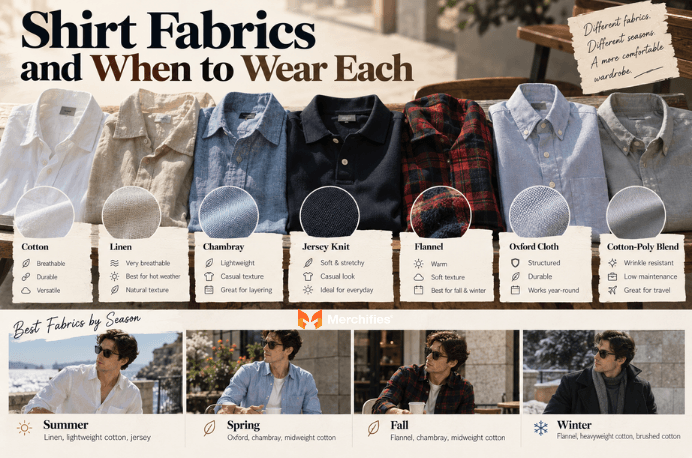
Linen excels in summer when cotton feels heavy. The flax-derived fiber creates natural temperature regulation by wicking moisture and allowing airflow through its loose weave. Linen wrinkles readily, which some men see as a downside but actually signals the fabric is authentic rather than synthetic. Accept the wrinkles as part of linen's character. Save linen shirts for genuinely warm weather since the breathability that cools you in summer will chill you in air conditioning or cool evenings.
Cotton-polyester blends trade natural feel for practical benefits. Polyester prevents wrinkles and maintains shape, making blends ideal for travel or long days when you cannot touch up your shirt. The honest trade-off: blends breathe less effectively than pure cotton and can feel slightly plasticky against skin. For office workers who sit in climate-controlled environments, blends perform well. For outdoor settings or hot commutes, stick with natural fibers.
Jersey knit fabric creates the comfortable feel associated with quality t-shirts. Jersey uses a single-knit construction that produces stretch and drape, making it the standard for casual tees and polos. Weight matters here: lightweight jersey works for summer, while midweight jersey handles cooler temperatures. Look for jersey weight measured in GSM, with 150-180 GSM working for most climates and 200+ GSM providing cold-weather heft.
Quality indicators beyond fabric type include stitching density, collar construction, and pre-shrunk treatment. Check stitches per inch along seams. Higher counts indicate durability. Collar bands should feel firm, not floppy. Press the collar between fingers; it should hold shape. Pre-shrunk treatment means the shirt will not shrink dramatically after first wash. Ask or check labels for this treatment.
Here is how each fabric performs by season:
Summer fabrics: Linen, lightweight cotton, and lightweight jersey deliver maximum breathability and moisture wicking when temperatures climb. These natural fibers keep you cool during outdoor events, beach days, and warm commutes.
Spring and fall fabrics: Oxford cloth, chambray, and midweight cotton provide moderate insulation while allowing layering flexibility. You can add a jacket when mornings feel cool and remove it by afternoon without overheating.
Winter fabrics: Flannel, heavyweight cotton, and brushed cotton trap heat and provide comfortable texture against skin. These fabrics work under sweaters and jackets, adding warmth without bulk.
Occasion-based styling matches shirt formality to setting expectations, preventing the discomfort of over or underdressing while letting you express personal style within appropriate boundaries. Here is how to choose mens shirts for the situations you actually face.
Weekend casual calls for crew-neck tees, v-necks, or henleys paired with jeans, chinos, or shorts depending on weather. This is your default setting when no dress code exists. White tees with dark jeans never fail. Gray henleys with khaki chinos work equally well. Add a casual jacket like a denim or bomber when temperatures drop. Save graphic tees for settings where personality expression feels welcome, like concerts, casual hangouts with friends, or creative environments.
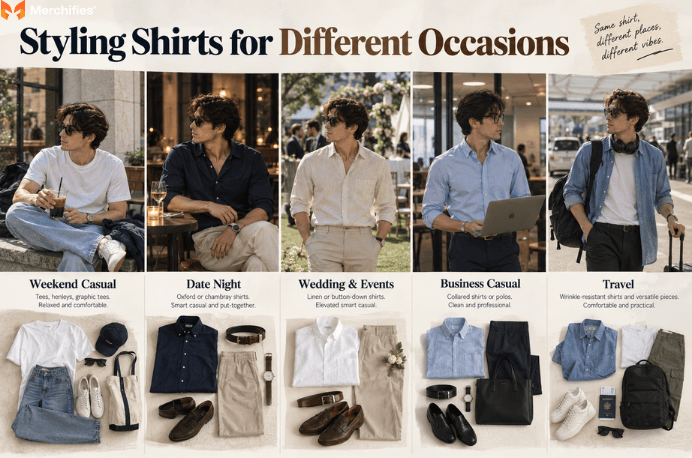
Date night benefits from smart casual elevation. Oxford button-downs or chambray shirts tucked into dark jeans or chinos signal effort without overdressing. Roll the sleeves twice for a relaxed touch if the venue skews casual. If you know the restaurant or bar leans upscale, add a casual blazer over your shirt. The key is looking like you considered your appearance without appearing to have tried too hard.
Wedding party and events require elevated smart casual at minimum. For weddings without black-tie requirements, linen shirts work for outdoor summer ceremonies while OCBDs or dress shirts handle indoor events. Match shirt formality to the venue and time of day. Daytime outdoor weddings permit lighter fabrics and softer colors. Evening indoor events call for crisper materials and darker tones. When in doubt, ask the couple or check their website for dress code guidance. Custom graphic tees make thoughtful personalized gifts for wedding parties and groomsmen, letting you commemorate the occasion with designs that mean something to the group.
Business casual offices present common confusion. The standard formula: collared shirt with chinos or dress pants. Polos work in most business casual environments, though some industries expect button-downs daily. When starting a new job, observe what leadership wears and match that formality level. Tech companies often accept polo shirts while finance or law firms expect button-downs. When meeting clients or presenting, default to button-down even if your office permits polos.
Travel demands versatile options that pack well and resist wrinkles. Cotton-polyester blends perform best for travel because they emerge from luggage relatively smooth. Pack one OCBD for any unexpected smart casual needs and two or three quality tees for casual exploration. Dark colors hide travel grime better than lights. Layer a chambray shirt open over a tee for airport comfort that still looks intentional.
Successful outfit building follows predictable principles: contrast between pieces, proportion balance, and color coordination, which combine to create looks more polished than randomly selected items. You do not need fashion expertise. You need formulas.
Shirt and bottom pairing follows the contrast principle. Light shirts work with dark bottoms. Dark shirts work with medium or light bottoms. Same-shade pairings create monotone looks that require accessories to break up visual weight. When uncertain, pair a white or light blue shirt with navy or dark gray pants. This combination never fails and requires zero thought.
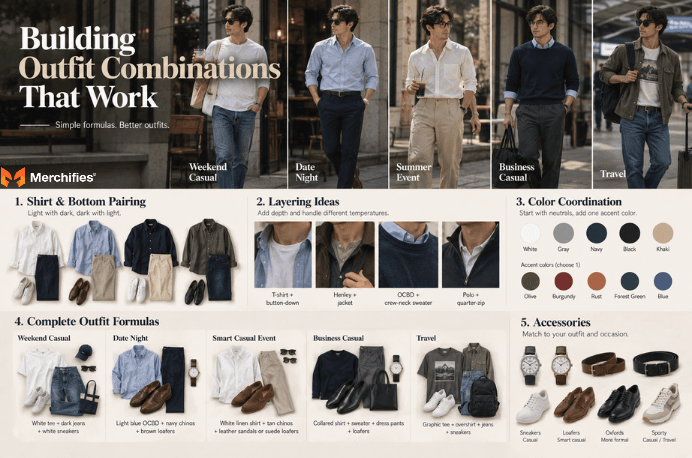
Layering adds visual interest and handles temperature changes. Basic layering for mens shirts: t-shirt under open button-down, henley under casual jacket, OCBD under crew-neck sweater, polo under quarter-zip. Each layer should contrast with its neighbors in either color or texture. A navy sweater over a white OCBD provides color contrast. A chunky knit cardigan over a smooth chambray provides texture contrast.
Color coordination does not require art school training. Start with neutrals: white, gray, navy, black, and khaki work together in any combination. Add one accent color from your shirt or accessories to create interest. If your outfit consists entirely of neutrals, the clean palette reads intentional. If you add a burgundy polo or olive tee, that color becomes the focal point. Avoid more than two non-neutral colors in one outfit unless you have developed strong color intuition.
Accessorizing shirts means paying attention to watches, belts, and shoes. Match belt color to shoe color in smart casual settings. Choose watch styles that align with outfit formality: sporty watches with casual shirts, leather-strap watches with button-downs. Shoes follow the formality spectrum too. Sneakers pair with tees. Loafers pair with polos. Oxford shoes pair with button-downs.
Here are three capsule outfit formulas to memorize:
Weekend casual: white crew-neck tee + dark jeans + white sneakers
Date night: light blue OCBD + navy chinos + brown loafers
Smart casual event: white linen shirt + tan chinos + leather sandals or suede loafers
Personal expression enters through intentional choices within these frameworks. Custom designs and personalized graphic tees let you stand out while staying stylish. When you want pieces that reflect your interests rather than mass-market trends, print-on-demand options deliver designs you will not find in chain stores.
Quality mens shirts share identifiable construction details regardless of price point, and knowing these markers helps you evaluate any shirt before purchasing. Drawing on Lucas Bennett's work with apparel sourcing, these indicators separate worthwhile shirts from disappointments.
Quality indicators to check when shopping: First, examine stitching along seams. Higher stitch counts per inch indicate durability. Second, test collar construction by pressing the collar band between fingers. It should feel structured, not limp. Third, check fabric weight and weave consistency by holding the shirt to light. Even density without thin spots signals quality cotton. Fourth, look for reinforced stress points at the collar, cuffs, and placket. Fifth, verify pre-shrunk treatment on labels to ensure accurate sizing after washing.
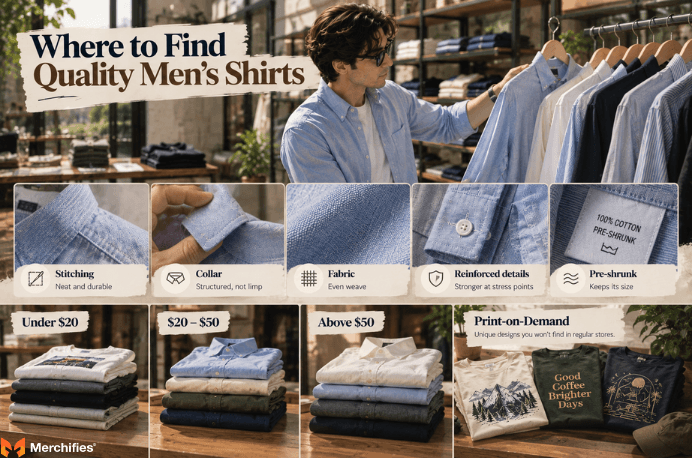
Price-to-quality expectations vary by tier. Under twenty dollars, you find fast-fashion basics that last one to two seasons before fading or losing shape. These work for graphic tees you may outgrow or trend-based items. From twenty to fifty dollars, quality improves noticeably with better cotton, tighter stitching, and longer-lasting construction. This tier handles wardrobe staples. Above fifty dollars, you encounter premium materials like Supima cotton, superior construction, and brand reputations built on consistency.
Print-on-demand offers advantages mass retailers cannot match: unique designs created for specific interests and style preferences rather than generic graphics designed to appeal to everyone. When you want a shirt that says something about who you are rather than what brand you bought, custom graphic tees provide options big box stores simply do not stock. The customization extends to fit preferences, with many POD services offering multiple shirt blanks.
Browse Merchifies' collection of men's shirts , including vintage-inspired graphic tees, custom text designs, and personalized options, to find styles that match the framework this guide provides. Our selection focuses on quality blanks with original designs you will not find hanging in mall stores.
-d4c38c342cdf20ca.jpeg)


-b555fcc6b204c456.jpeg)