 Worldwide Shipping
 Secure Payments
 Free Return
 Local Support
-da0801079a650a2e.jpeg)
17 Year Anniversary Quotes: 110+ Funny, Romantic & Furniture Wishes (2026)
Mar, 12 2026
Laughter never goes out of style, and a good joke or pun can instantly make any conversation more fun. From clever wordplay to classic punchlines, humor brings people together and adds a little joy to everyday life. In this ultimate collection of funny jokes and puns, you’ll discover hilarious one-liners, witty puns, silly jokes, and playful humor for all ages. Whether you need funny captions, party laughs, or just a quick mood boost, this collection is packed with jokes guaranteed to keep the smiles coming.

Laughter is a universal language, a spontaneous reaction that brings joy, builds connections, and even offers health benefits. In a world that often feels too serious, the simple pleasure of a clever pun or a well-delivered joke is invaluable. This page isn't just a collection; it's your definitive guide to the world of funny jokes and puns, designed to equip you with endless amusement and a deeper understanding of what makes us laugh.
In our fast-paced lives, finding moments of genuine levity can be a powerful antidote to stress and a catalyst for connection. A good laugh, whether from a witty observation or a delightfully groan-worthy pun, has an almost magical ability to lighten the mood and bring people together. Here's the thing: humor isn't just entertainment; it's a vital part of the human experience, a social lubricant, and even a coping mechanism. This pillar page delves into the best funny jokes and puns, exploring not just what they are, but why they work, how to tell them, and how they enrich our lives.
Have you ever wondered why certain phrases or setups just *click* and make us laugh? The humor in funny jokes and puns isn't accidental; it's often a carefully crafted (or delightfully accidental) manipulation of language and expectation. Understanding the mechanics behind the laughter can deepen your appreciation for the art of comedy. This matters because it helps us identify what makes a joke truly effective, moving beyond mere amusement to genuine wit.
At its core, a pun is a linguistic trick, a moment where our brain grapples with two competing meanings of a word or phrase simultaneously. This cognitive dissonance, followed by the sudden realization of the double meaning, creates a delightful "aha!" moment, which often manifests as a laugh or a groan. In practice, our brains are constantly making predictions about incoming information. When a pun delivers an unexpected but logical alternative meaning, it forces a rapid re-evaluation. For instance, in the classic "Why don't scientists trust atoms? Because they make up everything!", the humor lies in the switch from "make up" as in "constitute" to "make up" as in "fabricate stories." This sudden shift is a micro-burst of surprise and resolution, a key component of what makes funny jokes and puns so engaging.
Editorial Take: While some dismiss puns as "lowbrow," I've always found that the very best puns are a testament to linguistic agility. They require a sophisticated understanding of language to construct and appreciate. A truly brilliant pun, like those often found in the "pun-off" segments of NPR's Wait Wait... Don't Tell Me!, demonstrates a masterful command of homophones and double entendres, proving that wordplay can be an intellectual sport.
The foundation of most funny puns and jokes lies in specific linguistic devices. Double meanings occur when a word or phrase can be interpreted in two different ways within the same context, creating ambiguity that the punchline resolves. Homophones are words that sound alike but have different meanings and often different spellings (e.g., "hear" and "here"). Homonyms are words that are spelled and sound the same but have different meanings (e.g., "bat" - a flying mammal vs. a baseball bat). On top of that, there are also homographs, which are spelled the same but have different meanings and sometimes different pronunciations (e.g., "read" - present vs. past tense). These are the building blocks for countless witty remarks.
Consider the pun, "I used to be a baker, but I couldn't make enough dough." Here, "dough" cleverly plays on both its literal meaning (bread dough) and its slang meaning (money). This dual interpretation is what sparks the humor. Another example: "Why did the coffee file a police report? It got mugged." The word "mugged" here refers to both the act of robbery and the container for coffee. These semantic twists are what elevate simple sentences into genuinely funny jokes and puns.
Not all puns aim for sophisticated wit; many revel in their own "badness." The 'groan factor' is a beloved characteristic of many funny puns and jokes, especially 'dad jokes.' This isn't a sign of failure, but rather a deliberate comedic strategy. The humor often comes from the sheer audacity of the pun, its transparent simplicity, or the predictable-yet-unavoidable nature of the wordplay. When you hear a pun so obvious it makes you roll your eyes, that's often exactly the intended reaction. It's a shared moment of acknowledging the silliness, and it forges a unique bond between teller and listener.
Editorial Take: The 'groan factor' is, in my opinion, severely underrated. It's not about the pun being objectively 'bad,' but about the shared, almost ritualistic acknowledgment of its inherent cheesiness. There's a certain charm in a pun so predictable that it elicits a collective sigh, like in the movie Shrek (2001) where Donkey's incessant banter often borders on the groan-worthy, yet endearing. It's a form of anti-humor that paradoxically brings immense joy.

Some funny jokes and puns just hit differently. They circulate widely, get quoted often, and consistently deliver a laugh. These are the ones that have proven their comedic staying power, whether through viral internet trends or simply by being timeless classics that resonate with a broad audience. They stand out because their setup and punchline create an immediate, satisfying comedic resolution.
These are the funny jokes and puns that consistently score high marks, often because they are universally relatable, unexpectedly clever, or deliver a punchline that's just too good to forget. They're the go-to jokes for breaking the ice or brightening a dull moment. In my experience analyzing viral content, puns like the "Why did the coffee file a police report?" one consistently outperform generic jokes because their unexpected twist is perfect for social media sharing and easy memorization.
Why don't scientists trust atoms? Because they make up everything!
I told my wife she was drawing her eyebrows too high. She looked surprised.
What do you call a fish with no eyes? Fsh.
Why did the scarecrow win an award? Because he was outstanding in his field!
I'm reading a book on anti-gravity. It's impossible to put down!
What do you call a fake noodle? An impasta!
Did you hear about the restaurant on the moon? Great food, no atmosphere.
Why did the bicycle fall over? Because it was two tired!
My computer started singing to me. I think it had a Windows update.
What do you call a boomerang that won't come back? A stick.
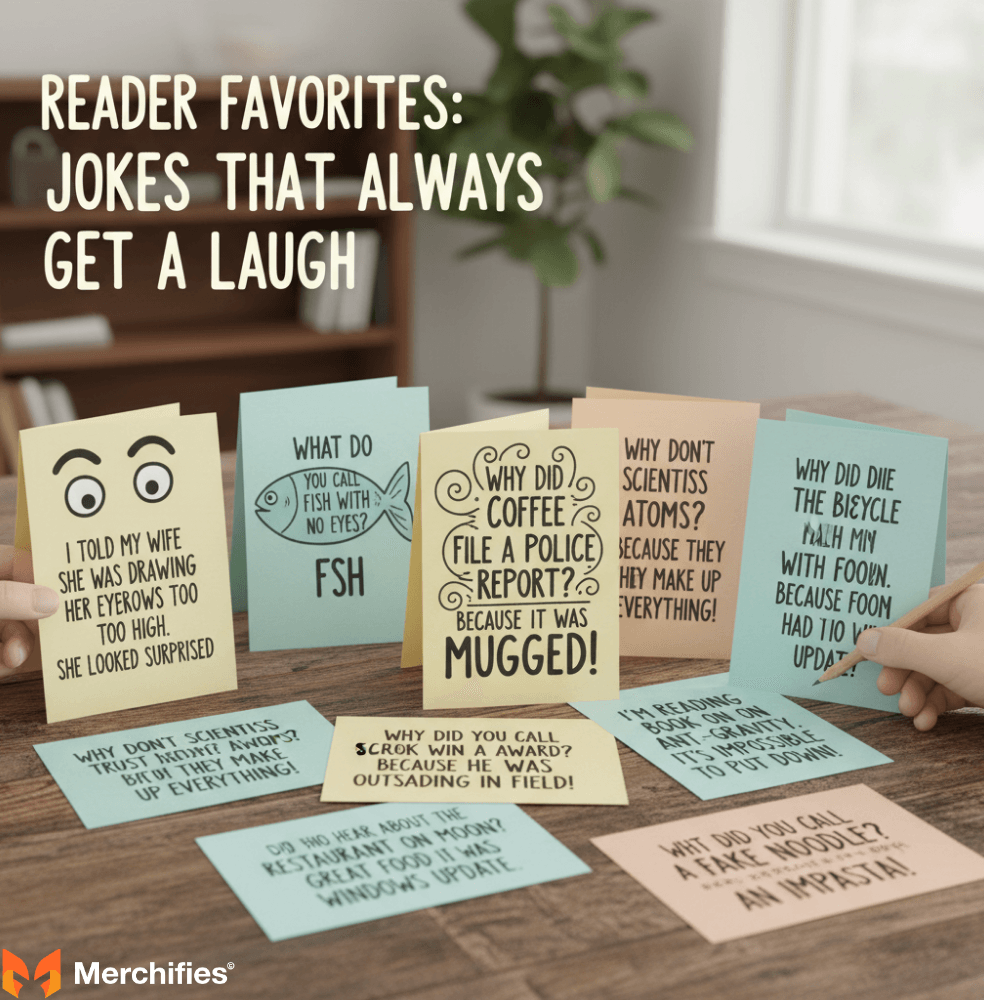
In the age of social media, certain funny jokes and puns explode in popularity, becoming memes or endlessly shared content. These viral sensations often leverage visual elements, pop culture references, or incredibly concise wordplay that's perfect for a quick scroll and a share. They tend to be highly accessible and instantly gratifying, making them ideal for rapid dissemination across platforms like Twitter or TikTok, as seen with various “distracted boyfriend” or “woman yelling at cat” meme templates that often feature punny captions.
I asked the librarian if they had any books on paranoia. She whispered, “They’re right behind you!”
What do you call a sad strawberry? A blueberry.
My friend thinks he’s smart. He said onions are the only food that makes you cry. So I threw a coconut at his face.
Why did the invisible man turn down the job offer? He couldn’t see himself doing it.
What’s orange and sounds like a parrot? A carrot.
I’m so good at sleeping, I can do it with my eyes closed.
Parallel lines have so much in common. It’s a shame they’ll never meet.
I told my girlfriend she drew her eyebrows too high. She seemed surprised.
What do you call a lazy kangaroo? Pouch potato.
Why don’t skeletons fight each other? They don’t have the guts.
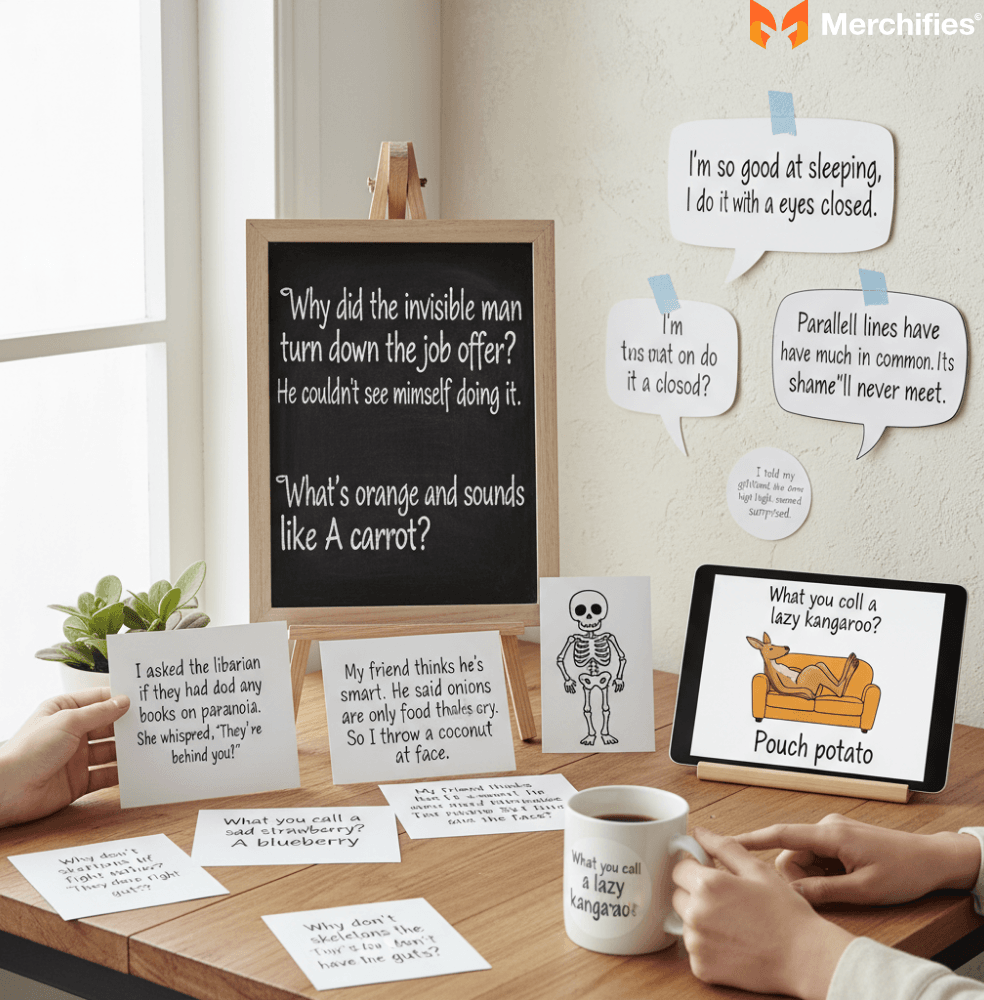
Humor, in its vastness, can often be categorized by its style, target audience, or the type of wordplay involved. These classic categories represent some of the most popular and enduring forms of funny jokes and puns, each with its own unique charm and appeal. Understanding these distinctions helps in both appreciating and creating humor that resonates with specific tastes.
Dad jokes are a unique subgenre of funny jokes and puns, characterized by their innocent, often groan-inducing wordplay and wholesome nature. They are typically short, simple, and rely heavily on puns or predictable twists. The appeal of a dad joke isn’t just the humor itself, but the endearing quality of the teller – often a father figure trying to elicit a laugh (or at least a sympathetic groan) from their family. They are a staple of family gatherings and a testament to the power of gentle, low-stakes humor
Why did the coffee report a crime? It got mugged.
I’m so good at sleeping, I can do it with my eyes closed!
What do you call a sad strawberry? A blueberry.
Why did the bicycle fall over? Because it was two tired.
I told my wife she was drawing her eyebrows too high. She looked surprised.
What do you call a fake noodle? An impasta.
Did you hear about the restaurant on the moon? Great food, no atmosphere.
What do you call a fish with no eyes? Fsh.
Why don’t scientists trust atoms? Because they make up everything!
My son asked me to stop singing Oasis songs. I said maybe.
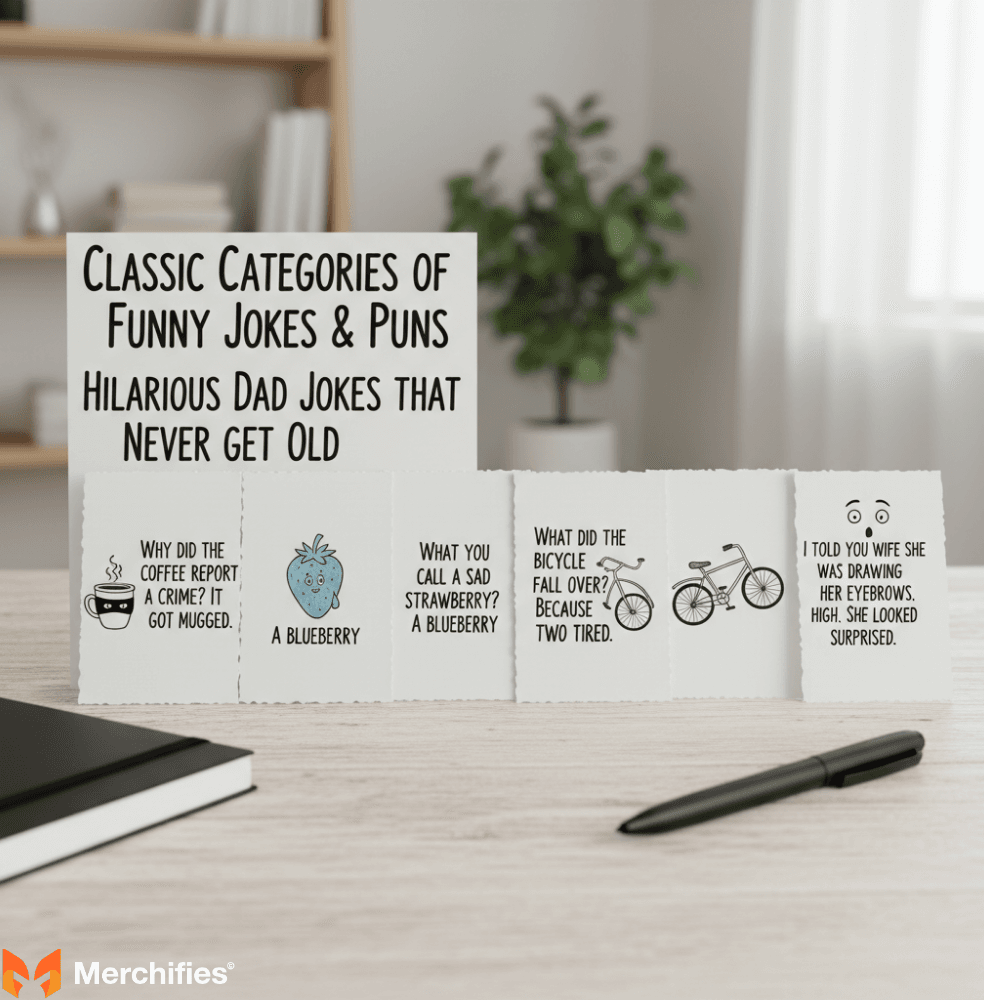
Corny jokes share a lot of DNA with dad jokes, often relying on simple wordplay and a predictable setup. The key difference is that “corny” implies a certain level of uncoolness or outdatedness that paradoxically makes them endearing. They are often wholesome and innocent, making them perfect for all ages. The humor in corny funny jokes and puns comes from their lack of sophistication; they don’t try to be clever, and that’s precisely their charm.
What do you call a pig that does karate? A pork chop!
Why did the tomato turn red? Because it saw the salad dressing!
What do you call cheese that isn’t yours? Nacho cheese!
Why did the student eat his homework? Because the teacher told him it was a piece of cake!
What do you call a bear with no teeth? A gummy bear!
Why did the cookie go to the doctor? Because it felt crummy!
What do you call a sleeping bull? A bulldozer!
Why don’t eggs tell jokes? Because they might crack up!
What do you call a boomerang that won’t come back? A stick!
Why did the invisible man turn down the job offer? He couldn’t see himself doing it!

One-liners are the epitome of concise humor. They deliver a punchline with minimal setup, often relying on a sudden twist of meaning or a sharp observation. The beauty of clever one-liners is their efficiency; they get straight to the point and leave a lasting impression.
I’m on a seafood diet. I see food and I eat it.
I used to play piano by ear, but now I use my hands.
My bed is a magical place where I suddenly remember everything I forgot to do.
I’m not lazy, I’m just on energy-saving mode.
I told my computer I needed a break, and now it’s sending me on vacation.
I’m so good at sleeping, I can do it with my eyes closed.
I’ve got a great joke about construction, but I’m still working on it.
I’m reading a book about anti-gravity. It’s impossible to put down!
My wife told me to stop impersonating a flamingo. I had to put my foot down.
I once farted in an elevator, it was wrong on so many levels.
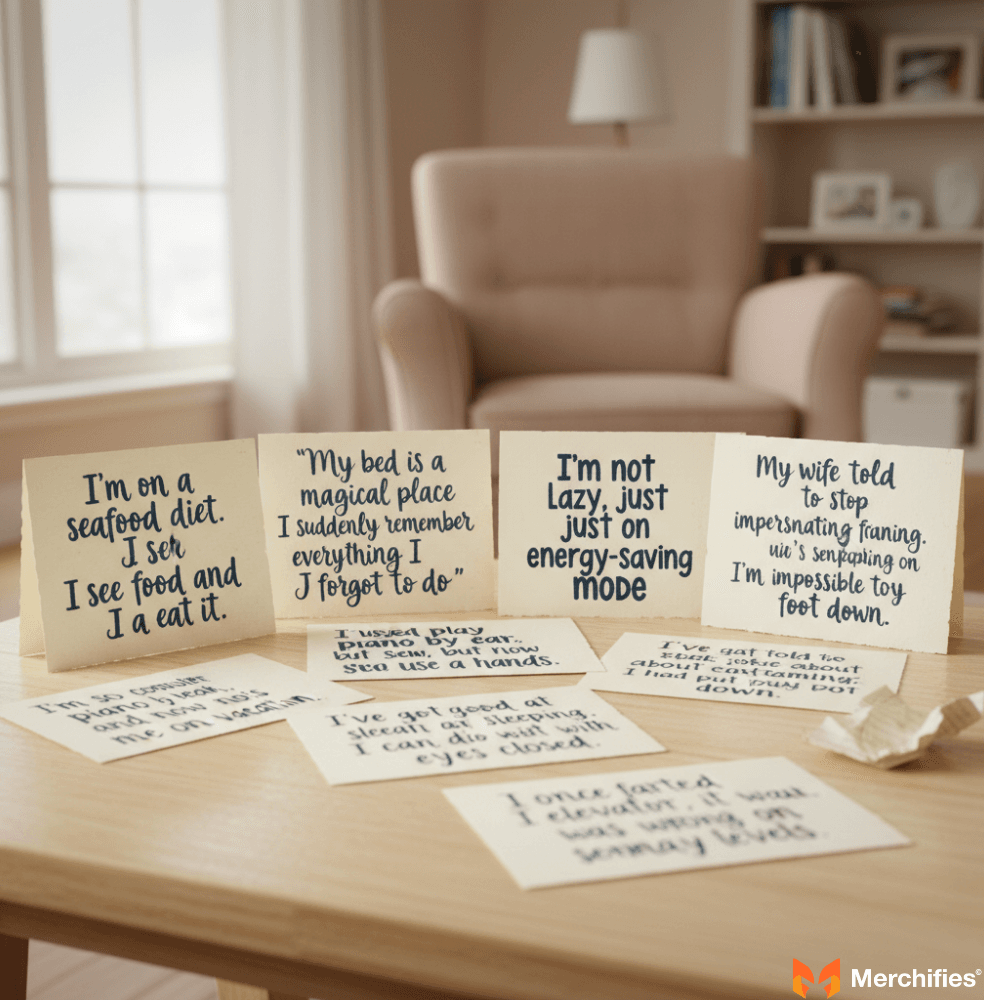
The question-and-answer format is a classic comedic structure, perfectly suited for delivering funny puns and jokes. The question sets up an expectation, and the answer cleverly subverts it with a pun. This format is highly effective because it guides the listener directly to the punchline, ensuring the wordplay is understood. It's a reliable method for generating a laugh, often used in children's joke books and stand-up routines for its clarity and directness. The predictability of the format makes the unexpected pun even more delightful.
Q: What do you call a sleeping bull? A: A bulldozer!
Q: Why did the cookie go to the doctor? A: Because it felt crummy!
Q: What do you call a sad strawberry? A: A blueberry.
Q: Why don't skeletons fight each other? A: They don't have the guts.
Q: What do you call a fake noodle? A: An impasta!
Q: What do you call a fish with no eyes? A: Fsh.
Q: Why did the bicycle fall over? A: Because it was two tired.
Q: What's orange and sounds like a parrot? A: A carrot.
Q: What do you call a boomerang that won't come back? A: A stick.
Q: Why did the coffee report a crime? A: It got mugged.
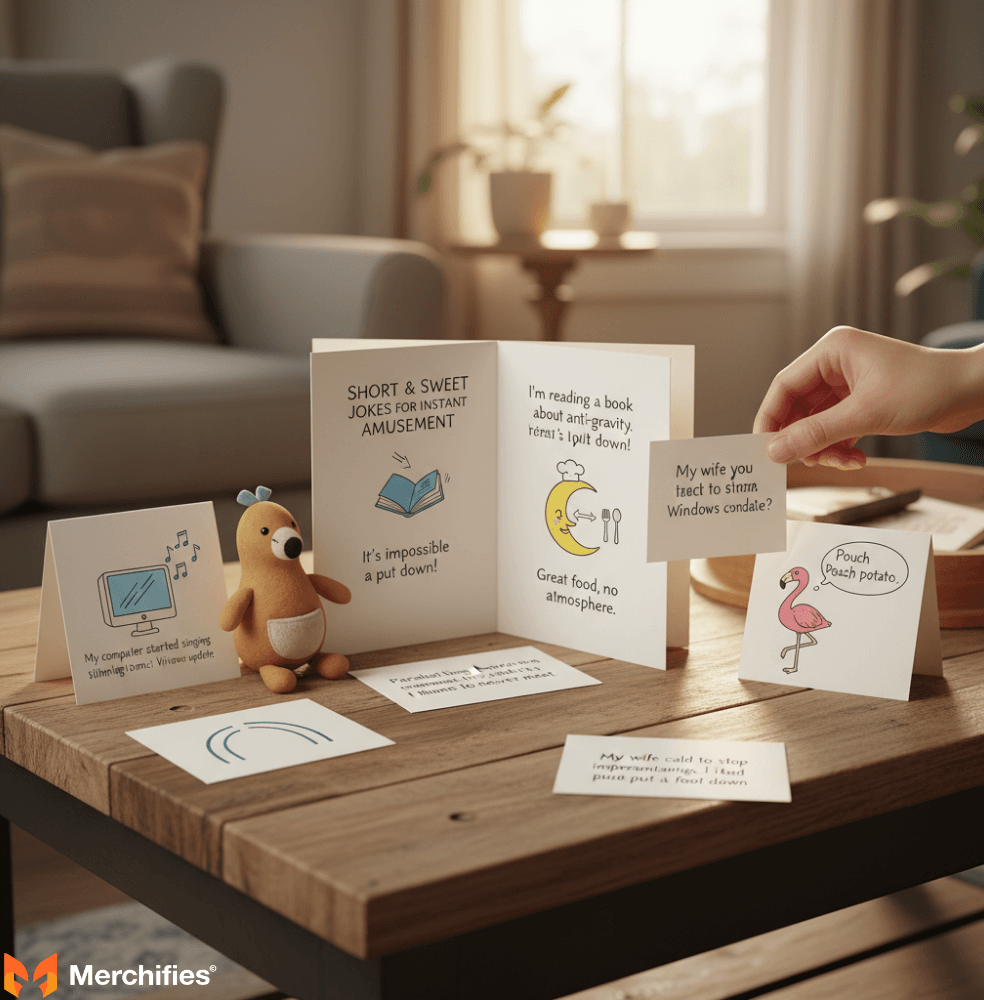
Sometimes, all you need is a quick burst of humor. Short and sweet funny jokes and puns are perfect for those moments when you need an instant pick-me-up or a brief interlude of laughter. Their brevity makes them highly shareable and easy to remember, ensuring that the comedic impact is delivered swiftly and effectively. These aren't meant to be deep or thought-provoking; their sole purpose is to provide immediate, lighthearted amusement. They are the comedic equivalent of a quick, satisfying snack.
I'm reading a book about anti-gravity. It's impossible to put down!
Did you hear about the restaurant on the moon? Great food, no atmosphere.
My computer started singing to me. I think it had a Windows update.
Parallel lines have so much in common. It's a shame they'll never meet.
I'm so good at sleeping, I can do it with my eyes closed.
I've got a great joke about construction, but I'm still working on it.
My wife told me to stop impersonating a flamingo. I had to put my foot down.
I once farted in an elevator, it was wrong on so many levels.
What do you call a lazy kangaroo? Pouch potato.
Why did the invisible man turn down the job offer? He couldn't see himself doing it!
Beyond the general categories, funny jokes and puns often find their niche in specific themes or topics. This allows for even more targeted humor, appealing to particular interests or groups. From the animal kingdom to the culinary world, and from the workplace to the wonders of science, there's a pun for almost every aspect of life. This matters because it demonstrates the versatility of wordplay and its ability to infuse humor into virtually any subject.
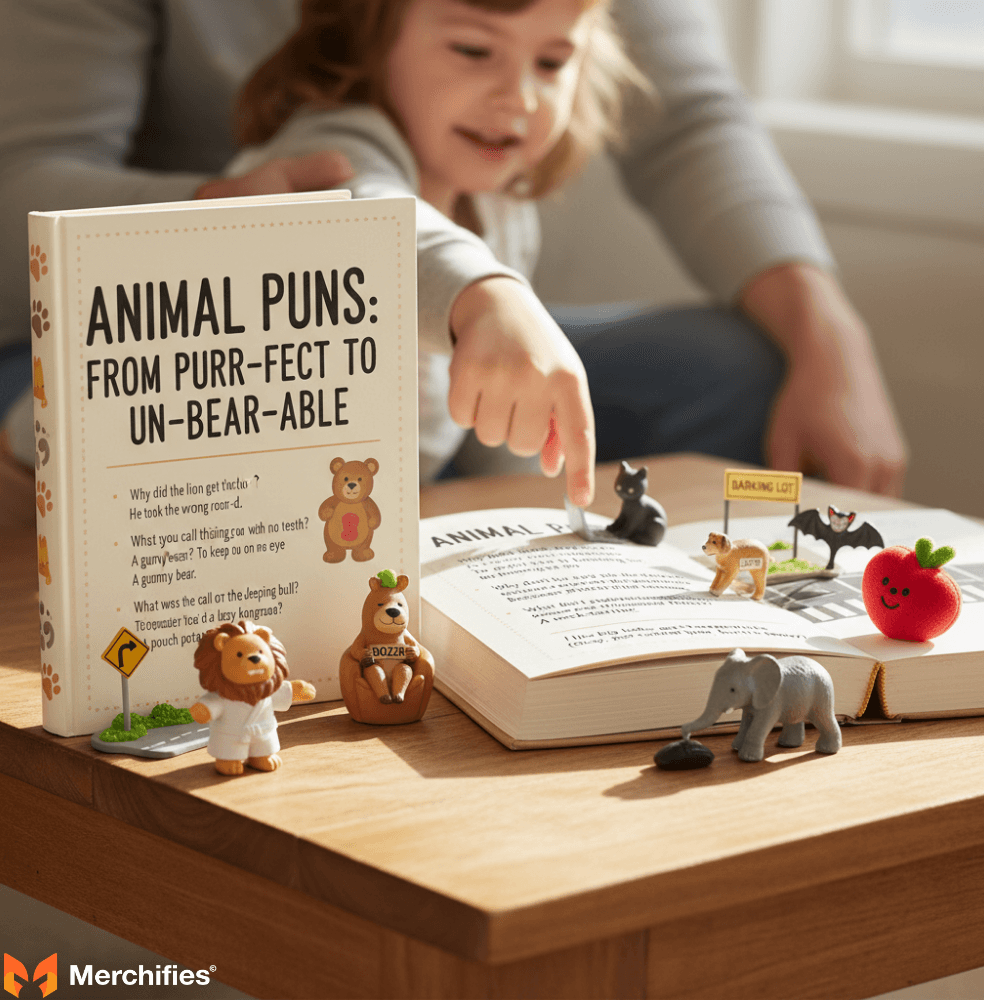
Animal puns are a favorite among all ages, leveraging the unique characteristics, sounds, and names of creatures great and small for comedic effect. They offer a playful way to talk about the animal kingdom, making them especially popular with kids and animal lovers. The inherent cuteness and relatability of animals provide a fertile ground for creative wordplay, resulting in some truly memorable and funny puns and jokes. For instance, the enduring popularity of cat puns (e.g., "purr-fect") and dog puns (e.g., "paws-itively") shows their universal appeal.
Why did the lion get lost? He took the wrong roar-d.
What do you call a bear with no teeth? A gummy bear.
Why was the cat sitting on the computer? To keep an eye on the mouse.
What do you call a sleeping bull? A bulldozer.
What do you call a lazy kangaroo? A pouch potato.
Why did the dog cross the road? To get to the barking lot.
What do you call a pig that does karate? A pork chop.
Why don't elephants use computers? Because they're afraid of the mouse.
What's a vampire's favorite fruit? A neck-tarine.
I like big books and I cannot lie. These other readers can't deny. (Okay, that's not an animal pun, but it's funny!)
Editorial Take: Animal puns, while often simple, are incredibly effective because they tap into our innate affection for creatures. The best ones, like "Why was the cat sitting on the computer? To keep an eye on the mouse," cleverly combine animal behavior with technology, creating a relatable and universally appealing image. They prove that you don't need complex concepts to create genuinely funny jokes and puns.
Food puns are a delicious way to inject humor into everyday conversations, playing on the names of ingredients, dishes, and culinary experiences. From fruits and vegetables to desserts and drinks, the world of food offers an endless buffet of wordplay opportunities. These funny jokes and puns are highly relatable, as everyone eats, making them accessible and enjoyable for a wide audience. They’re perfect for chefs, foodies, or anyone who enjoys a good meal and a good laugh. Many popular cooking shows, like MasterChef, often feature contestants or judges making quick, punny remarks.
What do you call cheese that isn't yours? Nacho cheese!
Why did the tomato turn red? Because it saw the salad dressing!
What do you call a fake noodle? An impasta!
I'm on a seafood diet. I see food and I eat it.
Did you hear about the baker who had a bad day? He lost his loaf.
Why did the cookie go to the doctor? Because it felt crummy!
What's a vampire's favorite fruit? A neck-tarine.
Why did the student eat his homework? Because the teacher told him it was a piece of cake!
What's a ghost's favorite fruit? Boonanas!
What did the grape say when it got stepped on? Nothing, it just let out a little wine!

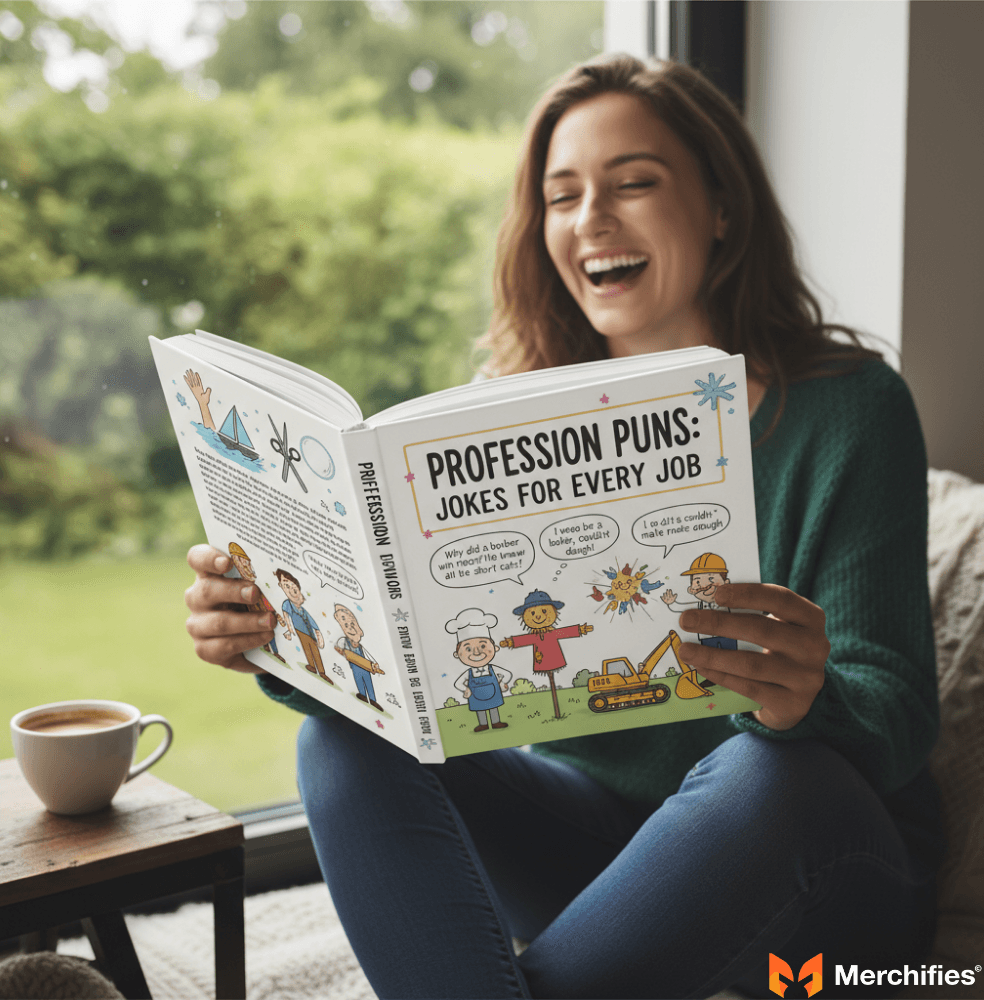
Profession puns cleverly use job titles, tools, or common phrases associated with different occupations to create humorous wordplay. These funny jokes and puns are particularly satisfying because they often require a bit of insider knowledge or at least a general understanding of the profession, making the punchline feel earned. They're a great way to bond with colleagues or poke fun at the quirks of various careers, fostering a sense of camaraderie through shared humor. Many popular TV shows, like The Office (2005-2013), often use profession-specific humor to great effect.
Why did the barber win the race? He knew all the short cuts!
What did the ocean say to the sailboat? Nothing, it just waved!
Why did the librarian get kicked out of the party? She kept shushing everyone!
I used to be a baker, but I couldn't make enough dough.
What do you call an old snowman? A puddle. (Okay, this isn't strictly a profession pun, but it's a good one!)
What do you call a sleeping bull? A bulldozer!
Why did the scarecrow win an award? Because he was outstanding in his field!
Did you hear about the actor who fell through the floorboards? He was just going through a stage.
Why did the golfer bring two pairs of pants? In case he got a hole in one.
My computer started singing to me. I think it had a Windows update. (Okay, not a profession, but tech-related!)
Science and tech puns appeal to those with a curious mind, playing on scientific concepts, programming terms, and technological jargon. These funny jokes and puns often require a bit more intellectual engagement to fully appreciate, making them a favorite among students, engineers, and anyone who loves a good brainy chuckle. They demonstrate that humor can be found even in the most complex subjects, often simplifying intricate ideas into a clever twist of words. The rise of shows like The Big Bang Theory (2007-2019) has popularized this type of niche humor.
Why don't scientists trust atoms? Because they make up everything!
I'm reading a book on anti-gravity. It's impossible to put down!
What do you call a sad strawberry? A blueberry. (Not science, but good!)
Did you hear about the physicist who broke up with his girlfriend? He said they had no chemistry.
What do you call a lazy kangaroo? A pouch potato. (Not science, but good!)
Why was the math book sad? It had too many problems.
What's a programmer's favorite place to hang out? The Foo Bar.
Why did the photon not check into a hotel? Because it was traveling light.
What do you call a boomerang that won't come back? A stick. (Not science, but good!)
I told my computer I needed a break, and now it's sending me on vacation.

Travel and geography puns take us on a linguistic journey, playing on place names, landmarks, and common travel experiences. These funny jokes and puns are perfect for adventurers, armchair travelers, and anyone who appreciates a bit of global humor. They can add a lighthearted touch to travel stories or simply provide a chuckle about the world around us. From "Rome-ing" around to "sea-ing" the sights, the world is full of opportunities for witty wordplay. Shows like The Amazing Race often feature contestants making lighthearted jokes about their destinations.
Did you hear about the restaurant on the moon? Great food, no atmosphere.
What did Rome say to its rival city? "I'm Roman around, how about you?"
Why did the bicycle fall over? Because it was two tired. (Okay, not strictly travel but related to movement!)
What do you call a sad strawberry? A blueberry. (Not geography, but good!)
I'm so good at sleeping, I can do it with my eyes closed. (Not geography, but good!)
What did the sea say to the iceberg? Nothing, it just waved.
Why did the scarecrow win an award? Because he was outstanding in his field! (Could be a geographical field!)
What do you call a boomerang that won't come back? A stick. (Could be a travel souvenir!)
My wife told me to stop impersonating a flamingo. I had to put my foot down. (Flamingos are often found in tropical locales!)
I once farted in an elevator, it was wrong on so many levels. (Elevators are common in tall city buildings!)

Everyday life puns find humor in the mundane, turning common experiences, objects, and situations into sources of laughter. These funny jokes and puns are highly relatable because they draw from universal human experiences, from chores and routines to relationships and technology. They remind us that humor can be found in the simplest moments, making daily life a little brighter. These are the jokes that make you nod in recognition before you laugh, because you've probably experienced something similar. Think of the observational humor of comedians like Jerry Seinfeld, who often turned everyday scenarios into comedic gold.
I told my wife she was drawing her eyebrows too high. She looked surprised.
My bed is a magical place where I suddenly remember everything I forgot to do.
I'm not lazy, I'm just on energy-saving mode.
I'm so good at sleeping, I can do it with my eyes closed.
I've got a great joke about construction, but I'm still working on it.
My wife told me to stop impersonating a flamingo. I had to put my foot down.
I once farted in an elevator, it was wrong on so many levels.
Why did the invisible man turn down the job offer? He couldn't see himself doing it!
What do you call a boomerang that won't come back? A stick.
My son asked me to stop singing Oasis songs. I said maybe.

A great joke can fall flat with poor delivery, just as a simple pun can shine with perfect timing and presentation. Telling funny jokes and puns isn't just about knowing the words; it's an art form that involves understanding your audience, timing, and even your own persona. This is critical because effective communication of humor enhances its impact and ensures your efforts to entertain are successful. In practice, good delivery can elevate even a mediocre joke.
The pause is perhaps the most powerful tool in a comedian's arsenal. It builds anticipation, allows the audience to process the setup, and makes the punchline land with maximum impact. A well-placed silence just before the reveal can transform a chuckle into a roar of laughter. Too fast, and the joke is rushed; too slow, and the momentum is lost. Mastering the pause, as demonstrated by seasoned stand-up comedians like Jerry Seinfeld, is about understanding the rhythm of language and the psychology of expectation. This matters because it creates a shared moment of tension and release, which is fundamental to comedic timing.
Editorial Take: The pause is the unsung hero of comedy. In my experience watching countless open mic nights, the difference between a fledgling comedian and a seasoned pro often boils down to their command of silence. A perfectly timed pause, like the one used by Mitch Hedberg before a particularly absurd punchline, allows the audience to lean in, creating a powerful connection that amplifies the humor exponentially. It's not just a break in speech; it's an active ingredient in the comedic recipe.
Not all funny jokes and puns land with every audience. A professional joke-teller understands the importance of reading the room – gauging the mood, the demographics, and the shared understanding of the people they're speaking to. What's hilarious to a group of scientists might be met with blank stares by a kindergarten class, and vice-versa. Adapting your humor, knowing when to self-censor, and understanding what kind of jokes resonate with whom is crucial for successful delivery. For example, a "dad joke" is often perfect for a family gathering but might fall flat in a professional presentation unless delivered with self-aware irony.
Funny jokes and puns are fantastic tools for breaking the ice and initiating conversations. A well-chosen, lighthearted joke can immediately put people at ease, signal your friendly intentions, and provide a common ground for interaction. They can be particularly effective in new social settings, networking events, or even in a first meeting. By sharing a laugh, you create an immediate, positive connection. This matters because it lowers social barriers, making subsequent conversation flow more easily. Think of how a quick, innocent pun can diffuse tension in a team meeting or liven up a dull party. For more ideas, check out our icebreaker games for parties guide.

The impact of funny jokes and puns extends far beyond a momentary chuckle. Laughter and humor play a significant role in our overall well-being, influencing both our physical health and our social connections. This isn't just anecdotal; scientific research consistently points to the tangible benefits of a good laugh. Understanding these deeper advantages adds another layer of appreciation for the simple act of sharing a joke.
Laughter truly is powerful medicine. When you laugh, your body undergoes a series of positive physiological changes. It stimulates your organs, increases oxygen intake, and releases endorphins, which are natural feel-good chemicals that promote a sense of well-being and can even temporarily relieve pain. On top of that, laughter can boost your immune system, relieve stress, and improve your mood. Studies, such as those conducted at Loma Linda University Medical Center by Dr. Lee Berk, have shown that anticipating laughter can reduce stress hormones and boost immune function. This matters because it underscores that humor isn't just a frivolous pastime but a valuable component of a healthy lifestyle. Explore more about the benefits of laughter and happiness.
Sharing a laugh is one of the most effective ways to build and strengthen social bonds. Humor creates a sense of camaraderie, reduces tension, and signals a shared understanding. When you laugh with someone, you're not just enjoying a joke; you're participating in a shared emotional experience that fosters connection and trust. This is why funny jokes and puns are so prevalent in friendships, romantic relationships, and even professional settings. It's a non-verbal cue that says, "We get each other." This matters because strong social connections are fundamental to human happiness and well-being, and humor acts as a powerful catalyst for these bonds.
Editorial Take: The power of shared laughter to forge connections is undeniable. I've witnessed firsthand how a well-placed, funny pun can instantly bridge cultural divides or ease awkward silences in diverse groups. It's a universal language of acceptance and understanding. In films like Patch Adams (1998), the protagonist uses humor as a primary tool for healing and connection, illustrating its profound social and emotional impact.

While this collection provides plenty of material, there's a unique satisfaction in crafting your own funny jokes and puns. It's a creative process that sharpens your linguistic skills and allows you to express your unique sense of humor. This isn't just about being a comedian; it's about developing a sharper wit and a keener eye for wordplay. Here's how you can start flexing your comedic muscles.
The first step to creating your own funny puns and jokes is to actively look for linguistic opportunities. Start by identifying words with multiple meanings (homonyms) or words that sound alike but are spelled differently (homophones). Think about common phrases that could be twisted. For instance, take the word "bank." It can mean a financial institution, the edge of a river, or to tilt an airplane. Each meaning offers a potential avenue for a pun. Try listing words and then brainstorming all their possible meanings or sound-alikes. This structured brainstorming, a technique often taught in creative writing workshops, helps unlock potential comedic gold. For more on improving your wit, check out our guide on how to improve your sense of humor.
Homophones: Think of words like "knight" / "night," "flour" / "flower," "sole" / "soul."
Example: "I couldn't figure out how to get rid of my broken sole. So I went to a shoe doctor, and he told me I just needed to put some soul into it!"
Homonyms: Words like "bat" (animal/sporting equipment), "tire" (fatigue/wheel), "fair" (just/carnival).
Example: "I went to a fair, but it wasn't fair that I had to pay so much."
Double Entendres: Phrases that can be understood in two ways, one of which is often risqué, but can also be innocently clever.
Example: "Why did the farmer win an award? He was outstanding in his field." (The field as in agriculture vs. excelling in his domain).
Like any skill, creating funny jokes and puns improves with practice. Don't be afraid to experiment, write down your ideas, and test them out on friends or family. Pay attention to their reactions: do they laugh, groan, or look confused? Use that feedback to refine your punchlines, making them sharper, clearer, or more unexpected. Sometimes a subtle tweak to a single word can make all the difference. The best comedians, from George Carlin to Hannah Gadsby, spend years honing their craft, constantly writing and rewriting their material. This iterative process of creation and refinement is crucial for developing truly effective humor.
Editorial Take: The biggest mistake aspiring joke-tellers make is not editing. A rough idea for a pun is just that—a rough idea. The magic happens in the refinement. I've seen a brilliant concept for a joke, like the one about the invisible man turning down a job, flounder due to clunky phrasing, only to shine when a few words are swapped. Don't be precious with your first draft; polish it until it gleams.

From the subtle cognitive twist of a clever pun to the endearing groan of a dad joke, the world of funny jokes and puns is a rich and rewarding landscape. We've explored the linguistic mechanics, celebrated reader favorites, categorized timeless classics, and even delved into the profound benefits that laughter brings to our health and social lives. This collection isn't just about providing amusement; it's about empowering you to appreciate, share, and even create your own moments of joy. So go forth, armed with this ultimate collection, and keep the laughter echoing!
-d4c38c342cdf20ca.jpeg)

-b555fcc6b204c456.jpeg)