 Worldwide Shipping
 Secure Payments
 Free Return
 Local Support
-da0801079a650a2e.jpeg)
17 Year Anniversary Quotes: 110+ Funny, Romantic & Furniture Wishes (2026)
Mar, 12 2026
Discover classic smocked styles for your little one's Thanksgiving celebration. From bubbles to bishop dresses, find the perfect garment type for your child's age with sizing, care, and photo tips.
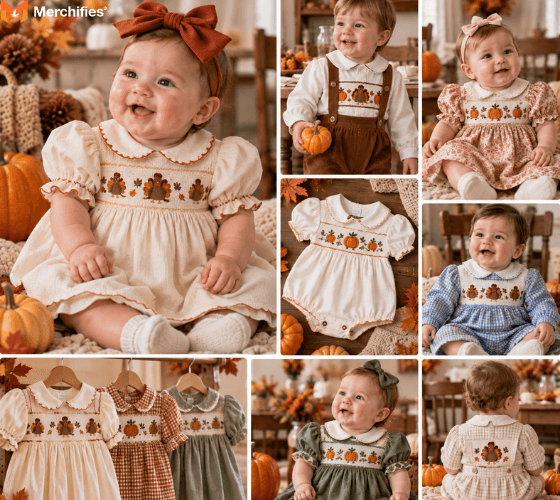
According to Autumn Wilder's research into holiday dressing traditions, thanksgiving smocked outfits remain the gold standard for baby and toddler celebration wear because the hand-gathered fabric creates dimension, texture, and heirloom quality that photographs beautifully and lasts for generations. These classic garments have dressed Southern babies for over a century, and their appeal has only grown as parents rediscover the charm of traditional craftsmanship in an era of mass-produced children's clothing. Whether you're shopping for your own child or selecting a gift for a grandchild, understanding what makes smocked garments special helps you choose confidently and care for these treasured pieces properly.
The honest trade-off with thanksgiving smocked outfits is this: quality smocking costs more than standard embroidered baby clothes, typically running $35 to $150 depending on whether the piece is machine-smocked or hand-stitched. You cannot get heirloom-worthy construction at fast-fashion prices. That investment, however, pays dividends when the same bishop dress or bubble romper dresses three cousins across five Thanksgivings.
Quick Answer: What to Know About Thanksgiving Smocked Outfits
Smocking creates dimensional gathered fabric ideal for holiday photos
Bubbles suit newborns to 18 months; bishops work through age 6
Order 8-10 weeks early for custom pieces, 4-6 for ready-made
Hand wash cold and air dry to preserve stitching for years
Smocking is a traditional needlework technique that gathers fabric into evenly spaced pleats, then secures those pleats with decorative embroidery stitches that create a textured, dimensional surface. Unlike flat embroidery that sits on top of fabric, smocking actually shapes the garment. Run your fingers across a smocked bodice and you feel the ridges and valleys of the gathered material. This tactile quality makes smocked clothing instantly recognizable and distinctly elevated compared to printed or appliqued alternatives.
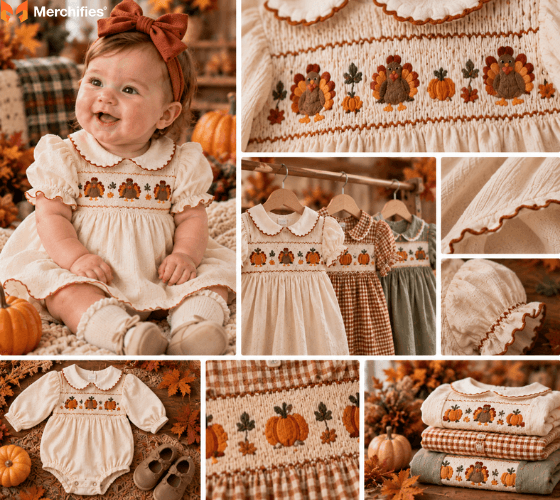
The technique originated in England centuries ago as a practical way to create stretch in linen shirts before elastic existed. Those same properties that made smocking functional for farmers now make it ideal for babies: the gathered fabric expands gently across a round belly, accommodates cloth diapers, and moves with an active child without binding or pulling. The decorative stitches that secure the pleats also reinforce the garment, making quality smocked pieces surprisingly durable despite their delicate appearance.
For Thanksgiving specifically, smocked outfits deliver several advantages parents appreciate. The dimensional texture catches light beautifully in photographs, creating visual interest that flat prints simply cannot match. Traditional Thanksgiving motifs like turkeys, pumpkins, fall leaves, and harvest cornucopias translate wonderfully into smocking and embroidery combinations. A smocked turkey across a bodice has depth and personality that a screen-printed turkey lacks entirely.
The classic aesthetic of smocking also aligns perfectly with the nostalgic, family-focused nature of Thanksgiving gatherings. There is something deeply satisfying about dressing your baby in the same style of garment your grandmother might have worn as a child. Many families deliberately choose thanksgiving smocked outfits because they want photographs that look timeless rather than trendy. Twenty years from now, a smocked bishop dress will still look elegant. A cartoon character onesie will look dated.
Quality smocked garments also carry genuine heirloom potential that resonates with the generational nature of Thanksgiving. When well cared for, these pieces can be passed between siblings, cousins, and eventually stored for the next generation. Grandparents particularly appreciate this quality, which explains why smocked Thanksgiving outfits are among the most popular gifts from grandparents to grandchildren. The investment feels proportional to the sentiment because the garment can serve multiple children across multiple holidays.
Understanding the distinction between smocking and regular embroidery helps parents unfamiliar with the craft shop more confidently. Standard embroidered baby clothes feature decorative stitching applied to flat fabric. Smocked garments feature embroidery that simultaneously gathers and decorates the fabric. If the decorative portion of the garment lies flat, it is embroidered. If it has raised ridges you can feel with your fingertips, it is smocked. Both can be beautiful, but smocking creates a more formal, heirloom-quality result that justifies the higher price point.
Bubble rompers with smocked bodices are the ideal thanksgiving smocked outfit choice for babies from newborn through approximately 18 months because the one-piece construction and snap closures simplify diaper changes while the gathered top accommodates growing bellies. The bubble silhouette features a smocked chest panel that typically sits above an elasticized waist, with short puffed leg openings that create the characteristic rounded shape. Snaps along the inseam allow quick access for diaper changes without removing the entire outfit.
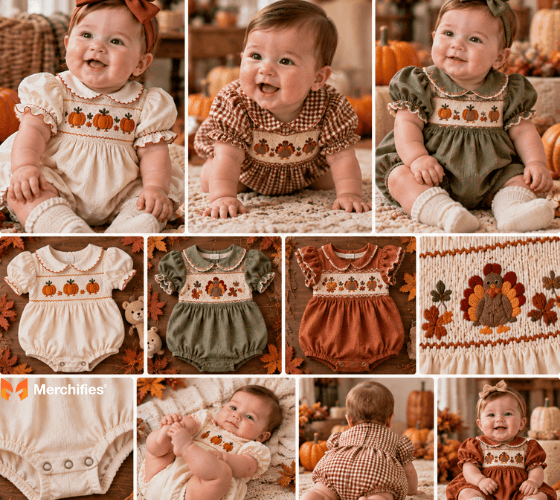
The age range where bubbles excel corresponds directly to mobility stages. Floor-sitting babies look adorable in bubbles because the elasticized legs stay put rather than riding up. Pre-walkers and early crawlers benefit from the freedom of movement the loose leg openings provide. Once a child is walking confidently and running around, many parents transition to other styles, though bubbles can work through 24 months for smaller children.
Practical advantages make bubbles the workhorse of infant Thanksgiving dressing. The one-piece design means no separate pieces to lose or misalign during the chaos of holiday gatherings. The snap closures enable diaper changes in under a minute without wrestling off an elaborate dress. The loose fit accommodates cloth diapers beautifully if your family uses them. Perhaps most importantly, babies in bubbles can play on the floor, reach for toys, and practice sitting without fabric bunching or binding.
The honest trade-off with bubbles involves formality. For a sit-down Thanksgiving dinner where the baby will spend most of the time in a high chair or being held, a bubble looks appropriately festive. For a very formal family photograph where older siblings are in dresses and suits, a bubble may read slightly more casual than a bishop dress. This distinction matters more to some families than others. If your Thanksgiving is a relaxed, play-on-the-floor affair, bubbles are perfect. If your family takes formal portrait-style photos before dinner, consider whether the bubble aesthetic matches your vision.
Price expectations for quality machine-smocked bubbles typically range from $35 to $75 depending on the complexity of the smocking design and the reputation of the maker. Hand-smocked bubbles from specialty artisans often run $60 to $100 or more. For a garment your child will wear for one season, the machine-smocked range offers excellent value. For a piece you hope to pass down through multiple babies, the hand-smocked investment may prove worthwhile.
When selecting a smocked bubble for Thanksgiving, look for details that indicate quality construction. The smocking stitches should be even and tightly gathered with no loose threads or puckering. The snap closures should align properly when fastened. The fabric should feel substantial enough that the smocked area holds its shape rather than drooping. Turkey, pumpkin, and fall leaf motifs are classic choices that never go out of style for the holiday. If you're exploring more Thanksgiving outfit options for babies , bubbles make an excellent starting point before considering other garment types.
Bishop dresses represent the quintessential smocked silhouette for girls, featuring a gathered yoke across the chest that flows into an A-line skirt falling gracefully below the knee. The bishop style takes its name from the shape of a bishop's sleeve, with the gathered smocked area creating fullness that releases into the flowing skirt. This silhouette photographs exceptionally well because the smocking catches light while the skirt creates elegant movement.
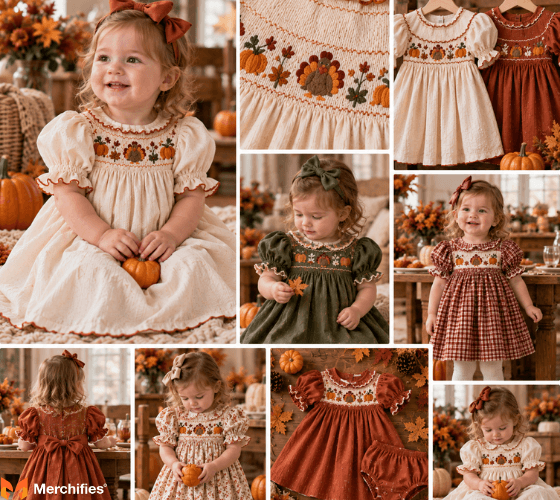
The gathered yoke construction makes bishop dresses remarkably flattering across a wide age range. The style works beautifully from approximately 6 months through 6 years old, though the most classic bishop dress aesthetic tends to suit toddlers through preschool age. The A-line skirt accommodates both diapered bottoms and potty-trained preschoolers equally well. As girls grow, the dress simply appears more fitted through the smocked bodice while maintaining the flowing skirt.
For family photographs, bishop dresses deliver the formal, timeless quality many families seek for Thanksgiving. The dimensional smocking creates visual interest at the top of the frame while the full skirt adds elegance to standing poses. In natural light, particularly near windows, the texture of quality smocking truly shines. Many photographers specifically request that families choose smocked or textured garments because they photograph with more depth than flat prints.
Practical layering considerations vary by age. For babies and young toddlers still in diapers, bloomers worn under the bishop dress provide coverage during diaper changes and crawling. Many quality bishop dresses include matching bloomers for this reason. For older toddlers and preschoolers, tights in complementary colors add warmth for cool November weather while completing the classic look. White or cream tights read more formal; burgundy, mustard, or forest green tights can coordinate with the dress colors for a more styled appearance.
One honest trade-off with bishop dresses involves active toddlers who climb. The flowing skirt that looks so elegant in photographs can catch on play equipment, get stepped on while climbing stairs, or become an obstacle during vigorous play. For toddlers who spend Thanksgiving running around with cousins rather than posing prettily, consider timing the dress for photographs and meal time, then changing into play clothes afterward. Alternatively, a smocked bubble or longall may better suit very active children.
The heirloom potential of bishop dresses particularly appeals to families with multiple daughters or close female cousins. A well-made bishop dress in a neutral Thanksgiving color palette like burgundy, hunter green, or cream can dress three or four girls across several years. Families who host annual Thanksgiving gatherings often photograph each daughter in the same dress at successive ages, creating a cherished tradition. The smocking quality must be excellent to withstand this repeated use, but investment-grade bishop dresses absolutely can serve multiple children when properly cared for.
Jonjons and longalls bring the smocked tradition to boys' Thanksgiving wardrobes, with jonjons offering a short romper silhouette and longalls providing full-length coverage through the legs. Both styles typically feature a smocked bib or chest panel, often with more subtle designs than girls' garments. While girls' smocking frequently incorporates elaborate florals or detailed scene work, boys' smocked thanksgiving outfits tend to feature geometric patterns, small scattered motifs like turkeys or footballs, or simple decorative borders.
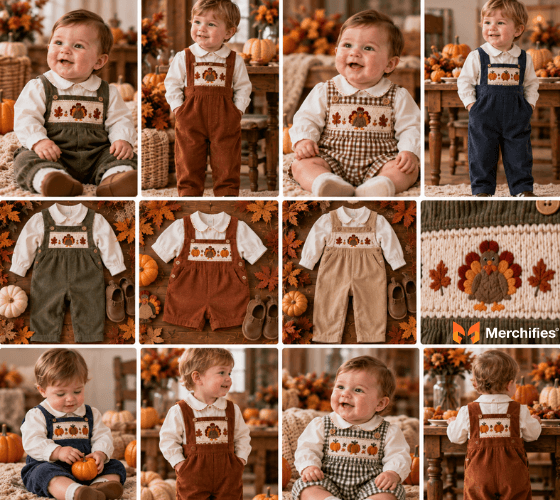
The jonjon silhouette resembles a bubble romper but with a more tailored fit and often with a more pronounced smocked bib across the chest. The shorts portion typically ends mid-thigh. This style suits warm Thanksgiving climates particularly well, making it ideal for families celebrating in the South, Southwest, or anywhere November weather remains mild. Jonjons work beautifully for boys from approximately 6 months through 4 years old.
Longalls extend the smocked bib concept to a full-length garment with coverage to the ankles. Some longalls feature closed feet while others end at the ankle with elastic or button closures. This style provides warmth for cooler November weather while maintaining the traditional smocked aesthetic. Longalls work well from infancy through approximately age 4, though the most classic age range tends to be 12 months through 3 years.
For a more formal Thanksgiving appearance, many families pair jonjons or longalls with a Peter Pan collar dress shirt worn underneath. The shirt collar frames the face and adds a polished touch to photographs. White or cream shirts are classic choices, though light blue can also work beautifully with fall-toned smocking. This layered look elevates the overall formality and works particularly well for sit-down dinners or formal family portraits.
Parents sometimes hesitate about smocked clothing for boys, wondering whether the style appears too fussy or feminine. As Autumn Wilder notes, this concern is entirely unfounded if you understand the tradition. Smocked jonjons and longalls represent a beloved Southern tradition dating back generations. Boys have worn smocked garments to church, family gatherings, and formal occasions throughout American history. The aesthetic is classic, not feminine. Quality boys' smocking tends toward more subdued designs that read traditionally masculine while maintaining the heirloom quality parents seek.
One particular advantage of smocked boys' wear for Thanksgiving involves sibling coordination. When a sister wears a smocked bishop dress, a brother in a coordinating smocked jonjon or longall creates a harmonious photograph without exact matching. Smocking from the same maker in complementary colors achieves a polished sibling look that appears intentional without being costumey. Many specialty children's retailers offer coordinating boy-girl sets specifically for this purpose.
Smocked garments require more careful sizing than standard children's clothing because the gathered fabric has significantly less stretch than regular knit garments. The smocking technique that creates the beautiful dimensional texture also limits the fabric's ability to expand. A smocked bodice that fits snugly when purchased will not stretch to accommodate growth the way a cotton onesie does. Understanding this fundamental difference prevents sizing frustration and returns.
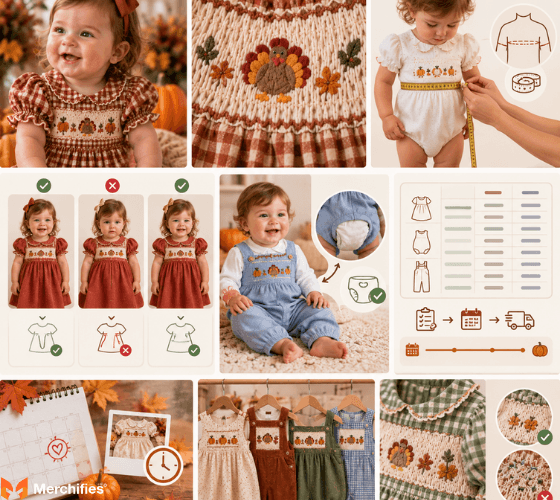
The most reliable approach to sizing smocked outfits involves measuring your child's chest circumference and comparing that measurement to the manufacturer's size chart rather than relying on age alone. Children of the same age vary enormously in body size. An 18-month-old might wear anywhere from 12-month to 2T depending on their build. For smocked garments specifically, chest measurement matters most because that is where the least flexible portion of the garment sits.
When your child's measurements fall between two sizes, always size up for smocked garments. A slightly roomy smocked dress or bubble looks intentional and classic. A too-tight smocked garment pulls across the chest, distorts the decorative stitching, and creates uncomfortable binding under the arms. The garment will also be unwearable much sooner because there is no stretch to accommodate even modest growth.
Cloth diaper families should particularly consider sizing up for smocked bubbles and longalls. The gathered waistlines of quality smocked garments actually accommodate cloth diapers better than many fitted-waistband alternatives because the gathering provides some built-in ease. However, the overall garment needs to be sized appropriately for the extra bulk in the seat area. If your child wears cloth diapers, add one size up from your measurements for optimal fit.
Ordering timeline becomes critical for Thanksgiving smocked outfits because custom and made-to-order pieces require significant lead time. For custom smocking where you select specific designs, colors, and size specifications, order 8 to 10 weeks before Thanksgiving. For the 2026 holiday season, this means placing orders by early October at the latest. Ready-made smocked inventory from established retailers typically ships faster, but 4 to 6 weeks lead time remains advisable to account for shipping delays and potential exchanges.
Quality smocked garments from reputable makers tend to run true to their size charts, but each brand's sizing differs. A size 18-month from one maker may fit quite differently than the same labeled size from another. Always consult the specific size chart for the brand you're purchasing rather than assuming consistency across makers. Taking five minutes to measure your child and compare to the chart prevents the disappointment of receiving a beautiful smocked outfit that doesn't fit for the holiday.
Coordinating family outfits creates more polished Thanksgiving photographs than exact matching because it allows each family member's personality to show while maintaining visual harmony. The trend in family photography has shifted away from everyone wearing identical outfits toward choosing a cohesive color palette that connects without being costumey. When baby wears a traditional smocked outfit, the rest of the family can coordinate around that anchor piece.
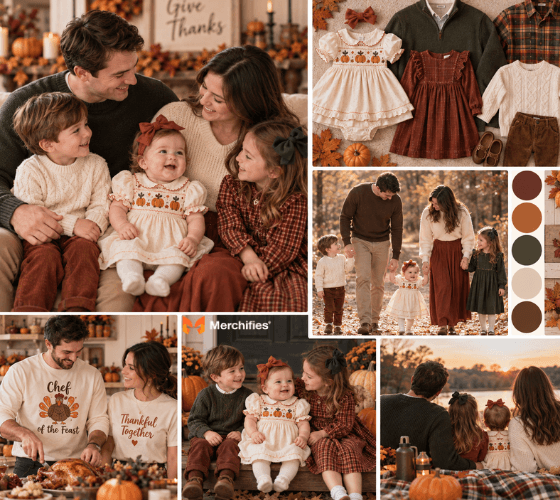
A color palette approach works best for Thanksgiving family coordination. Select two to three complementary fall tones that everyone incorporates into their outfit. Classic Thanksgiving palettes include burgundy with cream and mustard, forest green with rust and cream, or navy with pumpkin and ivory. Baby's smocked outfit often features multiple colors, making it the natural palette anchor. Pull colors from the smocking design for older siblings and parents.
The smocked garment typically reads as the most formal piece in the family photo, which works beautifully when other family members dress in smart casual. Older siblings might wear solid-colored dresses or button-down shirts in coordinating hues. Parents often choose simple, well-fitted pieces without busy patterns that compete with baby's textured smocking. The eye naturally travels to the smocking detail when surrounding outfits remain relatively simple.
Merchifies carries matching graphic tees and personalized items that complement traditional smocked baby wear for parents and older siblings. While baby wears the classic smocked outfit, older siblings can coordinate with themed holiday tees, and parents can add subtle matching elements. This approach honors the traditional smocked aesthetic for the littlest family member while keeping everyone else comfortable and age-appropriate.
Grandparents often gift the smocked outfit specifically because they appreciate the traditional aesthetic. This gifting pattern creates a natural opportunity for parents to purchase coordinating pieces for themselves and older children. The smocked garment becomes the special piece from grandparents while parents coordinate the rest of the family's look. Chef-themed shirts make a particularly fun coordinating piece for whoever is cooking the Thanksgiving meal.
For families taking both formal and candid Thanksgiving photos, consider the coordination through the whole day. The formal pre-dinner portrait might feature everyone in their most polished coordinating outfits with baby in the smocked piece. After dinner, baby can change into play clothes while the smocked outfit is carefully stored, and casual family candids capture the relaxed holiday atmosphere without risking stains on the heirloom garment.
Proper care extends the life of smocked garments from a single-season piece to a multi-generational heirloom, with hand washing and air drying as the gold standard for preserving decorative stitching. The embroidery threads that create smocking are more delicate than the base fabric, meaning aggressive washing or high heat can loosen stitches while the garment itself remains intact. Understanding why certain care methods matter helps you commit to the slightly more involved process.
Hand washing in cold water represents the safest cleaning method for quality smocked pieces. Fill a basin with cool water and add a small amount of gentle detergent designed for delicates or baby clothes. Submerge the garment and gently agitate without rubbing or wringing, particularly avoiding friction against the smocked areas. Rinse thoroughly in clean cold water until no soap remains. The entire process takes only a few minutes longer than machine washing and dramatically extends the garment's life.
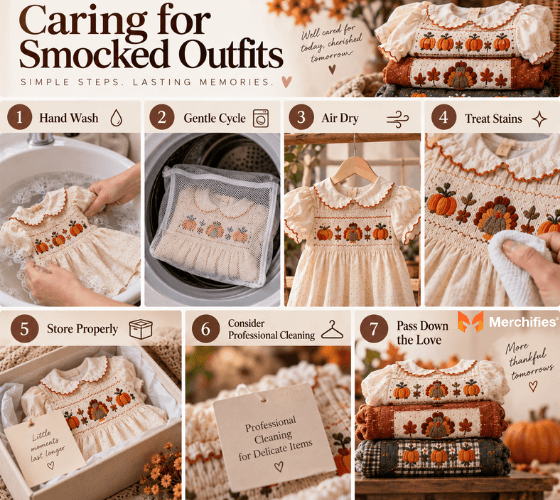
If hand washing isn't practical, machine washing on a gentle or delicate cycle in cold water with the garment turned inside out offers a reasonable alternative. Place the smocked garment in a mesh laundry bag to prevent tangling with other items. Avoid washing with items that have hooks, zippers, or rough textures that could snag the embroidery threads. Cold water is non-negotiable because warm or hot water can cause embroidery threads to loosen over time.
The dryer poses the greatest risk to smocked garments because high heat can distort both the base fabric and the embroidery threads. Air drying is strongly preferred. Lay the garment flat on a clean towel, reshape the smocked areas to lie smoothly, and allow to dry away from direct sunlight. If you must use a dryer, tumble on the lowest heat setting for the minimum time needed, then remove while still slightly damp and lay flat to finish drying.
Thanksgiving inevitably involves food spills, and smocked outfits are not immune. When gravy, cranberry sauce, or sweet potato lands on a smocked garment, address the stain immediately. Blot gently with a clean damp cloth working from the outside of the stain inward. Avoid rubbing the smocked area because friction can loosen stitches. For stubborn protein-based stains like gravy, cold water is essential since hot water sets protein stains permanently. Treat the stain before regular washing rather than hoping the wash cycle alone will remove it.
Storage matters as much as cleaning for preserving smocked garments between wearings and between children. Never fold a smocked garment with the fold line running through the smocked panel because the pressure can crush the raised stitching over time. Instead, hang the garment by built-in hanging loops or store it flat with acid-free tissue paper supporting the shape. For long-term storage between children, wrap in acid-free tissue paper and store in a breathable garment bag rather than plastic, which can trap moisture.
For heavily soiled smocked pieces or particularly valuable heirloom garments, professional cleaning from a cleaner experienced with delicate children's clothing offers peace of mind. Not every dry cleaner handles smocked garments appropriately, so ask specifically about their experience with hand-smocked items before entrusting them with an heirloom piece. The additional cost is worthwhile for irreplaceable items.
Warm fall tones that complement skin tones photograph best for Thanksgiving, with burgundy, mustard, sage, cream, rust, and navy consistently producing beautiful results across different lighting conditions. These colors appear in most quality thanksgiving smocked outfits precisely because they photograph reliably well. When selecting between available options, prioritize colors that flatter your child's complexion over trendy or unusual choices.
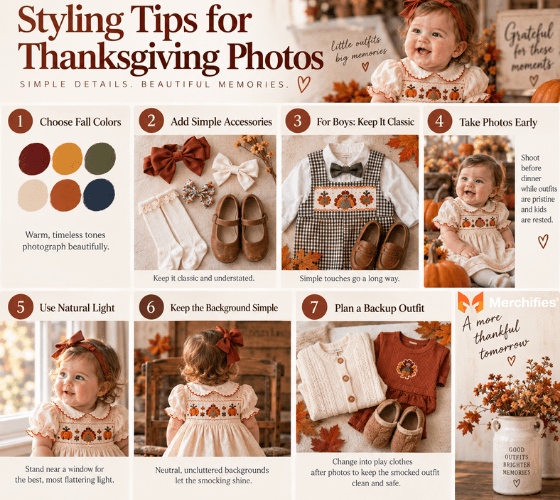
Accessories complete the classic smocked look without competing with the garment's intricate detail. For girls, simple headbands with fabric bows in coordinating colors frame the face beautifully. Avoid oversized bows or elaborate headpieces that draw attention away from the outfit. Knee-high socks in cream, white, or a complementary color add polish for toddlers in bishop dresses. Saddle shoes or Mary Janes complete the traditional aesthetic, though simple ballet flats work equally well.
For boys in smocked jonjons or longalls, accessory choices remain simpler but still matter. Leather loafers or saddle shoes provide the classic touch. Suspenders can add personality to a jonjon paired with a dress shirt, though the smocked bib typically provides sufficient visual interest without additional accessories. A bow tie in a coordinating color can dress up the look for formal photographs without overwhelming the smocking detail.
Timing your photographs strategically preserves both the outfit and your sanity. Schedule the formal photos for arrival time when outfits are pristine, children are rested, and patience remains high. Attempting perfect photos after dinner with gravy-stained garments and overstimulated children rarely produces the results families hope for. Even a five-minute photo session before guests arrive captures the polished look you envisioned.
Indoor lighting requires consideration for showing smocking detail effectively. Natural window light illuminates the dimensional texture of smocking beautifully, creating subtle shadows that emphasize the gathered fabric. Position your child facing a large window without direct sun for the most flattering, even illumination. Overhead artificial light tends to flatten the smocking texture, diminishing the visual impact of the technique. If natural light isn't available, a bright room with multiple light sources beats a single overhead fixture.
Simple backgrounds allow the detailed smocking to remain the visual focus. A wooden door, neutral wall, or fall foliage backdrop complements without competing. Avoid busy patterns, cluttered rooms, or backgrounds with competing textures. The intricate stitch work of quality smocking provides sufficient visual interest without elaborate settings. A clean background also allows these photos to work as home decor throughout the fall season.
Planning a backup outfit for post-meal activities protects the smocked garment while allowing continued holiday enjoyment. Once formal photos are complete and dinner is finished, changing baby into comfortable play clothes preserves the smocked outfit from pie filling, outdoor play, and the general chaos of holiday gatherings. The smocked piece can be carefully hung immediately rather than sitting crumpled in a diaper bag.
Quality smocking is identified by even gathering across the entire smocked panel, secure thread ends with no loose stitches, properly aligned pattern elements, and fabric that lies smoothly without puckering. Before purchasing any thanksgiving smocked outfit, examine these elements carefully whether shopping online (request detail photos) or in person. These quality markers distinguish investment-worthy pieces from disappointing fast-fashion attempts at the aesthetic.
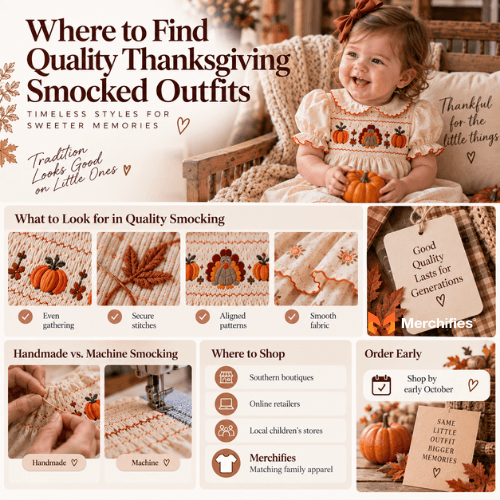
The gathering should appear consistent throughout the smocked area. Run your eye across the pleats looking for any sections where the fabric pulls tighter or lies flatter than surrounding areas. Inconsistent gathering indicates rushed or inexperienced construction. The thread ends at the edges of smocking should be secured invisibly, not left with visible knots or loose tails that could unravel. Pattern elements like turkeys or pumpkins should align symmetrically across the garment rather than appearing crooked or off-center.
Understanding the difference between handmade and machine smocking helps set appropriate price expectations. Hand-smocked garments, where an artisan creates each stitch individually, typically cost $60 to $150 or more depending on design complexity. Machine-smocked garments, produced on specialized pleating and stitching equipment, generally range from $25 to $80. Both can be high quality. Machine smocking allows for faster, more consistent production while hand smocking offers unique artisan touches and often more elaborate designs.
Southern boutiques and specialty children's retailers remain the traditional sources for quality smocked garments. These shops have built reputations over decades for stocking well-made pieces from established smocking houses. If you have a local children's boutique, their staff typically provides knowledgeable guidance about sizing, quality differences between makers, and care instructions. Online specialty retailers extend this access to families without local boutique options.
Drawing on Autumn Wilder's work with holiday family traditions, ordering by early October for Thanksgiving 2026 ensures adequate time for shipping, potential exchanges, and any needed alterations. Custom orders require even earlier planning. Mark your calendar to begin shopping in mid-September at the latest. The most sought-after designs and sizes sell quickly as families prepare for the holiday season.
For coordinating family pieces that complement baby's traditional smocked outfit, Merchifies offers personalized holiday apparel and matching sibling options. While specialty children's retailers excel at traditional smocking, Merchifies provides the matching family tees, personalized items, and themed pieces that round out your Thanksgiving family coordination. Browse the Merchifies collection for chef-themed shirts, family graphic tees, and personalized options that coordinate with your little one's smocked centerpiece.
-d4c38c342cdf20ca.jpeg)


-b555fcc6b204c456.jpeg)