 Worldwide Shipping
 Secure Payments
 Free Return
 Local Support
-da0801079a650a2e.jpeg)
17 Year Anniversary Quotes: 110+ Funny, Romantic & Furniture Wishes (2026)
Mar, 12 2026
When someone is going through a difficult time, even a few kind words can offer comfort, support, and hope. Thoughtful messages remind people they are not alone and can provide encouragement during moments of stress, grief, uncertainty, or emotional struggle. In this collection of 50+ short messages for someone going through a hard time, you’ll find compassionate, uplifting, and heartfelt words perfect for texts, cards, social media messages, or personal conversations. These supportive messages are designed to bring comfort, encouragement, and a reminder that brighter days can still lie ahead.

When someone you care about is facing a difficult time, finding the right words can feel daunting. A thoughtful, brief communication, however, can make a significant difference. You don't need a lengthy speech or perfect advice; often, a genuine, short message for someone going through a hard time offers comfort and reminds them they're not alone. This guide helps you craft impactful messages that truly resonate.
In moments of crisis, overwhelm, or sorrow, a concise, well-chosen message can be a lifeline. It communicates care, acknowledges pain, and offers a glimmer of hope or solidarity when someone might feel isolated. Many people underestimate the profound impact of a simple text or note, believing only grand gestures count. Here's the thing: a small, authentic expression of empathy often cuts through the noise more effectively than an elaborate one, precisely because it's manageable for someone already struggling. For instance, a quick "Thinking of you, no need to reply" (as I've observed in countless support group discussions) is often far more welcome than a long, demanding email that adds to their mental load.
This matters because empathetic communication isn't about solving problems; it's about connecting human to human. When you send a short message for someone going through a hard time, you're not expected to fix their situation. Instead, you're confirming their experience, validating their feelings, and extending a hand. This act of validation can be incredibly powerful, helping to alleviate feelings of loneliness or shame that often accompany personal struggles. It shows you see them, even if you don't fully understand their pain.
Crafting a truly supportive message requires more than just good intentions; it demands a mindful approach to communication. These core principles ensure your words land with the intended impact, offering genuine comfort rather than accidental distress. Adhering to these guidelines helps you convey authentic care, making your short message for someone going through a hard time a source of strength.

It's easy to get caught up trying to find the "perfect" words, often leading to paralysis or resorting to generic platitudes. The truth is, authenticity trumps perfection every single time. A slightly clumsy but heartfelt message resonates far more deeply than a perfectly polished but impersonal one. For example, saying "I'm not sure what to say, but I'm thinking of you" is infinitely better than a generic "Everything happens for a reason." In my experience observing interactions during difficult periods, people can instantly discern sincerity. A message like "My heart aches for you" (a phrase I've heard bring genuine tears of relief) communicates far more real care than a detached "Sorry for your loss."
One of the most crucial aspects of empathetic communication is validating the other person's feelings. This means acknowledging their pain, sadness, anger, or fear without trying to explain it away, cheer them up, or offer unsolicited advice. Phrases like "I can only imagine how hard this must be" or "It's okay to feel whatever you're feeling right now" create a safe space for them to process their emotions. Conversely, minimizing their experience with statements like "It could be worse" or "You'll get over it" can inadvertently make them feel misunderstood and alone. This matters because genuine support involves meeting someone where they are, not pulling them to where you think they should be. It's an editorial take that too many people, with good intentions, jump straight to problem-solving when validation is the immediate need.
When someone is struggling, their primary need is often for connection and understanding, not immediate solutions. While the urge to "fix" things is natural, especially for those who care deeply, offering your presence and a listening ear can be far more valuable. A short message for someone going through a hard time that emphasizes your availability, such as "I'm here for you, no pressure to talk," conveys unconditional support. This approach respects their autonomy and allows them to lean on you on their own terms. Avoid leading with advice like "You should try..." or "Have you thought about...?" unless specifically asked. The relief of knowing someone is simply *there* for them, without expectation, is a profound comfort.
A person navigating a hard time often has limited mental and emotional bandwidth. Long, rambling messages can feel overwhelming and demanding. Instead, aim for a concise and heartfelt message that gets straight to the point. Two or three genuine sentences are usually more effective than a lengthy paragraph. Think of it as delivering a concentrated dose of care. For example, "Sending you so much strength right now. I'm thinking of you" is powerful in its brevity. This approach respects their energy levels and ensures your message of support is easily digestible, offering comfort without adding extra cognitive load.
Different circumstances call for tailored messages, even when the underlying sentiment is empathy. Understanding the specific nature of their struggle allows you to craft a short message for someone going through a hard time that feels more relevant and personal. Here, we'll explore various scenarios and provide examples that hit the right note.
Grief is a profoundly personal journey, and there are no magic words to erase the pain. Your message should acknowledge their loss and offer comfort without trying to minimize or rush their healing process. The goal is to show you remember their loved one and that you're there for them. A common mistake, in my view, is to try and find a silver lining; grief simply doesn't work that way.
"My heart goes out to you. I'm so incredibly sorry for your loss of [Loved One's Name]."
"Thinking of you and remembering [Loved One's Name] fondly. Sending you strength."
"There are no words, but please know I'm here for you, whatever you need."
"I'm so sorry. [Loved One's Name] was truly special, and I'll always remember their [specific quality/memory, e.g., infectious laugh]. Thinking of you."

Professional setbacks, like job loss or a major project failure, can be devastating to one's self-esteem and sense of security. Your message should affirm their value and offer practical, non-intrusive support. It's crucial to avoid platitudes about "new opportunities" immediately; focus on acknowledging their present difficulty.
"I was so sorry to hear about your job. Please know I think highly of your skills and work ethic."
"This sounds incredibly tough. I'm thinking of you and sending good vibes your way."
"Let me know if I can help in any concrete way – a reference, a coffee chat, or just an ear."
"I'm really sorry you're going through this. Your talent will shine through, but it's okay to feel the sting right now."
A health crisis brings immense physical and emotional strain. Messages here should focus on their well-being, acknowledge their fight, and offer practical, specific support if appropriate. Avoid asking for medical details unless they volunteer them, and never suggest cures or remedies.
"Thinking of you and sending you so much strength as you navigate this. Take care of yourself."
"I know you're going through a lot right now. Wishing you comfort and peace."
"No need to reply, but I wanted you to know I'm thinking of you and hoping for the best."
"Sending you all my positive energy and thoughts for healing. You're incredibly resilient."

Relationship difficulties, whether a breakup or family conflict, can be deeply painful and emotionally draining. Your message should validate their hurt and offer a safe, non-judgmental space. Resist the urge to bash the other party or offer unsolicited advice on reconciliation or moving on too quickly.
"My heart breaks for you. I'm so sorry you're going through this pain."
"This sounds incredibly hard. I'm here to listen without judgment whenever you're ready."
"Sending you a huge hug. Take all the time you need to heal."
"It's okay to feel lost and hurt right now. I'm thinking of you and sending you love."
Mental health struggles often carry a stigma, making empathetic messages particularly crucial. Your words should be non-judgmental, reassuring, and emphasize that it's okay not to be okay. The biggest editorial mistake here is to suggest they "snap out of it" or "think positive."
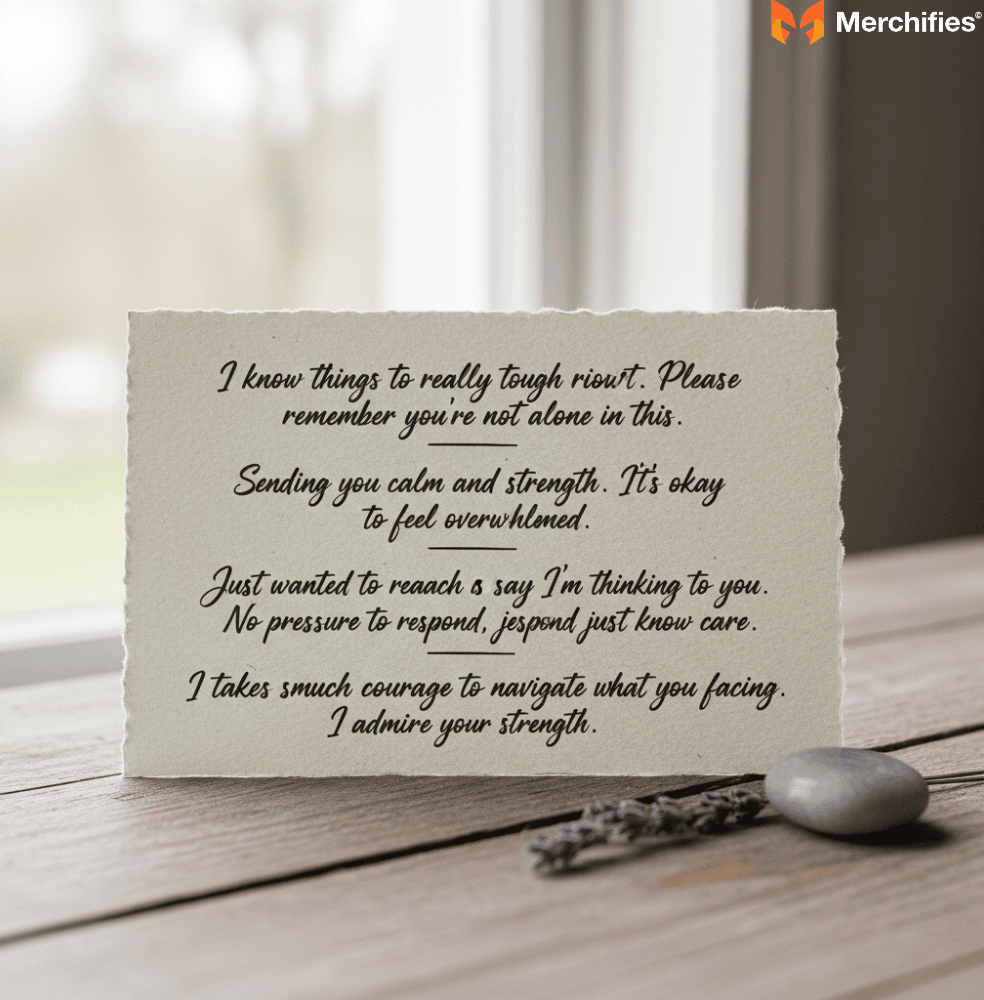
"I know things are really tough right now. Please remember you're not alone in this."
"Sending you calm and strength. It's okay to feel overwhelmed."
"Just wanted to reach out and say I'm thinking of you. No pressure to respond, just know I care."
"It takes so much courage to navigate what you're facing. I admire your strength."
Failure can feel catastrophic for students or young people, often impacting their self-worth. Your short message for someone going through a hard time in this context should focus on resilience, learning, and unconditional support, separating their worth from their performance.
"I know this feels like a huge setback, but it doesn't define you. You're smart and capable."
"It's okay to stumble. What matters is how you learn and grow from it. I'm here for you."
"Sending you encouragement. This challenge is just one chapter, not your whole story."
"I'm so sorry you're feeling this way. Remember how much you've achieved, and that I believe in you."
Beyond words of comfort, one of the most impactful ways to support someone is to offer specific, actionable help. People often struggle to ask for assistance, even when they desperately need it. Your message can bridge that gap by making it easy for them to accept. This proactive approach to offering support transforms a general sentiment into tangible care.
The common phrase "Let me know if you need anything" often puts the burden on the struggling person to identify a need and then articulate it. Instead, offer concrete suggestions that require a simple yes or no. This strategy, in my observation, drastically increases the likelihood of your help being accepted. It removes the friction of having to brainstorm and then ask for assistance. This is a critical distinction in truly supportive communication. If you're looking for more ways to connect, explore active listening skills for support.
"Can I drop off a meal for you on Tuesday evening? No need to cook."
"I'm heading to the grocery store. What can I pick up for you?"
"Would it help if I took the kids for a few hours this weekend so you can have some quiet time?"
"I have some free time this afternoon. Can I help with errands, laundry, or anything around the house?"
"I'm good at [specific skill, e.g., organizing paperwork, proofreading]. Let me know if that's something you could use help with."

Sometimes, the best support is simply being a consistent, low-pressure presence. People going through hard times might withdraw, not because they don't want support, but because they lack the energy to engage. Your messages should convey an open door without demanding immediate interaction.
"No need to reply, but I'm thinking of you and sending good thoughts."
"If you feel up to a quick, no-pressure chat sometime, I'm here. No worries if not."
"Just wanted to check in. Thinking of you today."
"I'm making coffee at [time]. No pressure, but if you're free and want company, my door is open."
While good intentions are admirable, certain phrases, even when meant to comfort, can actually cause more harm than good. Navigating a short message for someone going through a hard time means being mindful of what *not* to say, as much as what to say. This section highlights common pitfalls to avoid, particularly the insidious trap of toxic positivity.
These phrases often minimize the person's experience, invalidate their feelings, or place an undue burden on them. They typically come from a place of discomfort with another's pain, rather than genuine empathy. The editorial take here is firm: these phrases are almost universally unhelpful and should be avoided at all costs.
"Everything happens for a reason."
"Look on the bright side."
"You'll get over it."
"At least it's not worse."
"God never gives you more than you can handle."
"I know exactly how you feel." (Unless you truly do and can offer a specific, relevant shared experience, this often feels dismissive.)
"Just be positive!"
"What doesn't kill you makes you stronger."
"It's time to move on."
The phrases listed above, though often well-intentioned, can be incredibly damaging. "Everything happens for a reason," for example, implies that their suffering has a purpose, which can feel deeply invalidating and even cruel when they are grappling with senseless loss or pain. It suggests their current feelings are somehow "wrong." "Look on the bright side" is a classic example of toxic positivity, which insists on a positive outlook regardless of the situation. This can make someone feel guilty for experiencing natural human emotions like sadness or anger, pushing them to suppress their true feelings. In my observation, this often leads to isolation, as they feel they can't be honest about their struggles. Phrases like "You'll get over it" or "It's time to move on" rush the grieving or healing process, implying there's a set timeline for suffering, which simply isn't true for human emotion. When you send a short message for someone going through a hard time, the goal is to create space for their feelings, not to shut them down.
A single short message for someone going through a hard time is a wonderful start, but genuine support often requires sustained effort. Difficult periods rarely resolve quickly, and the initial outpouring of sympathy can fade, leaving the person feeling forgotten. Sustaining your support over time demonstrates true commitment and care, reminding them they're not alone even after the initial shock or crisis has passed.

The weeks and months following a major hardship can be particularly lonely. A brief follow-up message shows you haven't forgotten them. These don't need to be profound; consistency is key. For instance, a simple text weeks after a bereavement saying, "Thinking of you today, especially as it's been [timeframe] since [Loved One's Name] passed," can mean the world. It acknowledges their ongoing pain without demanding a response. This is often the point where many people drop off, so your continued presence stands out. Consider exploring how to support someone through grief for more insights.
"Just wanted to check in. No need to reply, but I'm still thinking of you."
"Hope you're having a gentle day. Sending you peace."
"Remembering you today. Hope you're finding moments of comfort."
"It's been a tough [week/month], I'm sure. Just wanted to remind you I'm here."
While your support is invaluable, there are times when professional help is necessary. If you notice signs of severe depression, prolonged inability to function, talk of self-harm, or an overwhelming sense of hopelessness, it's appropriate to gently suggest professional support. Your message should be framed with care and concern, not judgment. An editorial take: it's a sign of profound care to recognize the limits of your own support and guide them towards expert resources.
"I'm really worried about how much you're struggling, and I want you to get all the support you need. Have you thought about talking to a therapist or counselor?"
"It sounds like things are incredibly heavy right now. Sometimes talking to a professional can offer tools and perspective that friends can't. I can help you look for resources if you'd like."
"You don't have to carry this all alone. There are people who specialize in helping with these feelings, and I hope you'll consider reaching out to one."
The medium through which you send your short message for someone going through a hard time can influence its reception. Each digital platform has its own nuances and expectations. Thoughtful consideration of digital etiquette ensures your message is delivered respectfully and effectively, maximizing its positive impact.
For text messages, keep them very brief and direct. They are ideal for quick check-ins or specific offers of help ("Thinking of you," "Can I bring dinner?"). Avoid long paragraphs, as texts can feel intrusive or demanding if too lengthy. For **emails**, you have a bit more space, making them suitable for slightly longer, more reflective messages, or for outlining specific offers of help in more detail. They also allow the recipient to read and respond at their leisure. Social media private messages (DMs) can work for close friends, but be mindful of the public nature of social media itself; avoid posting public messages about their struggle unless they have already done so and explicitly invited public support. Never share sensitive information about someone else's hardship on social media, even in a private message, if there's any chance it could be seen by others or misconstrued. The key is to choose the platform that feels most private and least demanding for the recipient.
While words are powerful, sometimes a tangible gesture can amplify your short message for someone going through a hard time, providing physical comfort or practical relief. These thoughtful additions can transform your message from mere words into a comprehensive expression of care. This approach aligns well with considering how to offer holistic support.

A small, tangible item can often speak volumes, especially when paired with a heartfelt message. These gestures aren't about grandiosity but about demonstrating practical care or offering a moment of solace. For instance, leaving a simple coffee gift card along with a note saying, "Hope this helps you grab a moment of peace," is often more impactful than just words. It shows you've thought about their day-to-day struggles. Similarly, a handwritten card, even if the message is short, adds a personal touch that digital communication sometimes lacks. This matters because it offers a physical reminder of your support, which can be comforting during lonely moments.
A handwritten card: Adds a personal touch that digital messages sometimes miss.
A comforting drink: Drop off their favorite coffee, tea, or a smoothie.
A warm meal: Home-cooked or takeout, ready to eat, no fuss.
A small plant or flowers: A touch of nature can brighten a space and lift spirits.
A gift card for self-care: Think a coffee shop, a bookstore, or a local spa (if appropriate).
A care package is an excellent way to combine several thoughtful items into a single, supportive gesture. This is a prime "gift angle" opportunity, allowing you to provide a bundle of comfort. The key is to curate items that genuinely offer solace, distraction, or practical help, rather than just random goods. For supporters looking to care for themselves too, remember to check out self-care for caregivers and supporters.
Comfort items: A soft blanket, cozy socks, a scented candle, a calming essential oil roller.
Distraction/entertainment: A good book, a puzzle, a journal, a subscription to a streaming service for a month.
Nourishment: Gourmet tea bags, high-quality coffee, healthy snacks, a comforting soup mix, or even a gift certificate to a meal delivery service.
Self-care essentials: A nice hand cream, a relaxing bath bomb, lip balm, or a gentle face mask.
Personalized touches: Include a framed photo, a playlist of calming music, or a small item related to a shared memory.
Ultimately, when you send a short message for someone going through a hard time, your genuine presence and willingness to connect are the most valuable gifts you can offer. It's not about finding perfect words or solving intractable problems; it's about showing up, validating their experience, and offering a steady hand or a quiet ear. A heartfelt message, whether a simple text or a thoughtful card, creates a crucial bridge of empathy during their most challenging moments. Remember, true support is a sustained act of care, reminding them they are seen, heard, and deeply valued.
-d4c38c342cdf20ca.jpeg)


-b555fcc6b204c456.jpeg)