 Worldwide Shipping
 Secure Payments
 Free Return
 Local Support
-da0801079a650a2e.jpeg)
17 Year Anniversary Quotes: 110+ Funny, Romantic & Furniture Wishes (2026)
Mar, 12 2026
Valentine's Day has evolved from ancient traditions and legends into one of the world’s most celebrated holidays of love and romance. Its rich history blends Roman festivals, stories of Saint Valentine, and centuries of evolving customs centered around affection and connection. In this guide to the history of Valentine’s Day, you’ll explore the holiday’s origins, popular legends, and the romantic traditions that shaped modern celebrations. From handwritten love notes to flowers, chocolates, and heartfelt gestures, discover how Valentine’s Day became a timeless symbol of love across cultures and generations.

The origins of Valentine's Day are far more complex and intriguing than the simple exchange of cards and chocolates might suggest. Tracing the true roots of this mid-February celebration leads us down a winding path through ancient pagan rituals, the often-conflated legends of early Christian martyrs, and the romantic imaginings of medieval poets. Unraveling exactly where did Valentine come from requires a deep dive into centuries of evolving traditions.
Valentine's Day, celebrated globally on February 14th, stands as a testament to enduring love and affection. Yet, beneath its modern veneer of cupids and hearts lies a history shrouded in mystery, making it one of the most historically debated holidays on our calendar. Pinpointing precisely where did Valentine come from is a challenge because its story isn't a single, linear narrative but a rich tapestry woven from disparate threads across millennia.
The primary reason for the historical ambiguity surrounding Valentine's Day stems from a scarcity of definitive historical records from the early centuries of its supposed inception. Ancient accounts, particularly those concerning early Christian saints, were often passed down orally, embellished, or conflated over time. This makes separating verifiable historical fact from pious legend a formidable task for modern historians, leading to multiple competing theories about its true genesis. For example, the detailed stories of Saint Valentine's romantic gestures often appear centuries after his death, casting doubt on their literal accuracy.
Transitioning from the general mystery, let's zoom in on the specific figures at the heart of the enigma.

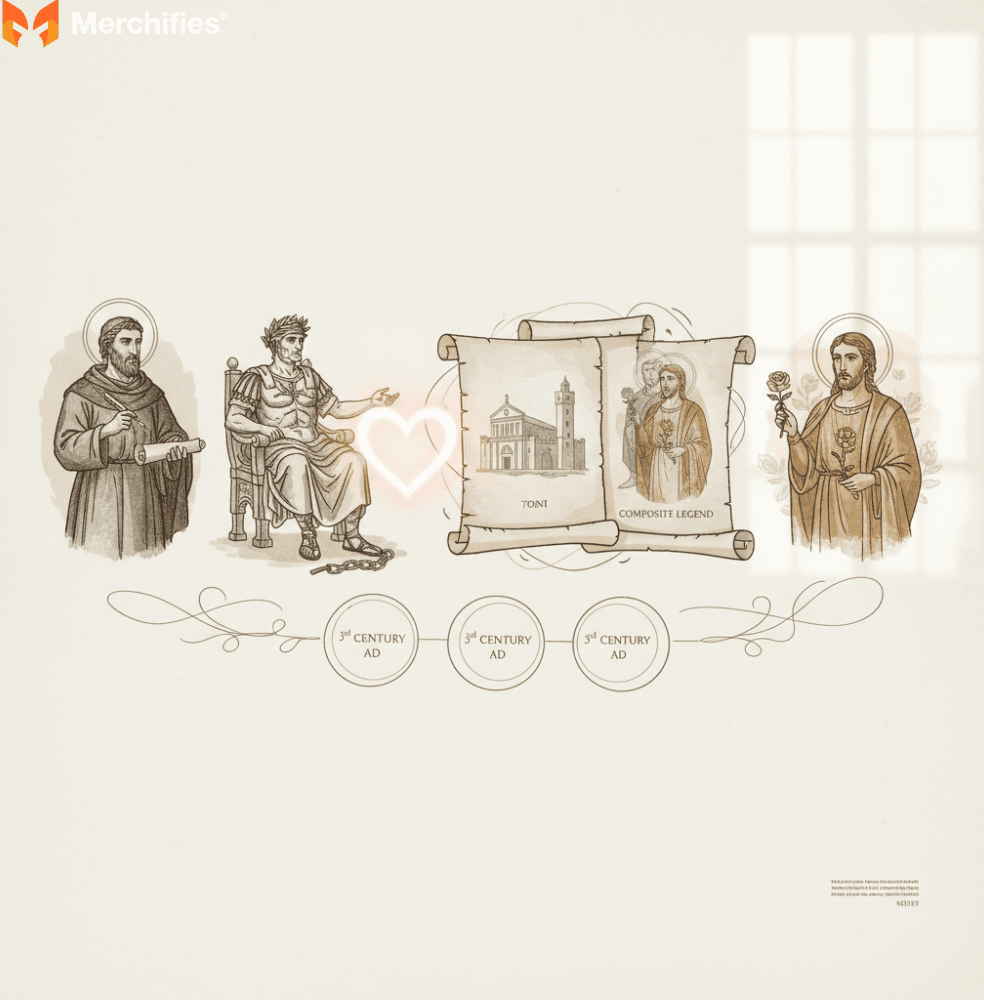
When you ask, "Who was the original Saint Valentine?" the answer isn't straightforward. Historical records point to at least two, possibly three, early Christian martyrs named Valentine, a Roman priest and a bishop of Terni, both martyred around the 3rd century. Their legends often merged over time, creating the composite figure we vaguely recognize today.
The identity of the specific Saint Valentine honored on February 14th is perhaps the most contested aspect of the holiday's origins. Historical sources from the Roman martyrologies point to multiple individuals named Valentinus or Valentine who were martyred in the early Christian era. The conflation of these figures into a single romantic patron is a fascinating example of how cultural narratives evolve. In my analysis of historical accounts, the conflation of different Saint Valentines becomes strikingly clear when comparing early church records from Rome and Terni, which describe separate individuals with similar fates.
One prominent legend centers on Saint Valentine of Rome, a priest who lived in the 3rd century AD. During the reign of Emperor Claudius II Gothicus, known as "Claudius the Cruel," a decree was issued banning marriage for young men. The emperor believed that single men made better soldiers, unencumbered by wives and families. Here's the thing: Valentine, a devout Christian, saw this ban as unjust and, defying the emperor's orders, secretly performed marriages for young lovers. This act of compassion and defiance ultimately led to his arrest and execution. This particular narrative strongly connects the saint directly to the concept of romantic love and commitment, even under duress.
Another significant figure is Saint Valentine of Terni, a bishop who was also martyred in the 3rd century AD. His legend often involves healing the sick and performing miracles, particularly for children. While his story doesn't directly involve secret marriages, his acts of charity and faith align with the broader Christian ideal of selfless love. On top of that, there are mentions of a third Saint Valentine, martyred in Africa, though his story is far less connected to the romantic holiday. The Catholic Church itself acknowledges the difficulty in distinguishing between these figures, often referring to them collectively, underscoring the challenge in definitively answering who was Saint Valentine.
Perhaps the most endearing legend linking Saint Valentine to romantic love involves a letter. The story goes that while imprisoned, Valentine fell in love with his jailer's daughter, Julia. Before his execution on February 14th, he allegedly sent her a final letter, signed "From Your Valentine." This phrase, of course, has become synonymous with the holiday. In practice, while a beautiful and poignant tale, historical evidence for this specific event is scarce. Most historians view it as a romantic embellishment added much later, likely during the medieval period when the holiday's romantic associations began to solidify. It serves as a powerful cultural myth, even if its historical veracity is questionable.
The Catholic Church, recognizing the historical uncertainties, made a significant decision in 1969. As part of a broader revision of the General Roman Calendar, Saint Valentine's Day was removed due to the lack of reliable historical information about the saint(s). This matters because while he is still recognized as a saint, and his feast day can be observed locally, the universal liturgical celebration was discontinued. My editorial take here is that this move, while perhaps disappointing to some romantics, demonstrates a responsible commitment to historical accuracy, distinguishing between popular devotion and verifiable hagiography. It's a pragmatic approach to a legend-rich past.
Beyond the saints, another powerful influence on the holiday's timing comes from much older traditions.
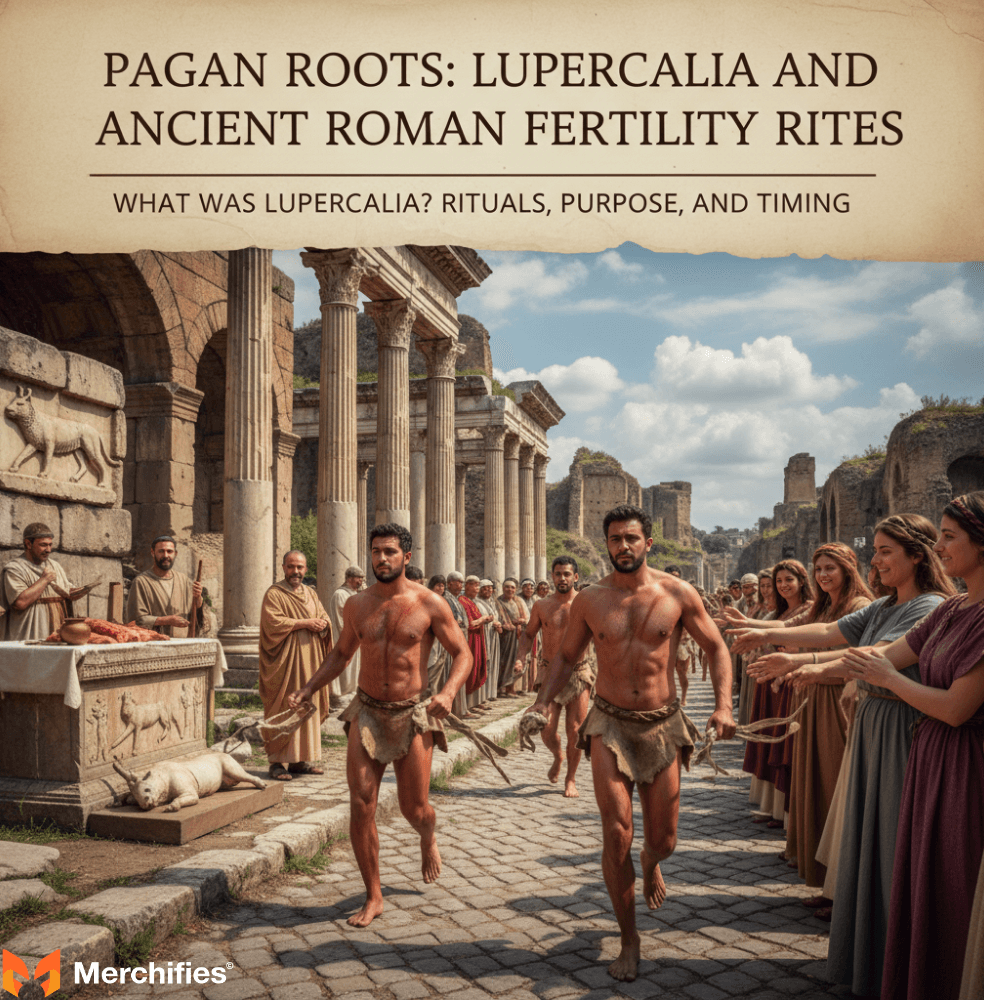
What was Lupercalia and how is it related to Valentine's Day? Lupercalia was an ancient Roman pagan festival celebrated from February 13-15, dedicated to fertility and the founders of Rome. While not directly a 'love' festival, its mid-February timing and focus on fertility rites are often cited as a possible precursor or influence on the later Christian holiday.
The timing of Valentine's Day in mid-February is one of the strongest arguments for its connection to ancient pagan festivals. The most prominent of these is Lupercalia, a Roman festival with roots stretching back to the 6th century BC. This annual event was a raw, primal celebration of fertility, purification, and the mythological founding of Rome by Romulus and Remus, who were said to have been suckled by a she-wolf (Lupa). The rituals themselves were far removed from modern notions of polite romance.
Lupercalia was observed from February 13th to 15th. The main rituals involved a group of Roman priests, known as Luperci, sacrificing goats and a dog. Following the sacrifice, they would strip naked or don loincloths made from the sacrificial animals' hides, then run through the streets of Rome, lightly striking women with strips of the hides. This act was believed to bestow fertility upon the women. For example, Plutarch, the Greek historian, describes women actively seeking out the touch of the Luperci, believing it would aid conception and ease childbirth. The entire festival was a boisterous, often raucous affair, aimed at warding off evil spirits and promoting health and fertility for the coming spring. It was a stark contrast to the refined love poems that would later define Valentine's Day.
The question of whether Lupercalia has a direct link to Valentine's Day is a subject of ongoing historical debate. Some scholars argue that the early Christian Church strategically placed Saint Valentine's Day in mid-February to "Christianize" or absorb the popular pagan festival, making it easier for converts to transition. The common mid-February timing certainly suggests a potential overlap. My opinionated take here is that while a direct, ritualistic conversion is unlikely, the Church's decision to place a Christian feast day around the same time as a deeply ingrained pagan celebration was a shrewd move in cultural assimilation. It's less about direct lineage and more about strategic replacement, a common tactic in the spread of Christianity, as seen with Christmas and winter solstice celebrations. This suggests where does Valentine comes from is partially tied to ancient Roman efforts to ensure fertility and prosperity.
The Church's strategy to replace pagan holidays leads directly into the next phase of Valentine's Day's development.
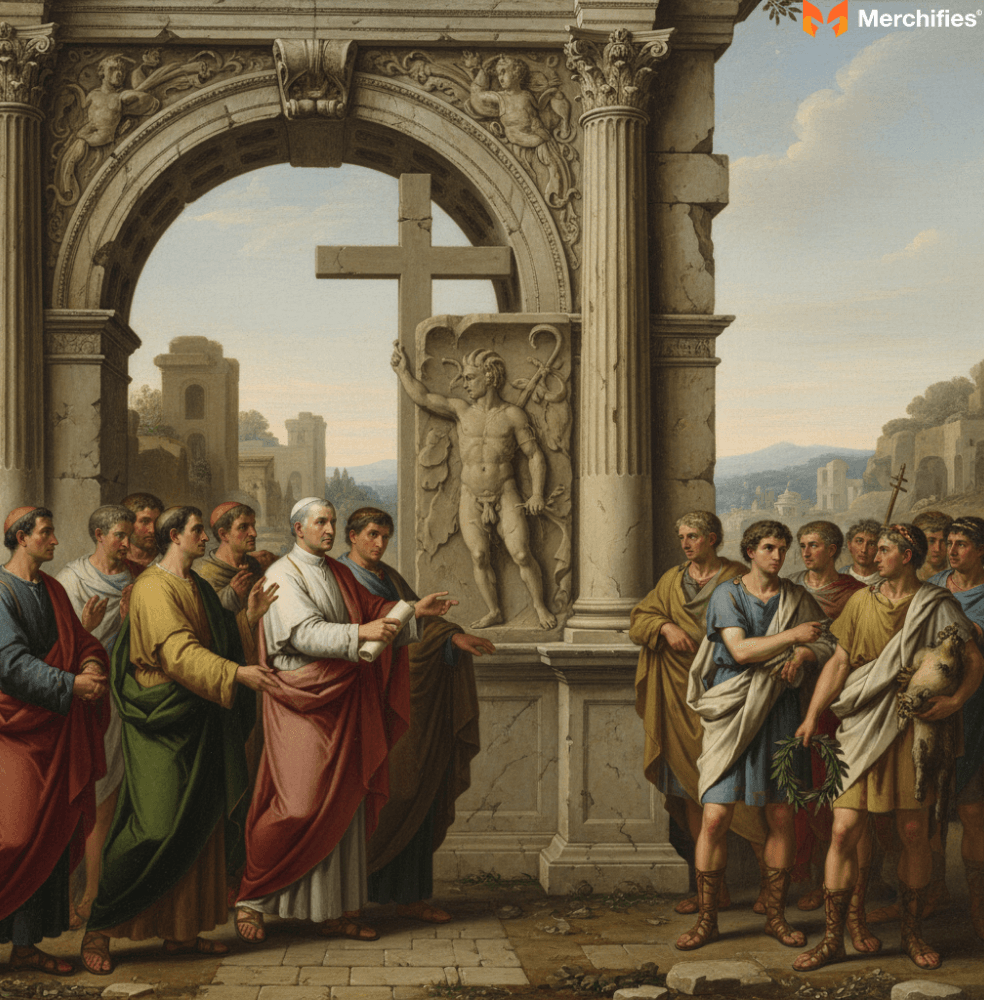
The early Christian Church faced the challenge of converting a pagan empire. Rather than simply abolishing popular festivals, a common tactic was to overlay existing pagan celebrations with Christian meaning. This strategic approach likely played a significant role in establishing February 14th as a Christian observance, effectively giving a new answer to where did Valentine come from.
By the late 5th century, the Roman Empire had officially become Christian, but pagan practices like Lupercalia persisted, much to the chagrin of Church leaders. In 494 AD, Pope Gelasius I took decisive action. He famously outlawed Lupercalia, condemning its "impious error" and pagan rituals. This wasn't just a simple prohibition; it was a move to consolidate Christian authority and purify Roman society of its ancient traditions. In his letter to the Roman Senator Andromachus, Gelasius explicitly denounced the festival, making it clear that such celebrations had no place in Christian Rome. This pivotal moment marked a clear break from the pagan past.
While Pope Gelasius I outlawed Lupercalia, there's no direct decree from him establishing Saint Valentine's Day as its replacement. However, the timing is highly suggestive. By removing a major pagan festival that occurred in mid-February, the Church created a void. The existing feast day of Saint Valentine(s) on February 14th naturally filled this gap, offering a Christian alternative for a mid-winter celebration. This wasn't necessarily about romantic love at this stage, but about commemorating martyrs and solidifying Christian identity. The Church’s actions demonstrate a clear pattern of absorbing and transforming existing cultural practices, ensuring that where did Valentine come from would include a strong Christian narrative.
The Christianization laid the groundwork, but the romantic heart of Valentine's Day wouldn't beat strongly until centuries later.
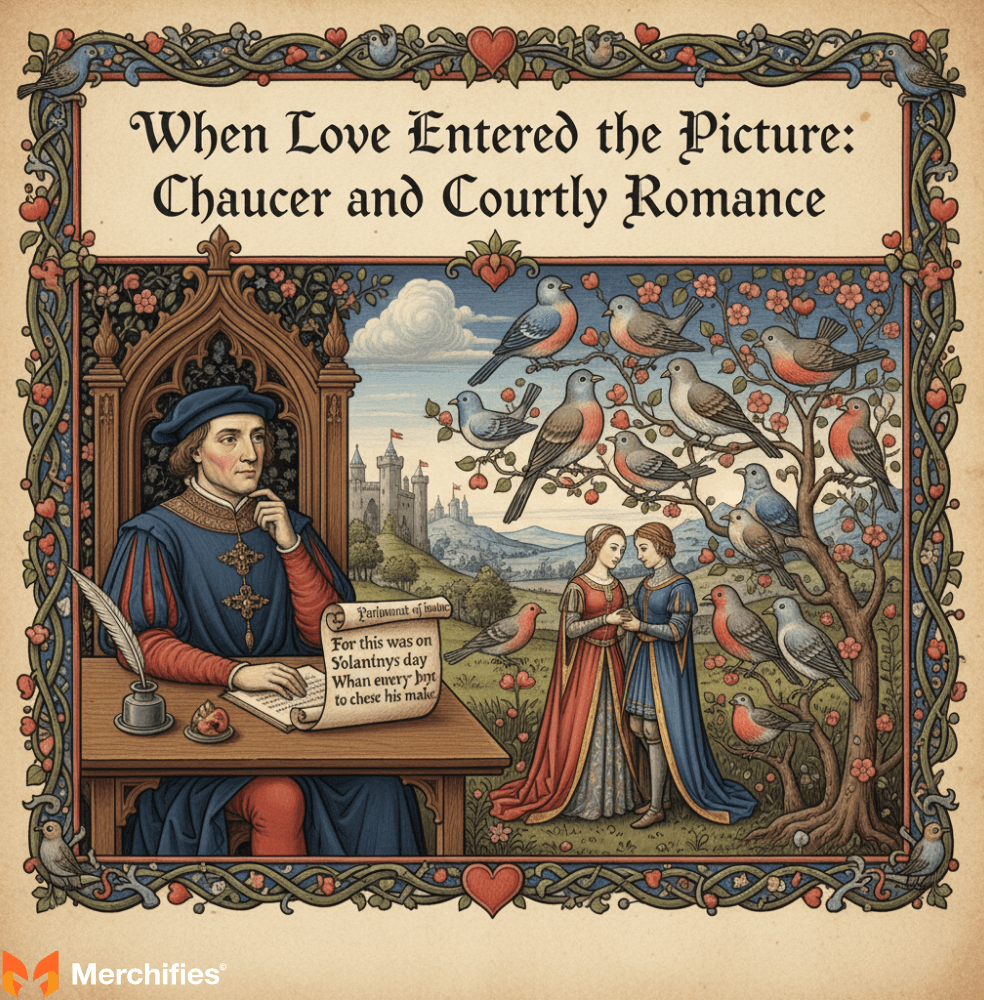
The association of Valentine's Day with romantic love largely began in the 14th century, primarily influenced by the English poet Geoffrey Chaucer's poem 'Parliament of Foules,' which linked February 14th with the mating season of birds and courtly love.
For centuries after the Christianization efforts, Saint Valentine's Day remained primarily a religious observance, commemorating martyrdom. The romantic connotations we associate with it today are a much later development, largely attributable to the flourishing of courtly love traditions in medieval Europe. This is the period when the holiday truly began to answer how Valentine's Day became romantic.
The English poet Geoffrey Chaucer is widely credited with being the first to explicitly link Valentine's Day with romantic love. His 1382 poem, Parliament of Foules, contains the lines: "For this was on seynt Volantynys day / Whan euery bryd comyth there to chese his make." This translates to: "For this was on Saint Valentine's Day, when every bird comes there to choose his mate." This poem, written to commemorate the engagement of King Richard II to Anne of Bohemia, firmly established February 14th as a day for lovers and the mating season of birds. My editorial take is that while the idea that Chaucer single-handedly "invented" romantic Valentine's Day is a bit of an oversimplification, his poem undeniably provided the crucial literary and cultural anchor that connected the saint's day to romantic love, especially within the English-speaking world. It wasn't just a casual mention; it solidified an association.
Chaucer's work didn't exist in a vacuum. The 14th and 15th centuries saw the rise of courtly love, a highly stylized and often unrequited form of romantic devotion, particularly among the nobility. This era produced a wealth of poetry, songs, and literature celebrating love, chivalry, and devotion. Hand-written valentines, often elaborate and poetic, began to appear during this period, exchanged between lovers and admirers. For instance, Charles, Duke of Orléans, imprisoned in the Tower of London after the Battle of Agincourt in 1415, wrote one of the earliest known surviving valentines to his wife, calling her "my very gentle Valentine." These traditions further cemented the romantic association, illustrating how where did Valentine come from evolved from religious observance to a day of romantic expression.
From medieval courtly love, the holiday transitioned into something more widely accessible and eventually, commercial.
The journey of Valentine's Day from ancient rituals and medieval poetry to a global celebration of affection is a fascinating one. The Industrial Revolution and subsequent advancements in printing and communication played a pivotal role in transforming it into the holiday we recognize today, dramatically shaping where did Valentine come from in its modern form.
By the 18th century, the exchange of handwritten valentines had become common in England. These were often elaborate, decorated with lace, ribbons, and hand-drawn illustrations. However, the 19th century brought about a significant shift with the advent of the printing press and more efficient manufacturing processes. This allowed for the mass production of cards, making valentines accessible to a broader population, not just the wealthy elite. In the United States, Esther Howland, often called the "Mother of the American Valentine," began producing elaborate, commercially printed valentines in the 1840s, importing lace and paper from England. Her success demonstrated the immense market for pre-made expressions of affection, effectively democratizing the practice of sending valentines.
The iconic symbols we associate with Valentine's Day also have their own rich histories. Cupid, the winged cherubic figure, traces his origins back to ancient Roman mythology as the god of desire, erotic love, attraction, and affection. His Greek counterpart was Eros. The heart shape, while symbolically linked to love for millennia, gained its distinct stylized form in medieval art and became universally recognized as a symbol of romantic love by the 15th century. Red roses, meanwhile, have been associated with love and beauty since ancient times, particularly with the Roman goddess Venus. These symbols, once steeped in classical or medieval contexts, were readily adopted and popularized by commercial valentine manufacturers, becoming shorthand for romantic sentiment across the globe.
Today, Valentine's Day is undeniably a massive commercial enterprise, with billions spent annually on cards, chocolates, flowers, and gifts. This level of commercialization sparks a critical debate: does it enhance or detract from the holiday's true meaning? My editorial take is that while the commercial aspect can feel overwhelming and even cynical, it also provides an accessible, universal language for expressing affection. The challenge lies in remembering that the spirit of love and connection should always supersede the pressure to buy. For many, the commercial element provides a convenient framework, but the most meaningful gestures often remain the personal ones, whether a thoughtful note or a shared experience. The market has certainly defined where did Valentine come from in its current iteration, but personal connection still reigns.
As the holiday evolved, its influence spread far beyond its Western origins.

While Valentine's Day has deep roots in Western history, its modern commercial form has certainly traveled globally, leading to fascinating adaptations and unique traditions in different cultures. It's interesting to observe how various societies interpret and celebrate this day, often integrating their own customs.
For instance, in Japan, the tradition is somewhat reversed. On February 14th, women give chocolates to men, with different types of chocolate signifying different relationships: giri-choco (obligation chocolate) for colleagues and friends, and honmei-choco (true feeling chocolate) for romantic partners. Then, on March 14th, known as White Day, men who received honmei-choco are expected to reciprocate with gifts that are typically two or three times the value of the chocolate they received. Similarly, South Korea also observes White Day, and even has a "Black Day" on April 14th for singles. In the Philippines, mass weddings are a popular tradition on Valentine's Day, with hundreds of couples tying the knot in a communal ceremony. These diverse practices highlight that while the core idea of expressing love might be universal, the specific rituals and expectations around Valentine's Day are wonderfully varied, showcasing a truly global answer to where did Valentine come from in terms of cultural adoption.
After exploring its complex journey, it's clear that Valentine's Day is more than just a single event.
The question of where did Valentine come from doesn't yield a simple answer, but rather a rich, multifaceted narrative. We've journeyed from the bloody fertility rites of ancient Roman Lupercalia to the shadowy legends of multiple Christian martyrs named Valentine. We've seen the strategic hand of the early Church in attempting to Christianize pagan festivals and, centuries later, the pivotal role of medieval poets like Geoffrey Chaucer in imbuing February 14th with romantic significance. Finally, we've observed its transformation into a global, commercial phenomenon, complete with iconic symbols and diverse cultural expressions.
Valentine's Day, at its core, is a holiday that defies singular definition. It's a testament to humanity's enduring need to celebrate love, affection, and connection, regardless of its convoluted historical origins. Whether you trace its roots to pagan rituals, Christian martyrdom, or courtly romance, the holiday continues to evolve, reflecting our ever-changing understanding and expression of love. It remains a powerful cultural marker, reminding us each year of the importance of those we cherish.
-d4c38c342cdf20ca.jpeg)


-b555fcc6b204c456.jpeg)