
-da0801079a650a2e.jpeg)
101 Engaging Ways of Saying Hello: Master Every Greeting & Make a Great Impression
Discover over 100 different ways of saying hello for any situation! From formal business greetings to casual slang, learn cultural nuances, non-verbal cues, and make a memorable first impression every time.

Blog Post Contents
Every interaction begins with a greeting. It's more than just an exchange of words; it’s the crucial first step in building rapport, showing respect, and setting the tone for any conversation, whether it’s a quick passing encounter or a significant business meeting. A well-chosen greeting can open doors, foster connections, and leave a lasting positive impression. On the other hand, a poorly chosen one can create awkwardness or even unintended offense. As relationship expert and communication specialist Hannah Gale often emphasizes, "The way you greet someone is the first signal you send about who you are and how you value the interaction."
This comprehensive guide will equip you with a rich vocabulary of ways of saying hello, spanning diverse contexts, cultures, and moods. You’ll learn how to navigate formal settings, bond with friends, and even say "hello" across borders. By the time you’re done, you’ll have well over 100 different ways to confidently say "hi" and "hello," transforming your social and professional interactions.
How do you actually say ‘hello’ and ‘hi’ in English?
Getting the basics right is crucial for clear and effective communication. While "hello" and "hi" might seem simple, understanding their nuances and common alternatives can significantly enhance your everyday interactions.
The Classics (Always Appropriate)
These are your go-to greetings, universally understood and generally safe for most situations. They are reliable ways of saying hello.

- "Hello": This is the quintessential English greeting – standard, versatile, and appropriate in virtually any context, from a formal introduction to answering the phone.
- "Hi": Slightly less formal than "hello," "hi" is incredibly common and widely accepted in friendly, casual, and even semi-formal settings. It’s a warm and approachable way of saying hello.
- "Hey": While more casual than "hi," "hey" is a very common and friendly greeting among acquaintances and friends. It can also be used to get someone's attention.
- "Good morning / afternoon / evening": These time-specific greetings are respectful and polite, suitable for both formal and informal environments. They demonstrate awareness of the time of day and are excellent ways of saying hello professionally.

The Simplist & Quickest
Sometimes, you need a brief, no-fuss greeting. These options offer quick ways of saying hello.
- "Greetings": A more traditional and slightly formal option, "greetings" can feel a bit old-fashioned but is still understood and can be used in written communication or to add a touch of formality.
- "Howdy": Predominantly used in the Southern and Western United States, "howdy" is a friendly, informal, and distinctly regional greeting.
- "Yo": This is a very informal and slang greeting, primarily used among close friends or in specific youth cultures. Use it with caution, as it can be inappropriate in many settings.
Let’s go formal: Professional & Respectful Ways to Say Hello
In many situations, especially in business, when meeting new acquaintances, or addressing elders, a formal greeting is not just polite – it's essential. It conveys respect, professionalism, and helps establish a positive first impression. These are polished ways of saying hello.
Respectful & Traditional Greetings
When the stakes are higher, or respect is paramount, these greetings come into play.

- "It's a pleasure to meet you." This is a gold-standard formal greeting for new introductions, conveying genuine delight and respect.
- "How do you do?" A classic, traditional formal greeting, often rhetorical in nature, meaning an answer isn't always expected. It’s more of a polite acknowledgment.
- "Pleased to make your acquaintance." Similar to "It's a pleasure to meet you," this phrase offers a slightly more formal and old-world charm, perfect for very formal settings.
- "Welcome." Used when you are receiving someone, this greeting expresses hospitality and makes them feel at ease.
- "Greetings, [Name/Title]." Adding a name or title immediately elevates the formality and personalization, showing you acknowledge the individual.

Professional Written Greetings (Email/Letters)
First impressions also count in writing. These phrases are the appropriate ways of saying hello in professional correspondence.
- "Dear [Name]," The standard and most widely accepted formal salutation for emails and letters, suitable for most professional communications.
- "To Whom It May Concern," Use this when you don't know the specific recipient's name but need to address an official entity.
- "Greetings," Can be used as a slightly less formal but still professional opening in emails, especially when addressing a group or an unknown individual.
Let’s go casual: Friendly & Modern Ways to Say Hello
When you’re among friends, family, or in relaxed social settings, a more laid-back greeting is perfectly acceptable and often preferred. These are the fun, informal ways of saying hello.
Common & Conversational
These are popular choices for everyday interactions with people you know well.

- "What's up?" / "Wassup?" Hugely popular, this greeting is a casual inquiry about how someone is doing or what they’ve been up to. It's one of the most common casual ways of saying hello.
- "How's it going?" / "How are things?" These are friendly, open-ended questions inviting a brief update on the other person's life.
- "What's new?" / "What's happening?" Similar to the above, these greetings express interest in the other person's recent events.
- "Alright?" (UK common): While short, this is a very common informal greeting in the UK, essentially meaning "How are you?" or "Hello."
- "Long time no see!" / "It's good to see you!" These phrases are perfect for reconnecting with someone you haven't encountered in a while, conveying warmth and familiarity.
- "How have you been?" A slightly more reflective way of asking about someone's well-being over a period of time, suitable for friends and family.

Slang & Modern Greetings (Use with Caution!)
Slang greetings are often tied to specific groups or trends. While they can be fun, their appropriateness varies wildly.
- "Sup?" An even shorter, more informal version of "What's up?", definitely reserved for close friends.
- "Yo!" A very casual and sometimes attention-grabbing greeting, popular in youth culture.
- "G'day" (Australia): A quintessential Australian informal greeting, short for "Good day."
- "Howdy partner" (Playful/Regional): Often used humorously or to evoke a Western vibe. While "howdy" is common in some regions, adding "partner" makes it more specific and playful.
How to say hello in English in other English speaking countries & Beyond
Understanding cultural nuances in greetings, even within English-speaking countries, is a sign of respect and global awareness. Beyond English, knowing a few simple greetings in other languages can create memorable connections. This section covers a variety of ways of saying hello internationally.
English Greetings Around the World
Even within the Anglosphere, greetings can have distinct regional flavors.
- "G'day mate" (Australia): The classic, friendly Australian informal greeting.
- "Howzit" (South Africa): A common, informal greeting in South Africa, short for "How is it?"
- "Top of the morning to ya!" (Ireland, often playfully): While stereotypical, this cheerful phrase is understood and occasionally used, particularly in jest.
- "Alright, eh?" (Canada): A casual greeting that often blends a question about well-being with the Canadian "eh."
European Greetings
Europe offers a rich tapestry of verbal and non-verbal greetings.
Spanish:
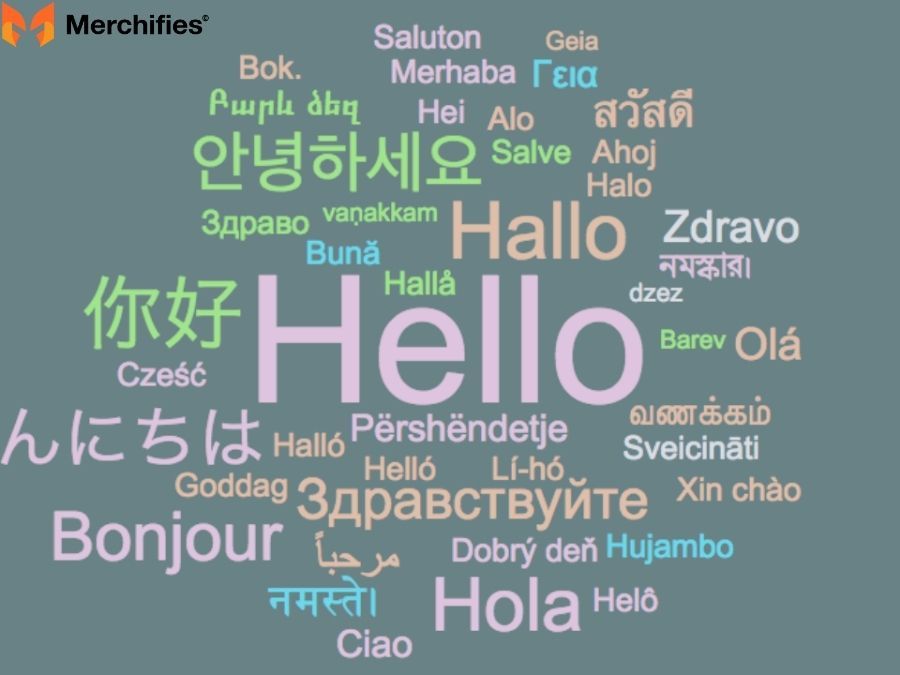
- Hola: The universal "hello."
- Buenos días: "Good morning."
- Buenas tardes: "Good afternoon."
- Buenas noches: "Good evening/night."

French:
- Bonjour: "Good day" or "hello" (used during the day).
- Salut: Informal "hi."
Bonsoir: "Good evening."
German:
- Hallo: "Hello."
- Guten Tag: "Good day."
- Grüezi (Swiss German): A formal "hello" in Switzerland.
Italian:
- Ciao: Both "hello" and "goodbye" (informal).
- Buongiorno: "Good morning."
- Buonasera: "Good evening."
Asian Greetings
Greetings in Asia often carry deeper cultural significance.
Japanese:

- Konnichiwa: "Hello" (general day greeting).
- Ohayou gozaimasu: "Good morning" (formal).
- Konbanwa: "Good evening."

Mandarin Chinese:
- Nǐ hǎo: "Hello."
- Zǎo shang hǎo: "Good morning."
Korean:
- Annyeonghaseyo: "Hello" (polite formal).
Hindi:
- Namaste: "Hello" (often accompanied by a slight bow and palms pressed together).
Other Notable Greetings
- Arabic: As-salamu alaykum (Peace be upon you) – A respectful and common Islamic greeting.
- Swahili: Jambo / Habari (Hello / News) – Popular greetings in East Africa.
Note on Non-Verbal Cultural Cues: Verbal greetings are often accompanied by specific non-verbal actions. In France and Italy, two or three kisses on the cheek are common. The Wai in Thailand involves a bow with palms pressed together, and the depth of the bow signifies respect. In the Middle East, a Salaam or handshake may be common, often followed by placing a hand over the heart.
Creative & Unique Ways to Say Hello (For Adding Personality)
Sometimes, you want to stand out or inject a little fun into your interactions. These creative ways of saying hello are perfect for situations where you can add a touch of personality.
Playful & Humorous
These are great for close friends or lighthearted situations where you want to elicit a smile.

- "Fancy meeting you here!"
- "Look what the cat dragged in!"
- "May the force be with you!" (A classic pop culture reference for fans.)
- "Greetings, earthling!"
- "What's cookin', good lookin'?" (Very informal and playful, use with extreme caution!)

Enthusiastic & Energetic
When you're genuinely excited to see someone, let your greeting reflect it!
- "Great to see you!"
- "Hey there, stranger!"
- "What a pleasant surprise!"
- "It's fantastic to finally catch you!"
Non-Verbal Greetings: The Silent Hello
Often, our body language speaks volumes before we even utter a word. Non-verbal greetings are powerful, either accompanying verbal ones or standing alone to acknowledge someone's presence.
Universal Non-Verbal Cues
These actions are widely understood and often transcend language barriers.

- Smile: The most universally understood and welcoming greeting, instantly signaling friendliness and approachability.
- Eye Contact: Shows engagement, attention, and respect. However, be mindful of cultural variations; prolonged eye contact can be seen as aggressive in some cultures.
- Nod: A simple, quick nod of the head is an easy way to acknowledge someone from a distance or during a momentary pass.
- Wave: Perfect for greeting someone from across a room or street, a wave is a clear sign of recognition and welcome.

Physical Contact Greetings (Context is Key!)
Physical greetings are highly dependent on culture, relationship, and situation.
- Handshake: The standard professional and formal greeting in many Western cultures. A firm but not bone-crushing grip, combined with direct eye contact, conveys confidence.
- Hugs: Reserved for friends, family, and very close acquaintances, hugs are a warm expression of affection.
- High-fives / Fist bumps: Casual, often celebratory greetings common among friends, especially in sports or informal settings.
- Bow: Prevalent in East Asian cultures like Japan and Korea, the depth of a bow signifies the level of respect being shown.
Choosing the Right Greeting: Tips for Every Situation
With so many ways of saying hello, how do you pick the perfect one? It all comes down to careful observation and thoughtful consideration.
Consider the Context
Is it a formal business meeting or a casual backyard barbecue? Your greeting should match the environment. A "Howdy" might feel out of place in a boardroom, just as "Pleased to make your acquaintance" could feel stiff at a party.
Assess the Relationship
Who are you greeting? A stranger, a new acquaintance, a close friend, a family member, or a superior? The level of familiarity dictates the appropriate greeting. You wouldn't greet your boss the same way you greet your best friend.
Read the Room
Observe how others are greeting each other. Are people shaking hands, hugging, or simply nodding? Mimicking the general atmosphere can help you blend in and choose an appropriate greeting.
Cultural Sensitivity
Always err on the side of formality when unsure about cultural greeting norms. Researching common greetings and customs beforehand, especially when traveling or meeting people from different backgrounds, shows immense respect. As Hannah Gale advises, "Cultural sensitivity isn't just about avoiding offense; it's about actively seeking to understand and connect on a deeper level."
Be Authentic
While following etiquette is important, choose greetings that feel natural to you. An authentic smile and genuine tone can make almost any appropriate greeting more effective.

The Power of a Smile
Even if you stumble over your words or choose a slightly less-than-perfect greeting, a genuine smile is universally understood and can smooth over many social missteps. It’s the simplest, yet most powerful, non-verbal hello.
Practice Makes Perfect
Don't be afraid to try new greetings and expand your repertoire. The more you practice, the more comfortable and confident you'll become in choosing the right way to say hello for any situation.
Conclusion: Making Every First Impression Count
From the simplest "hi" to the most elaborate cultural greeting, the myriad ways of saying hello are more than just words – they are bridges of human connection. Mastering these diverse greetings empowers you to navigate social landscapes with confidence, show respect across cultures, and make every first impression a positive one. Whether you’re opting for "107 ways to say hi in English" or exploring international forms, the practice of greeting thoughtfully is an art.
We encourage you to experiment with the various ways of saying hello discussed in this article, applying them thoughtfully to different situations and relationships. Remember that a well-chosen greeting, paired with a genuine smile, is the first step toward meaningful interaction and lasting connections. As Hannah Gale profoundly concludes, "A greeting is never just a greeting; it's the opening chord of a relationship, so make it resonate." Start practicing today, and watch your social and professional world expand!
-d4c38c342cdf20ca.jpeg)


-b555fcc6b204c456.jpeg)